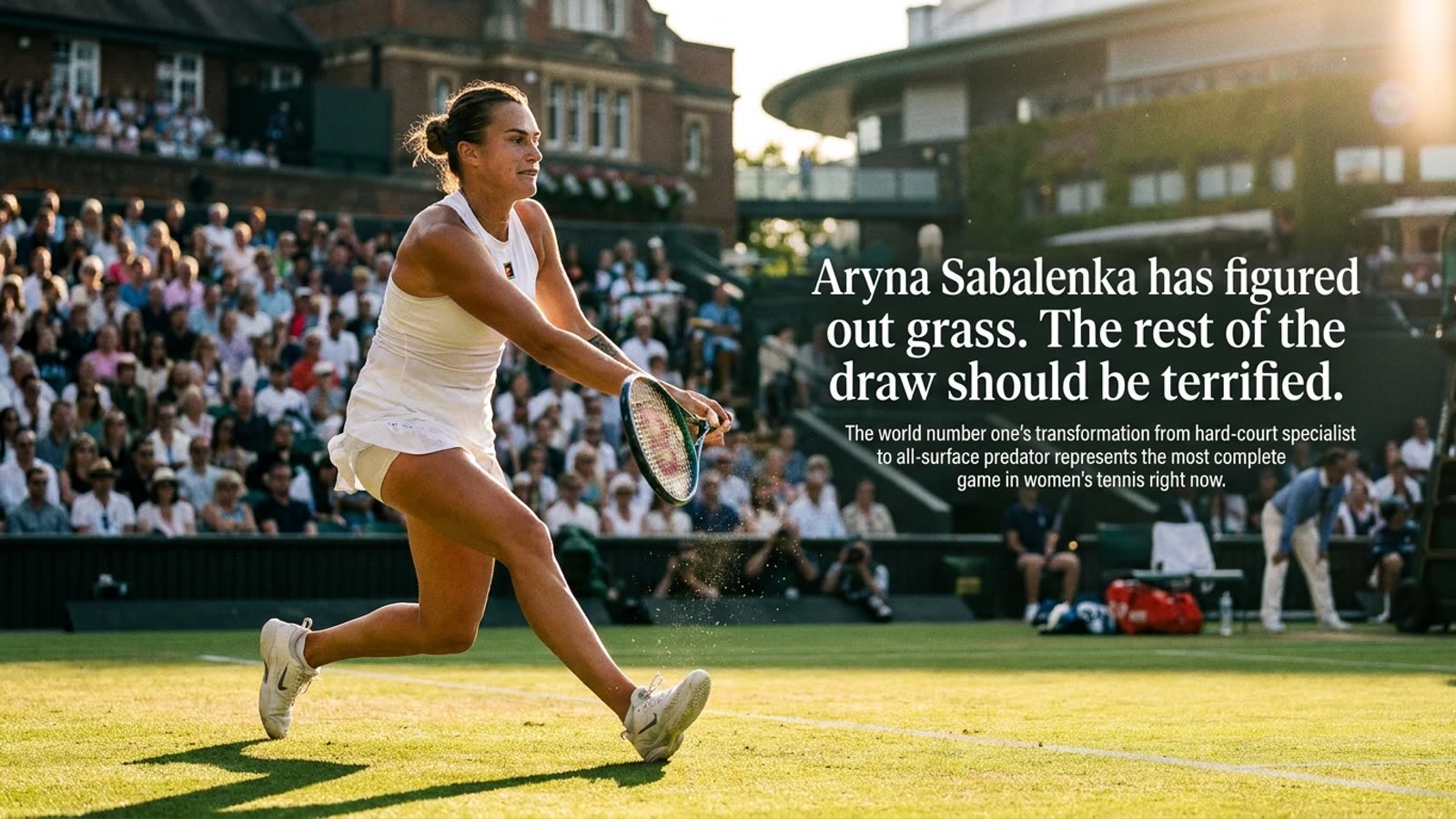
For years, Aryna Sabalenka's relationship with grass was like a power hitter trying to bunt: technically possible, aesthetically painful, strategically baffling. Her thunderous groundstrokes, designed to bludgeon opponents into submission on hard courts, would skid unpredictably off the slick surface. Her serve, a weapon everywhere else, became a liability when the low bounce exposed her second-delivery yips. Wimbledon felt like a tournament she endured rather than competed in.
That player no longer exists. The Sabalenka stalking the All England Club this fortnight has completed one of the most impressive surface adaptations in recent memory, adding slice, touch, and tactical patience to her nuclear arsenal without sacrificing any of the raw power that made her a two-time Australian Open champion.
The technical metamorphosis
Watch Sabalenka's footwork now compared to even two years ago, and you're seeing a different athlete. She's staying lower through her shots, taking the ball earlier, using the pace coming at her rather than trying to generate everything from scratch. Her slice backhand — once a defensive afterthought — has become a genuine weapon, skidding low and forcing opponents to hit up. Most crucially, she's learned when not to go for winners, constructing points with a patience that seemed antithetical to her game.
The serve, that former Achilles heel, has been rebuilt from the mental foundations up. The double-fault storms that once derailed her matches have calmed considerably. She's placing her first serve with more precision and hitting her second with more confidence, trusting the kick to keep her out of trouble.
Why the draw opens up
With Iga Swiatek's shock exit and Elena Rybakina's continued absence, the women's bracket has lost its two most obvious Sabalenka obstacles. Naomi Osaka, her next opponent, presents an intriguing stylistic matchup — two former world number ones with power games — but Osaka is still finding her footing after her return from maternity leave. Her grass-court results have been encouraging but inconsistent.
The path to a maiden Wimbledon title has never looked clearer for Sabalenka. She's playing the best grass-court tennis of her career at the precise moment when the usual suspects have faltered. Sometimes greatness is about timing as much as talent.
Our take
Sabalenka's evolution demolishes the lazy narrative that modern baseliners can't adapt to grass. She did the work — the technical adjustments, the mental recalibration, the humbling hours of practice on a surface that once humiliated her. Now she's the favorite at a tournament where she once looked like a tourist. That's not luck; that's craft.