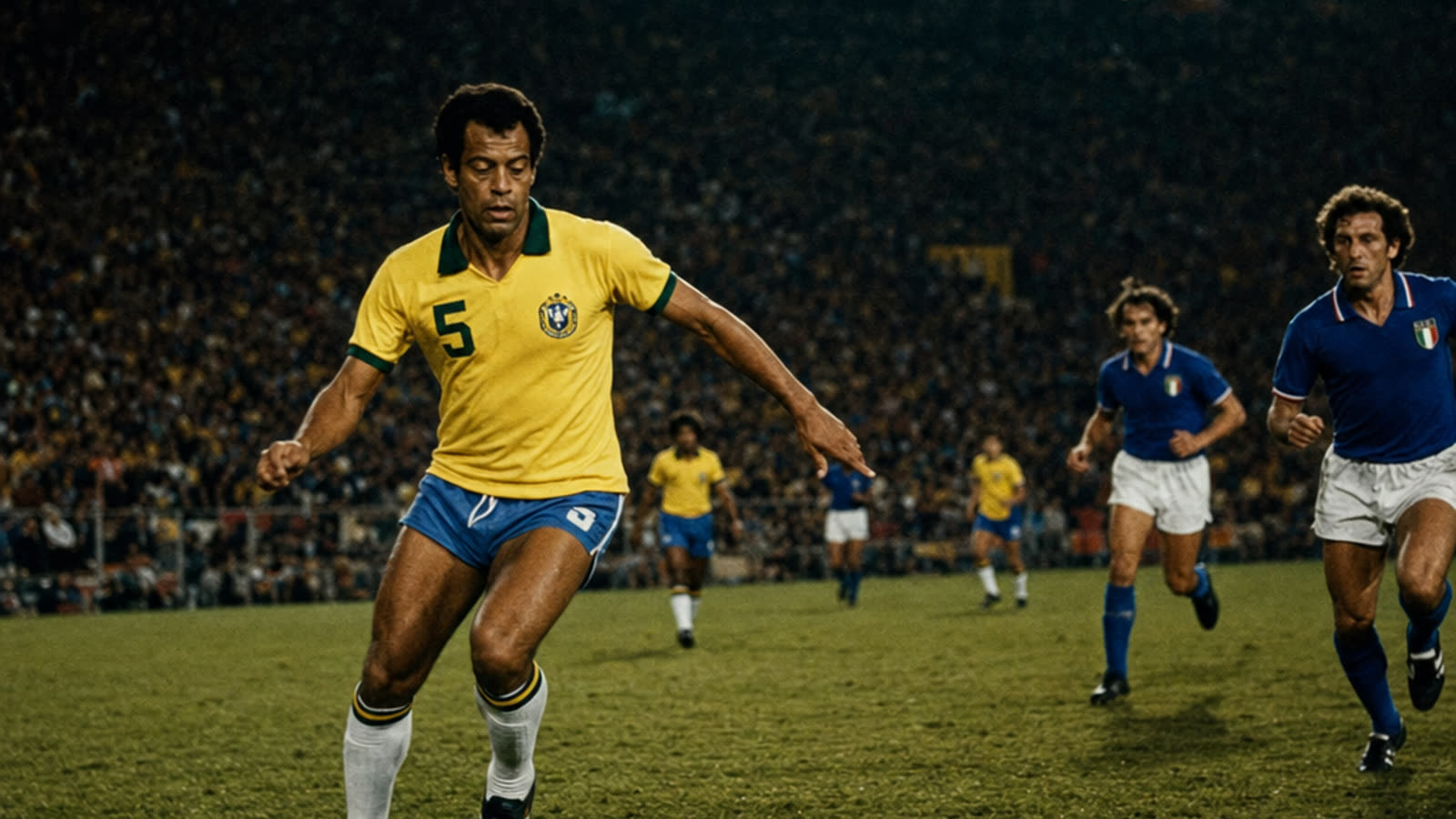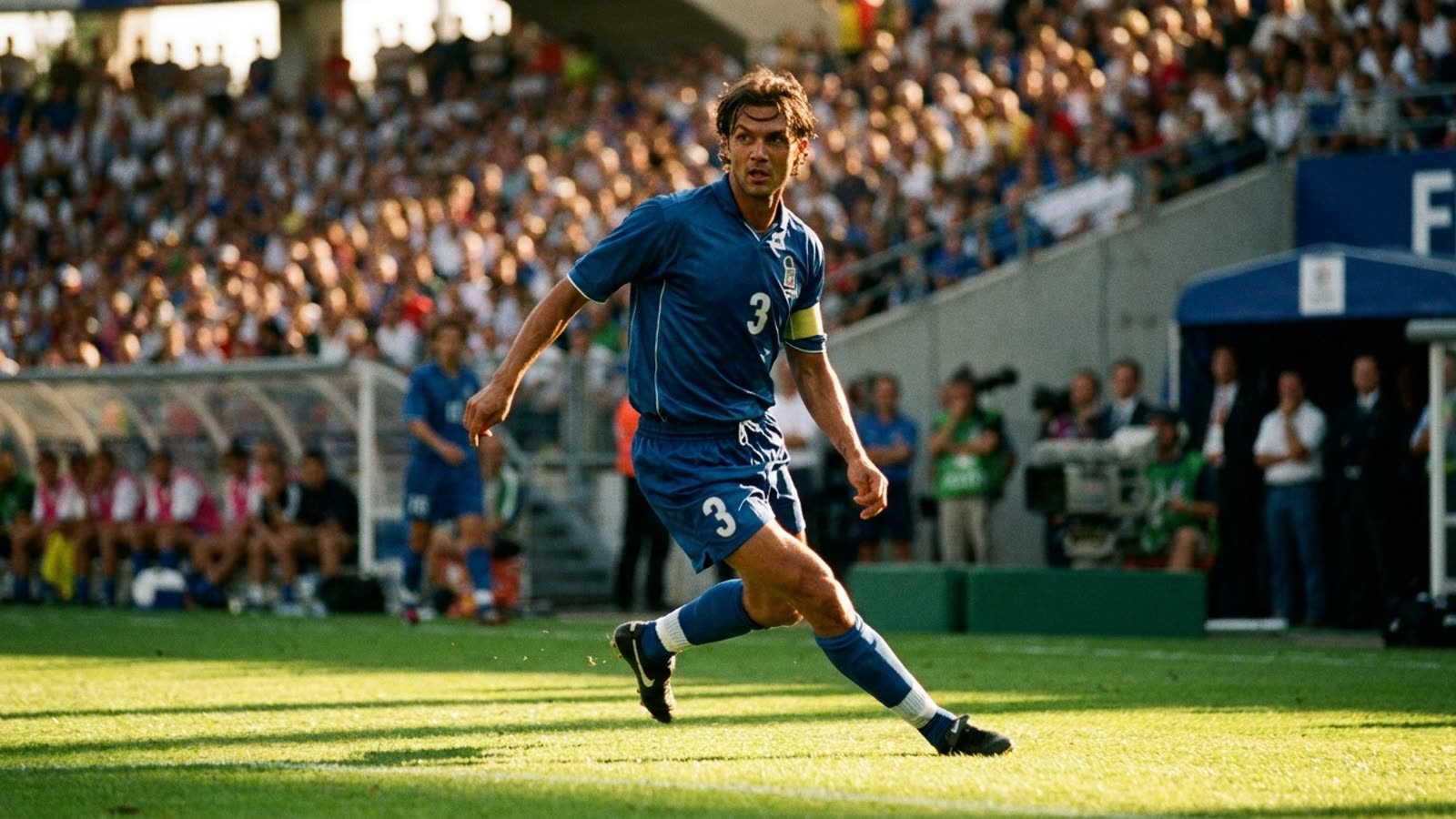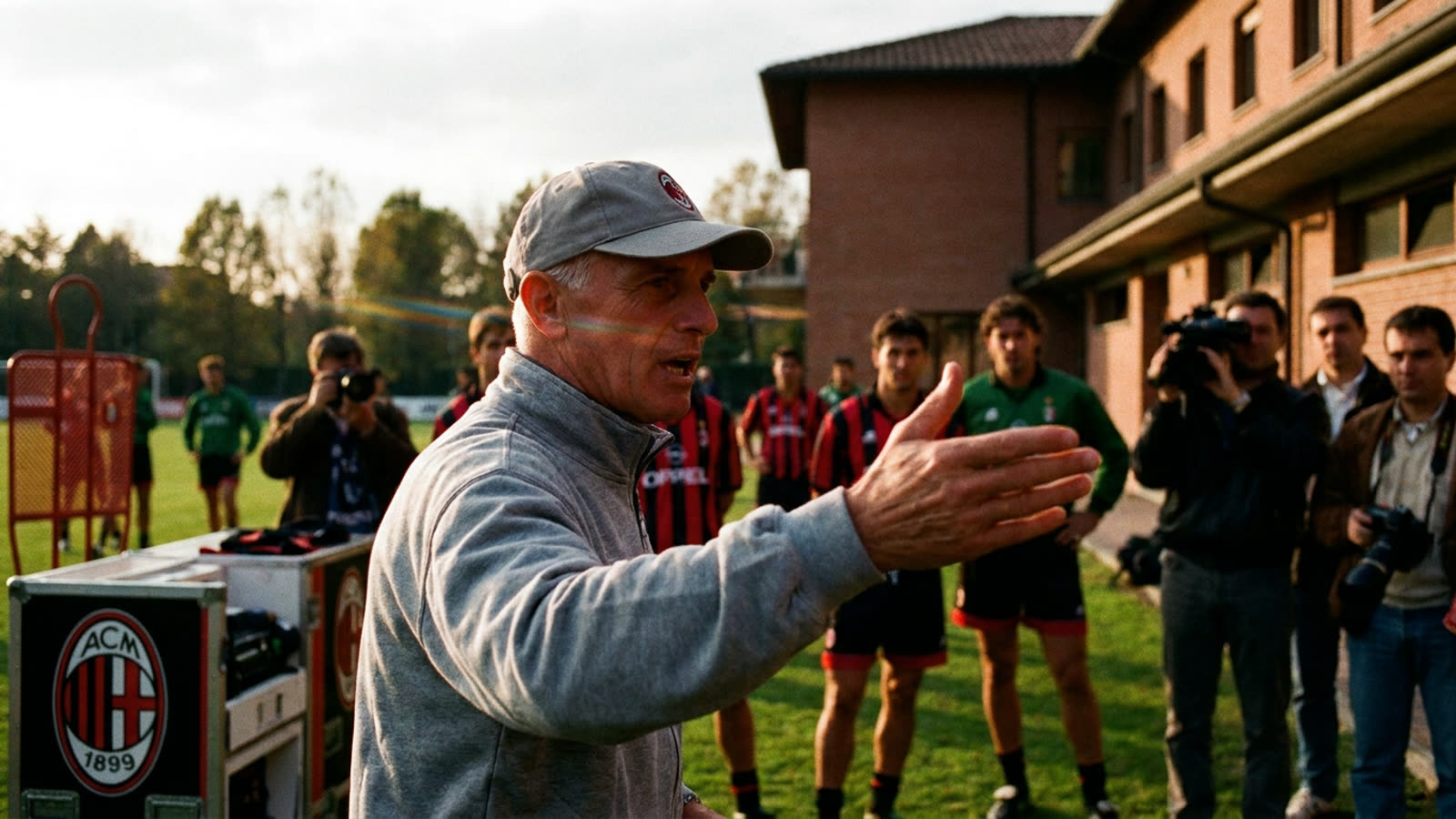
Before Arrigo Sacchi arrived at AC Milan in 1987, Italian football was a fortress sport. Teams defended deep, relied on a sweeper to mop up danger, and waited for moments of individual brilliance to decide matches. Sacchi, a man who had never played professional football, looked at this orthodoxy and saw cowardice dressed as pragmatism. Within two years, his Milan had won back-to-back European Cups and changed the sport forever.
The revolution was philosophical before it was tactical. Sacchi believed football should be about dominating space rather than reacting to opponents. His Milan pressed high and pressed together, the entire team moving as a single organism to suffocate possession. The back four held an impossibly high line, trusting the offside trap and each other. When they lost the ball, they hunted it immediately rather than retreating into shape. It was exhausting, exhilarating, and unprecedented at the highest level.
The system over the stars
Sacchi inherited Marco van Basten, Ruud Gullit, and Frank Rijkaard — three of the finest players of their generation. A lesser coach might have simply given them the ball and watched. Sacchi demanded they work like everyone else. Van Basten, one of the most elegant strikers ever to play, was required to press from the front. Gullit, capable of winning matches alone, had to maintain his position in the collective structure. The message was clear: the system made the players great, not the reverse.
This was heresy in a country that worshipped the fantasista, the creative genius who operated outside tactical constraints. Sacchi's response was that collective intelligence was more beautiful than individual improvisation. When Milan dismantled Real Madrid 5-0 in the 1989 European Cup semifinal, they did so through relentless coordinated movement, not moments of magic. The football world took notice.
The coaching tree that reshaped Europe
Sacchi's direct influence spread through the coaches who studied and adapted his methods. Fabio Capello, his assistant and successor at Milan, won four Serie A titles and a Champions League with a more pragmatic version of the pressing game. Giovanni Trapattoni, initially skeptical, incorporated elements into his later work. But the deeper impact came through osmosis: Sacchi proved that a coach with ideas could matter more than a squad with talent.
The lineage runs through Pep Guardiola's Barcelona and Manchester City, through Jürgen Klopp's Dortmund and Liverpool, through every modern team that treats losing possession as a trigger for immediate collective action rather than a signal to retreat. When you watch a high press executed perfectly today, you are watching Sacchi's ghost.
Our take
Sacchi's legacy is often reduced to tactics, but his real contribution was cultural. He demonstrated that football could be an intellectual pursuit, that a coach who had never kicked a ball professionally could reshape the sport through pure force of idea. The shoe salesman from Fusignano didn't just build a great team; he proved that the beautiful game could be beautiful in an entirely different way.