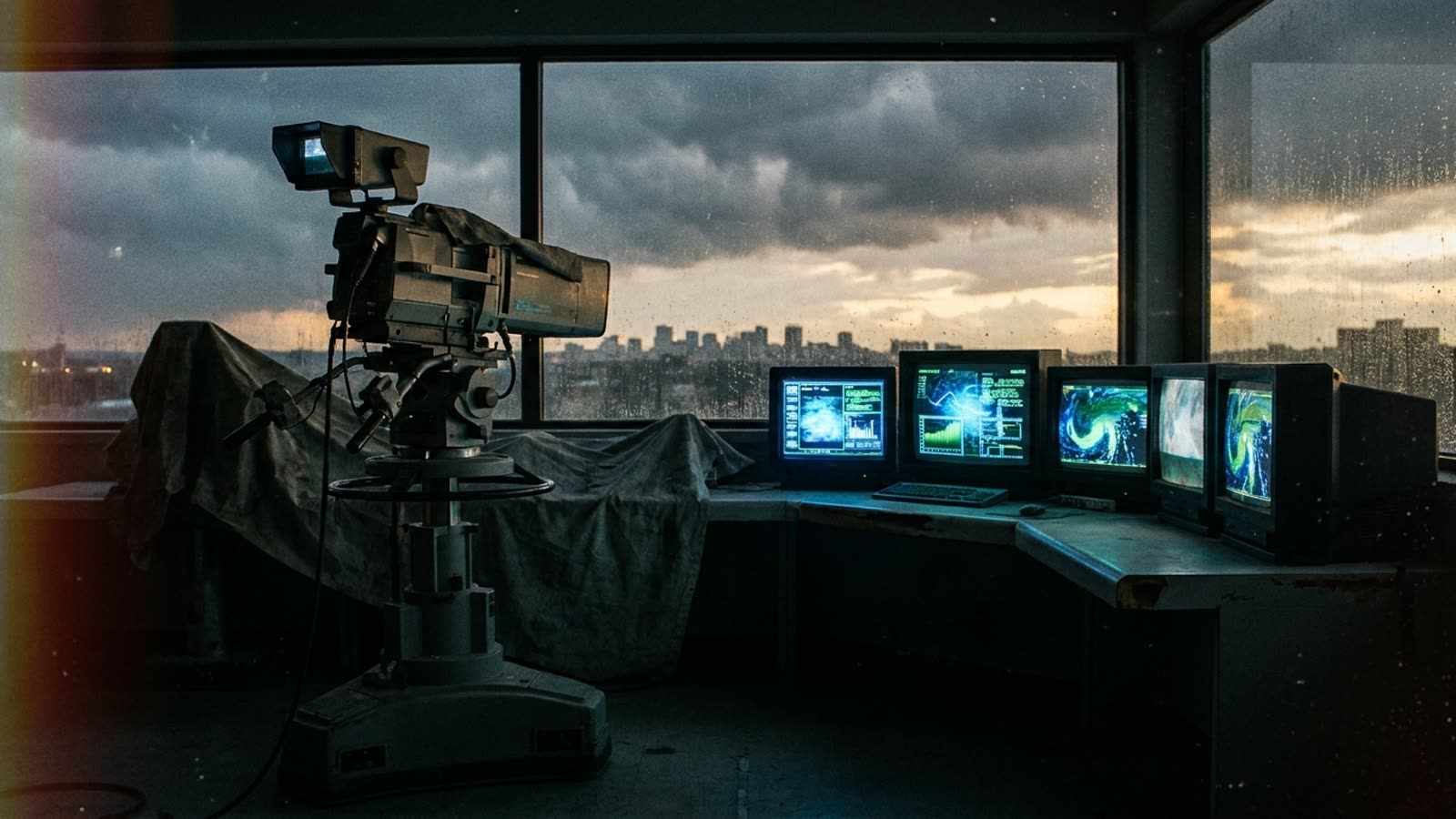
For decades, the local television meteorologist occupied a peculiar niche in American life: part scientist, part entertainer, part reassuring presence during tornado warnings. They pointed at green screens, drew cold fronts with dramatic swoops, and became minor celebrities in their markets. That era is ending, not with a bang but with a neural network.
The transformation began with forecasting itself. The European Centre for Medium-Range Weather Forecasts and similar institutions have spent years developing machine learning models that can predict atmospheric conditions with startling accuracy. Google's GraphCast, released in late 2023, demonstrated that AI could outperform traditional numerical weather prediction on many metrics while running in minutes rather than hours. These systems don't replace the physics-based models entirely—they're trained on their outputs—but they've proven that pattern recognition at scale can capture atmospheric dynamics that explicit equations sometimes miss.
From prediction to presentation
The more consequential shift is happening on-air. Several regional stations in the United States have begun experimenting with AI-generated weather segments, where synthetic voices narrate forecasts over automated graphics. The economics are brutal: a human meteorologist costs between seventy and two hundred thousand dollars annually in salary alone, plus benefits, while an AI system requires a fraction of that in licensing and compute. For struggling local stations, the math is persuasive.
The quality gap is narrowing faster than veterans of the profession expected. Modern text-to-speech systems can modulate tone for severe weather alerts, inject casual warmth for weekend forecasts, and maintain the kind of measured authority that viewers associate with trustworthy information. They don't stumble over words, don't call in sick, and don't demand raises. What they lack—for now—is the improvisational humanity that makes a good weathercaster memorable: the self-deprecating joke when yesterday's forecast went wrong, the genuine concern when a storm threatens familiar neighborhoods.
The trust question
Weather broadcasting has always been about more than data transmission. During hurricanes, floods, and tornado outbreaks, local meteorologists become crisis communicators. Viewers develop parasocial relationships with them over years, and that trust matters when someone needs to decide whether to evacuate. Whether an AI-generated voice can command the same authority during a genuine emergency remains untested at scale.
Some stations are hedging. They're using AI for routine forecasts—the pleasant Tuesday, the unremarkable weekend—while keeping human talent for severe weather coverage and the sweeps periods that drive advertising rates. It's a hybrid model that may prove unstable: once viewers grow accustomed to the synthetic version, the economic pressure to expand its role becomes difficult to resist.
Our take
The weathercaster's decline is a preview of what awaits many professions that combine technical knowledge with public communication. The AI doesn't need to be better than the best human practitioners; it needs to be good enough at a price point that makes the human economically irrational. Broadcast meteorology is discovering that "good enough" arrives faster than anyone planned for. The question isn't whether AI will take these jobs—it's whether the humans who remain will be the stars of severe weather coverage or the last holdouts of a dying format.