The transformation began not with a dramatic announcement but with a quiet confession at a Los Angeles bar. A mid-level television writer, three drinks in, admitted to using ChatGPT to generate dialogue variations for a procedural drama. The scripts were still hers, she insisted. The AI simply helped her iterate faster.
This anecdote, repeated with variations across the industry, captures how artificial intelligence is infiltrating one of entertainment's most protected creative guilds. The 2023 WGA strike secured contractual protections against AI replacing writers, but it could not legislate against writers choosing to use these tools themselves. What is emerging is something more nuanced than displacement: a fundamental restructuring of how narrative television gets made.
The Invisible Co-Author
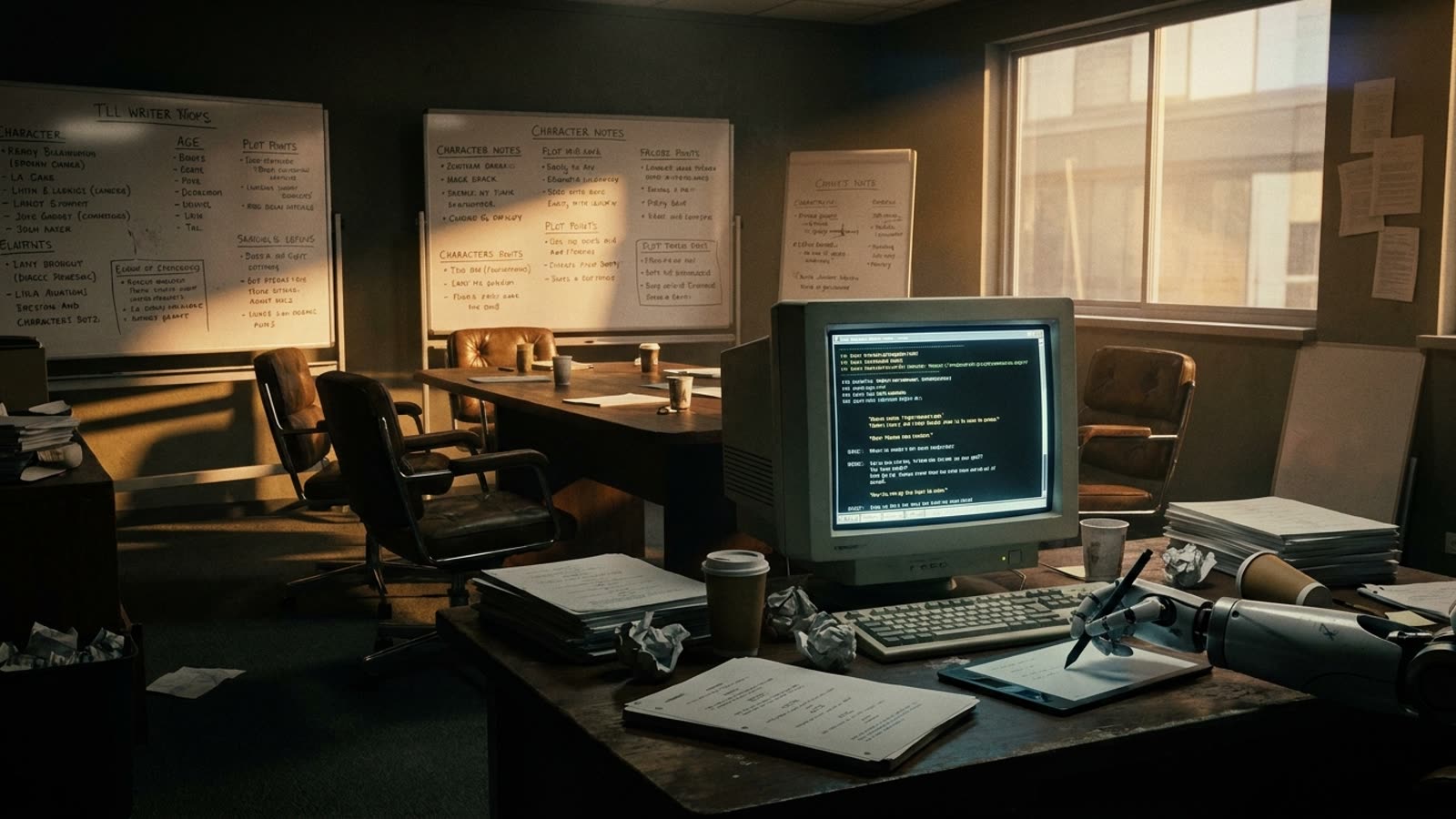
Screenwriting has always been collaborative, but the collaboration typically involved other humans arguing about character motivation over takeout containers. Now, an increasing number of writers report using large language models for tasks that once required junior staff or long solo hours: generating alternative scene endings, testing dialogue rhythm, researching period-accurate slang, or simply breaking through the paralysis of a blank page.
The economics are brutal and clarifying. A streaming series might employ half the writers of a network show from a decade ago. Shorter room durations mean less time for the organic development that produced television's golden age. AI fills the gap not by replacing creativity but by accelerating the mechanical work that surrounds it. One showrunner described it as having a research assistant who never sleeps, never complains, and occasionally produces something genuinely useful buried in pages of mediocrity.
What the Machine Cannot Do
The limitations remain substantial. Large language models excel at pattern recognition and recombination, which makes them serviceable at generating dialogue that sounds like television. They struggle with the deeper architecture of storytelling: the thematic coherence across a season, the character choices that feel both surprising and inevitable, the subtext that emerges from lived human experience.
A veteran comedy writer put it bluntly: AI can generate jokes, but it cannot tell you which joke belongs in this moment for this character in this episode. That judgment—the editorial intelligence that separates competent from memorable—remains stubbornly human. The technology is better understood as a sophisticated autocomplete than a creative partner, capable of suggesting where a sentence might go but incapable of knowing where it should go.
The Guild's Dilemma
Hollywood's labor structures were built around clearly delineated roles: writer, producer, director, each with contractual protections and credit arbitration procedures. AI dissolves these boundaries. When a showrunner uses a language model to polish dialogue at midnight, is that writing? When an AI generates a story outline that a human then develops, who authored the episode?
The WGA's current framework treats AI as a tool that cannot receive credit and cannot be credited as source material. But enforcement depends on disclosure, and disclosure depends on honesty in an industry where credit determines compensation and career trajectory. The incentives for quiet adoption are considerable.
Our take
The screenwriting profession is not being replaced; it is being compressed. The middle tier—the staff writer jobs that once trained future showrunners—faces the greatest pressure, squeezed between AI tools that can perform entry-level tasks and senior writers who now have less need for human assistance. What remains will likely be smaller, more elite, and more reliant on the ineffable qualities that machines cannot replicate: voice, vision, and the courage to write something the algorithm would never suggest. Television may get more efficient. Whether it gets better is a question the technology cannot answer.