Somewhere in a flight simulator, a young trainee is receiving instruction from a pilot who died decades ago. The voice is warm, authoritative, unmistakably human—and entirely synthetic. Welcome to the uncanny frontier where artificial intelligence meets memorial culture, and the implications extend far beyond aviation nostalgia.
Defense technology firms and aviation heritage organizations have begun deploying AI voice-cloning systems trained on archival recordings of deceased pilots. The stated purpose is educational: preserving institutional knowledge, honoring service members, creating immersive training environments. The unstated reality is that we have crossed a threshold that ethicists have long warned about, with remarkably little public debate.
The technology behind the resurrection
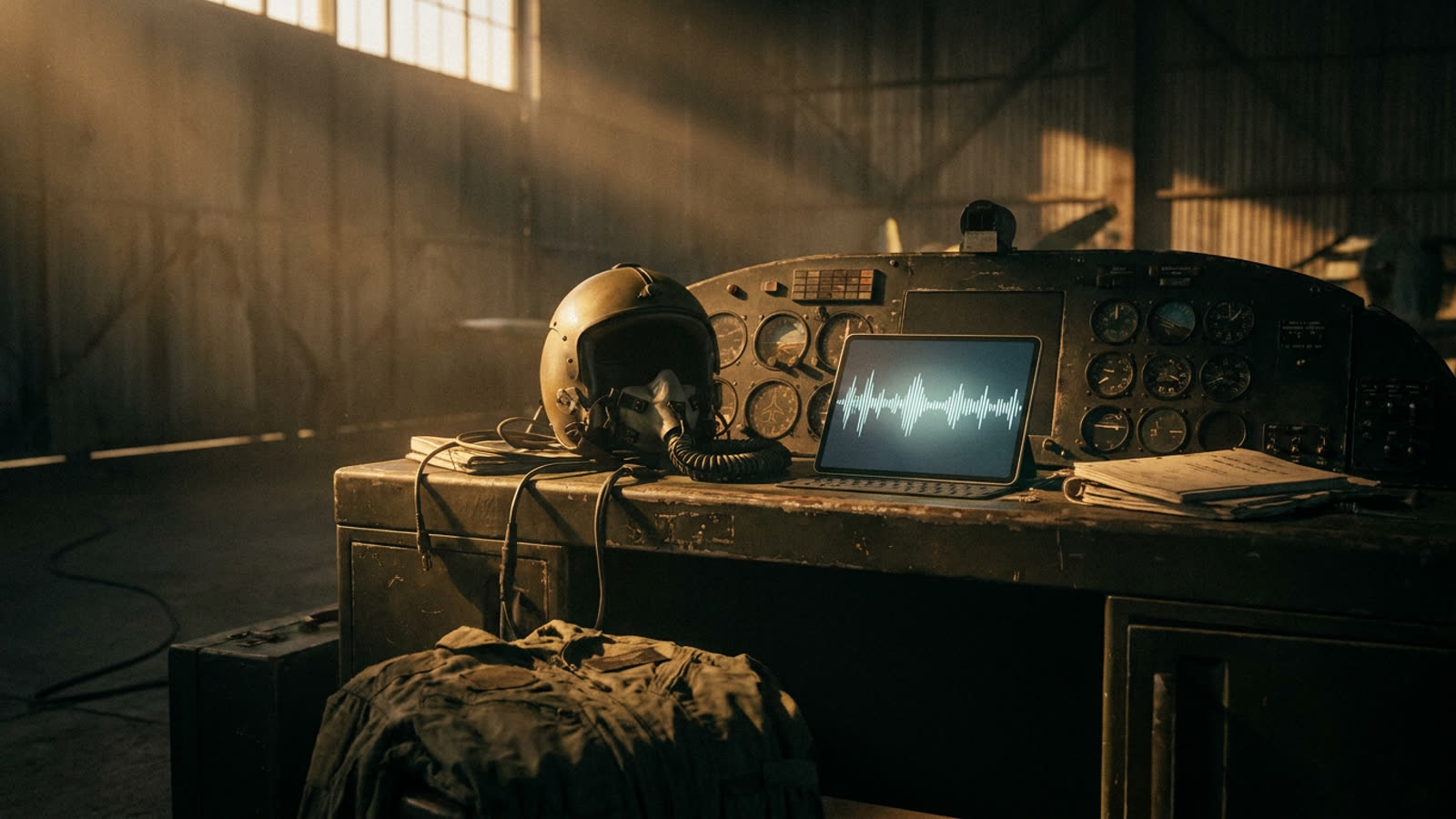
Modern voice synthesis requires surprisingly little source material. A few hours of clear audio—cockpit recordings, interviews, public speeches—can now generate a convincing vocal replica capable of saying anything. The AI learns not just timbre and accent but cadence, breath patterns, the micro-hesitations that make speech feel alive. When applied to historical figures, the result is disorienting: you are hearing someone speak who cannot possibly be speaking.
The aviation sector has particular advantages here. Military and commercial pilots generate extensive voice records by the nature of their work. Black box recordings, radio communications, debriefing tapes—all become training data for algorithms that promise to keep expertise alive indefinitely.
Consent from the grave
The central ethical problem is obvious but apparently insufficient to slow deployment: dead people cannot consent. Families may approve, institutions may authorize, but the individual whose voice is being puppeteered has no say. This matters because voice is identity in ways we are only beginning to understand legally. Several jurisdictions now recognize voice as a protected aspect of personality rights, but posthumous protections remain patchwork.
Proponents argue the use is honorific, educational, respectful. Critics note that the same technology enabling a museum exhibit can produce propaganda, misinformation, or commercial exploitation. Once a voice model exists, controlling its use becomes extraordinarily difficult.
Our take
There is something genuinely moving about preserving the wisdom of those who served, and something genuinely troubling about doing so without their blessing. The aviation industry's embrace of AI voice resurrection is a preview of broader societal choices we will face as the technology becomes trivially accessible. The question is not whether we can bring back the dead—we manifestly can, in this limited sense—but whether we should, and who gets to decide. Right now, the answer appears to be: whoever has the recordings.