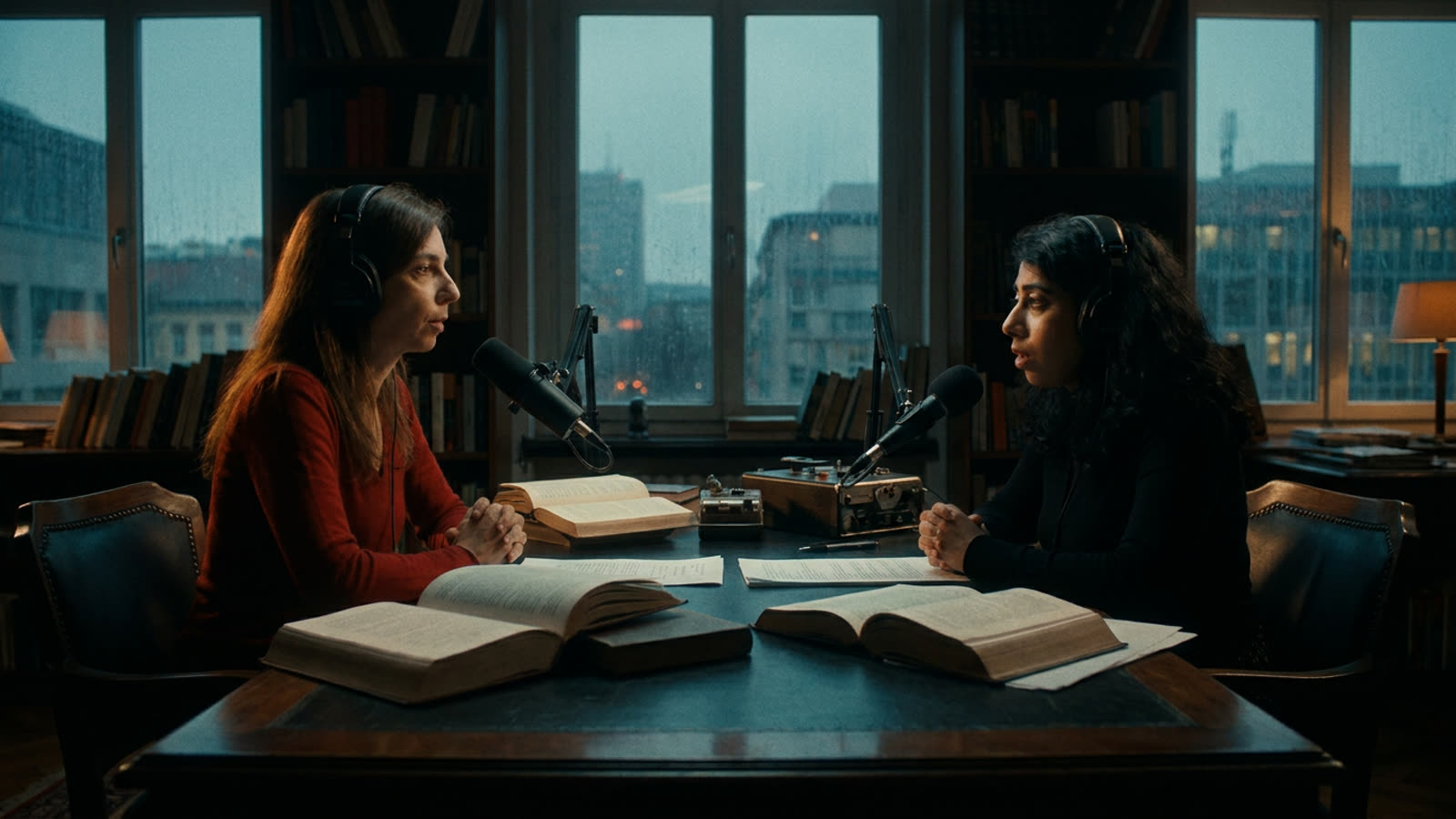
For most of the twentieth century, literary translation was a quiet, underpaid, deeply respected corner of the publishing world. Translators were invisible artisans, their names in small type, their work essential to the circulation of ideas across languages. Now they find themselves at the center of an uncomfortable question: if a machine can produce grammatically flawless prose in seconds, what exactly are human translators selling?
The answer, it turns out, reveals something important about both the capabilities and the limits of contemporary AI.
The fluency trap
Modern neural machine translation systems are remarkably good at producing smooth, readable output. They have absorbed billions of sentence pairs and learned the statistical regularities that make prose feel natural. A passage of Flaubert fed through a leading translation engine emerges in English that sounds, at first glance, like competent professional work.
But literary translators have long known that fluency is a trap. The goal is not to produce text that reads as if it were originally written in the target language—that would erase the foreignness that makes translated literature valuable. The goal is to create a controlled dissonance, a text that carries the rhythms and textures of the source while remaining comprehensible to new readers. This requires judgment calls that are aesthetic, cultural, and sometimes political. Should a nineteenth-century Russian aristocrat sound formal in English, or would that impose Victorian stuffiness on a character who was casual in his own context? There is no correct answer, only interpretive choices.
AI systems optimize for fluency because that is what their training rewards. They smooth away the productive friction that distinguishes a translation from a paraphrase.
What machines cannot parse
Consider the problem of register. In Japanese, the choice between formal and informal verb endings encodes social relationships that English marks differently—through word choice, sentence structure, tone. A skilled translator reads the original, understands the social dynamics, and finds English equivalents that preserve the emotional texture. This is not a lookup problem. It requires understanding what the author was trying to do, which requires understanding the culture the author was writing within and against.
Or consider humor. A pun in German that hinges on the double meaning of a word cannot be translated; it can only be replaced with a different joke that produces a similar effect in the new language. This demands creativity, not pattern matching. The translator must invent something that did not exist in the source text while remaining faithful to its spirit.
These are not edge cases. They are the core of what literary translation involves.
The emerging division of labor
Some translators have begun using AI as a first-draft tool, generating raw output that they then substantially revise. This can save time on straightforward passages, freeing attention for the difficult ones. Others refuse to engage with machine output at all, arguing that it contaminates their interpretive process with someone else's (or something else's) choices.
Publishers, meanwhile, face economic pressure. If AI can produce passable translations at near-zero marginal cost, why pay humans? The answer depends on what readers value. For technical documents, contracts, and news articles, machine translation is often good enough. For literature, the question is whether readers can tell the difference—and whether they care.
Early evidence suggests they can and do. Translations that win prizes and build reputations still come from humans who spend months inhabiting a text. The market for cheap, fast, adequate translation is growing, but it is a different market from the one that sustains literary culture.
Our take
AI has clarified something that was always true but easy to forget: translation is not a technical problem with a correct solution. It is an interpretive act, closer to performance than to transcription. The best translators are not word-swappers but readers of unusual depth, people who understand two cultures well enough to build bridges between them. Machines can now handle the mechanical parts of that work, which means the human contribution must become more explicitly creative, more visibly authorial. That is not a crisis. It is a long-overdue recognition of what the job always required.