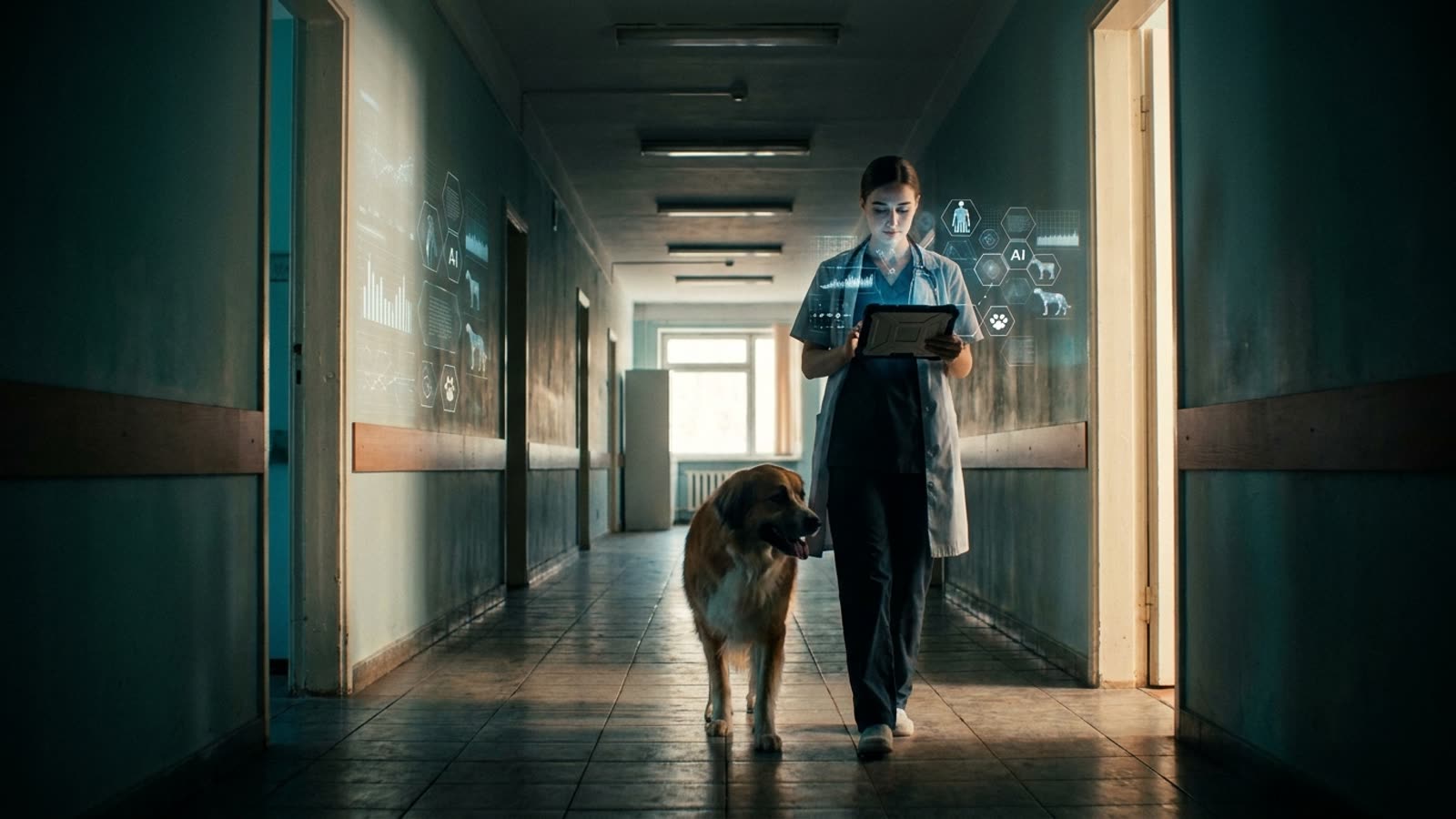
The veterinarian squinting at your cat's chest X-ray is increasingly not alone. Behind the screen, pattern-recognition systems trained on millions of animal radiographs are flagging masses, measuring heart silhouettes, and detecting the subtle asymmetries that human eyes might miss after a twelve-hour shift. This is not a future scenario. It is the present state of veterinary radiology, and it represents one of the most complete integrations of AI into a traditional profession that exists today.
Veterinary medicine has become an unlikely proving ground for diagnostic AI, and the reasons are instructive. Unlike human healthcare, veterinary practice operates with fewer regulatory barriers, less litigation anxiety, and patients who cannot describe their symptoms. A dog cannot tell you where it hurts. A horse cannot explain that the lameness started three weeks ago. This communication gap makes objective diagnostic tools not merely useful but essential—and it has made veterinarians surprisingly receptive to algorithmic assistance.
The quiet revolution in imaging
Radiology was the first veterinary specialty to embrace AI at scale, and it remains the most transformed. Several commercial systems now analyze companion animal X-rays and flag abnormalities within seconds of image capture. The technology excels at tasks that demand consistency: measuring vertebral heart scores, identifying intervertebral disc disease, detecting early signs of hip dysplasia. Studies suggest these systems match or exceed the accuracy of board-certified veterinary radiologists for many common conditions.
The economics are compelling. A general practitioner in a rural clinic can now access specialist-level radiographic interpretation without the delay and expense of sending images to a referral center. Emergency clinics operating at two in the morning can get immediate second opinions. The democratization of expertise has genuine welfare implications for animals whose owners cannot afford specialist consultations.
But imaging is only the beginning. Predictive analytics are now entering clinical practice, with systems that analyze routine bloodwork to forecast kidney disease, diabetes, or hepatic dysfunction months before conventional markers would trigger concern. The proposition is seductive: catch disease earlier, intervene sooner, extend healthy lifespans.
What the algorithm cannot see
The integration has not been frictionless. Veterinary AI systems inherit the biases of their training data, which skews heavily toward certain breeds, species, and populations. A system trained predominantly on Labrador retrievers may perform poorly on sighthounds, whose unique thoracic anatomy confounds standard cardiac measurements. Exotic species—birds, reptiles, pocket pets—remain largely outside the algorithmic gaze.
More fundamentally, diagnostic AI excels at pattern recognition but struggles with the contextual judgment that defines good medicine. The system that flags a suspicious pulmonary nodule cannot weigh whether aggressive workup is appropriate for a seventeen-year-old cat whose owner is already navigating end-of-life decisions. It cannot read the room when a family is grieving, or recognize when the most therapeutic intervention is simply listening.
Veterinarians report a subtle but persistent tension: the AI provides answers, but medicine often requires wisdom about which questions to ask. The technology is superb at finding things. It is less helpful at deciding what to do about them.
Our take
Veterinary medicine's embrace of AI offers a preview of where human healthcare is heading, with fewer of the regulatory and cultural obstacles that slow adoption in our own clinics. The results are genuinely promising—better diagnostics, broader access, earlier intervention. But they also illuminate a truth that technologists sometimes neglect: medicine is not merely a pattern-matching problem. The best veterinarians, like the best physicians, integrate technical knowledge with emotional intelligence, clinical experience with ethical judgment. AI can augment these capacities. It cannot replace them. The animals in our care deserve both the algorithm's precision and the clinician's wisdom. The challenge is ensuring they get both.