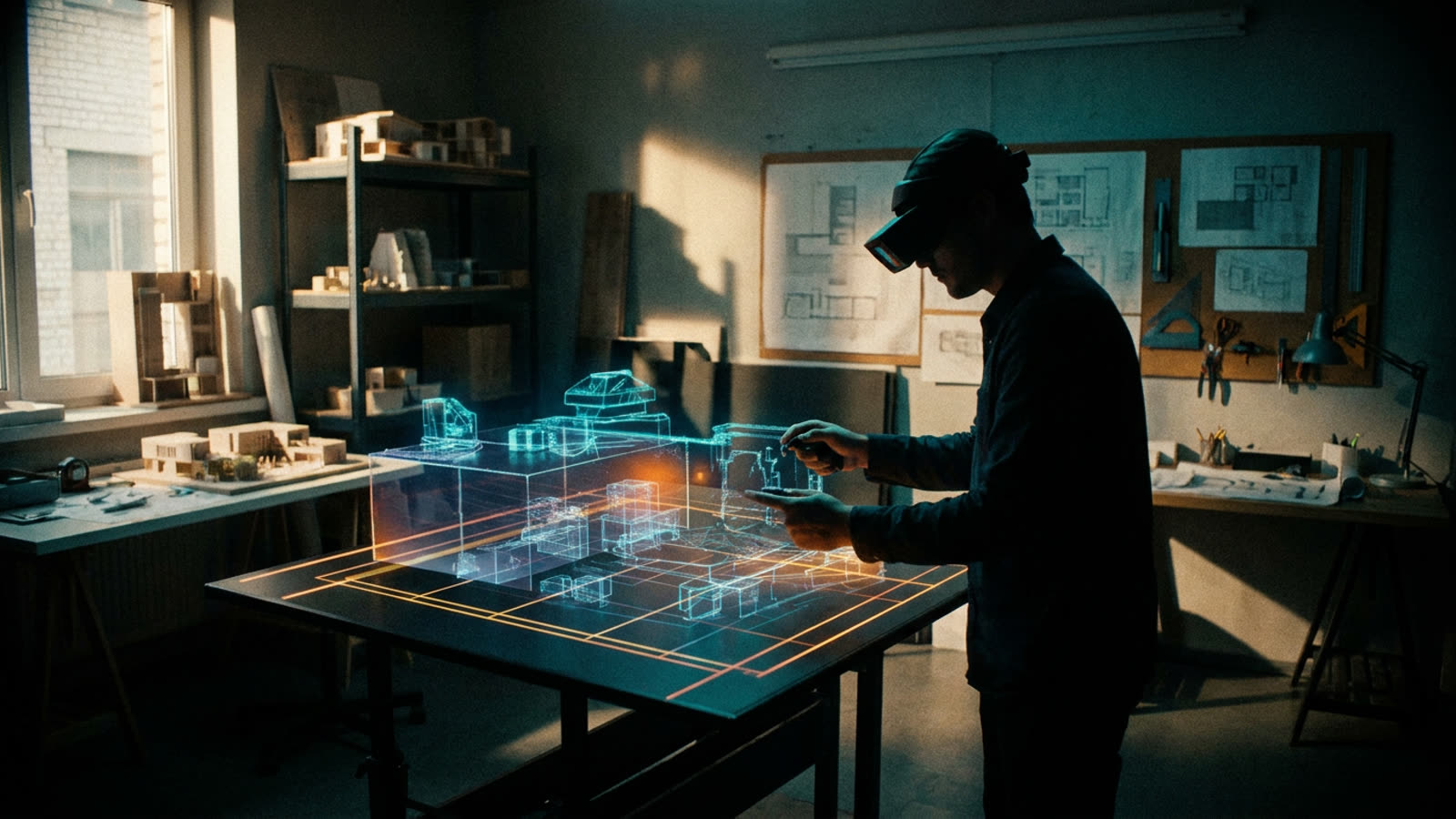
The architectural profession has always been caught between art and engineering, between vision and the grinding reality of regulations, budgets, and physics. Now artificial intelligence is inserting itself precisely into that tension, automating the technical drudgery while leaving the creative questions more exposed than ever.
For decades, the daily work of architecture has been dominated by tasks that require expertise but not inspiration: checking that window placements comply with egress codes, calculating structural loads, ensuring accessibility requirements are met, coordinating the thousands of specifications that turn a concept into a buildable reality. These are the hours that consume junior architects and drain senior ones. They are also, it turns out, exactly the kind of pattern-matching problems that machine learning handles well.
The compliance revolution
The most immediate transformation is happening in regulatory compliance. Building codes are essentially massive rule sets—if-then statements about setbacks, fire ratings, ventilation requirements, and accessibility standards. Software tools now parse architectural drawings and flag violations automatically, work that previously required associates to spend days cross-referencing code books. Firms report that code review tasks that once took forty hours can now be completed in under four, with the AI catching errors that human reviewers routinely missed.
This is not theoretical. Major firms have integrated these tools into their standard workflows, and the economics are stark. A mid-size practice might employ two or three people whose primary job was code compliance; that work now requires perhaps half a person's attention, mostly reviewing the AI's output rather than doing the underlying analysis.
The design feedback loop
More interesting is what happens earlier in the process. Generative design tools can now produce hundreds of building massing options that satisfy a given set of constraints—site boundaries, floor area requirements, solar exposure targets, structural efficiency parameters. The architect's role shifts from generating options to curating them, from asking "what could go here" to asking "which of these possibilities best serves the client's actual needs."
This changes the nature of design conversations. When a client asks whether the building could be taller or the lobby larger, the answer used to require days of study. Now it can be explored in real time, with the AI instantly showing the cascade of consequences: how the change affects parking requirements, shadow impacts on neighboring properties, structural costs, and energy performance. The architect becomes less a producer of drawings and more an interpreter of tradeoffs.
What remains irreducibly human
The profession's anxiety about these tools often misses the point. The fear is replacement; the reality is reallocation. What AI cannot do—and shows no sign of learning to do—is understand why a client wants what they want, navigate the politics of a planning board, sense that a community meeting is going poorly, or recognize that a building's relationship to its street matters more than its energy efficiency score.
Architecture has always been a service profession dressed in artistic clothing. The technical work that AI absorbs was never the source of the profession's value; it was the tax paid for the privilege of shaping the built environment. Removing that tax does not diminish architecture. It clarifies it.
Our take
The architects who will struggle are those who defined their expertise by mastery of codes and coordination—valuable skills, but now commoditized. The architects who will thrive are those who always understood that their real job was translating human needs into physical form, a task that requires judgment, empathy, and the ability to hold competing values in productive tension. AI is not coming for architecture. It is coming for the parts of architecture that were never really architecture at all.