The revolution in medical diagnosis arrived without fanfare. No ribbon-cutting ceremonies, no breathless press conferences—just a gradual accumulation of FDA clearances, hospital procurement decisions, and radiologists quietly incorporating algorithmic second opinions into their morning workflows. Today, artificial intelligence reads more medical images than most people realize, and the implications for how we detect disease are profound.
The transformation began in earnest with diabetic retinopathy screening. The condition, which damages blood vessels in the retina and can lead to blindness, affects tens of millions of diabetics worldwide. Traditional screening requires an ophthalmologist to examine retinal photographs—a bottleneck that left many patients, particularly in underserved areas, unscreened. AI systems trained on millions of retinal images now perform this task with accuracy matching or exceeding human specialists, operating in primary care clinics where no eye doctor has ever set foot.
The radiology suite's new resident
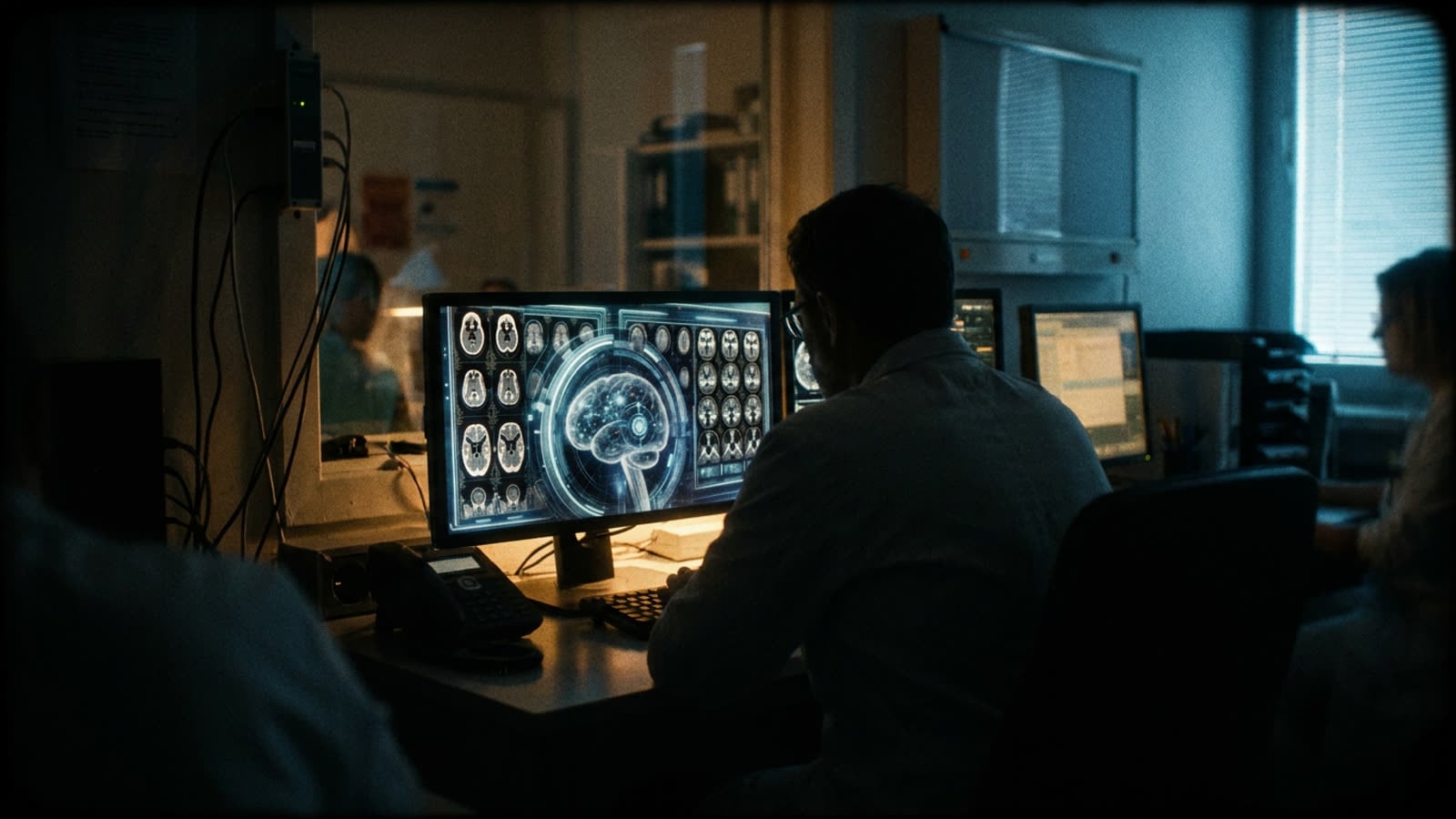
Radiology proved fertile ground for AI adoption because the work is fundamentally visual pattern recognition—exactly what deep learning excels at. Mammography screening, chest X-ray interpretation, and CT scan analysis all now benefit from algorithmic assistance. The systems don't replace radiologists; they function as tireless junior colleagues who never miss a shift, flagging suspicious findings for human review and catching abnormalities that might otherwise slip past fatigued eyes at the end of a long day.
The economics are compelling. A radiologist's attention is expensive and finite. An AI system can pre-screen thousands of images, prioritizing urgent cases and reducing the cognitive load on human physicians. In stroke diagnosis, where every minute of delayed treatment destroys brain tissue, algorithms that rapidly identify clots in CT angiograms have demonstrably improved patient outcomes by accelerating the path to intervention.
Pathology's digital transformation
Less visible but equally significant is AI's penetration into pathology, the medical specialty that examines tissue samples under microscopes. Digitizing glass slides into high-resolution images opened the door for machine learning systems trained to identify cancer cells, grade tumor aggressiveness, and detect subtle patterns invisible to the human eye. Some algorithms now predict which genetic mutations a tumor likely harbors based purely on its visual appearance—information that traditionally required expensive molecular testing.
The implications extend beyond diagnosis. AI systems analyzing pathology slides have identified previously unknown prognostic markers, visual features that correlate with patient survival but that pathologists had never thought to look for. The algorithms, unburdened by textbook conventions, sometimes discover what humans overlooked.
The limits of the machine eye
Yet the technology's boundaries remain real. AI diagnostic systems are narrow specialists, trained on specific imaging modalities for specific conditions. They cannot integrate a patient's history, symptoms, and social context the way a physician does. They struggle with edge cases that fall outside their training data, and they can confidently produce wrong answers when presented with images that differ subtly from what they learned on.
Liability and trust present ongoing challenges. When an AI system misses a cancer, who bears responsibility—the algorithm's developer, the hospital that deployed it, or the physician who relied on it? Regulatory frameworks are still catching up, and the black-box nature of deep learning makes it difficult to explain why a system reached a particular conclusion.
Our take
The quiet integration of AI into medical diagnosis represents one of the technology's most consequential real-world applications—far more significant, for now, than chatbots or image generators. These systems are already saving lives by catching diseases earlier and extending specialist expertise to places it could never physically reach. The hype cycle will eventually move on to the next shiny object, but in hospital basements and clinic back offices, the algorithmic diagnostician has become a permanent fixture of modern medicine. The interesting questions are no longer whether AI belongs in healthcare, but how we train physicians to work alongside it and how we ensure its benefits reach everyone, not just patients at well-resourced institutions.