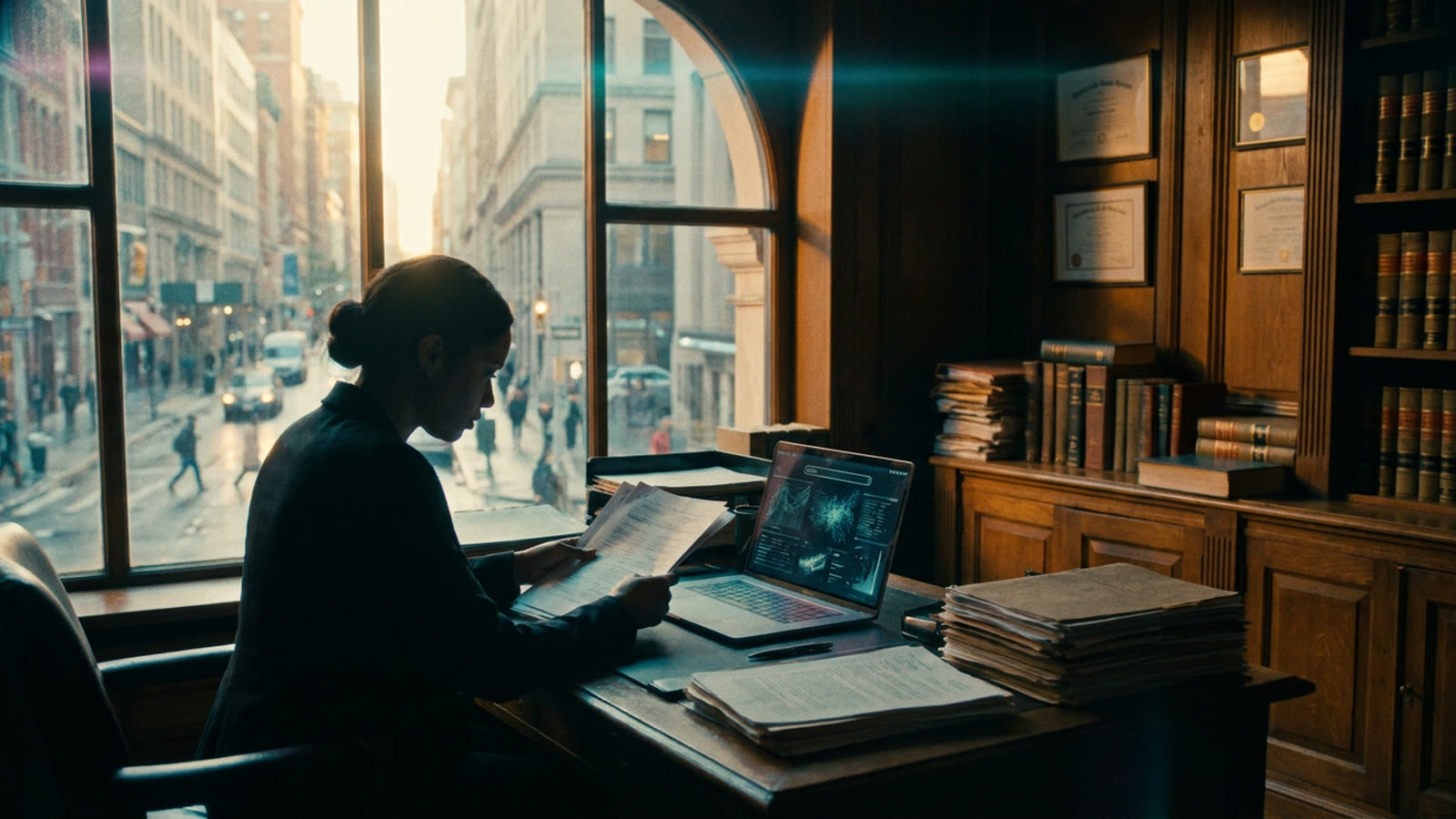
The paralegal profession was built on a particular kind of drudgery: reading thousands of pages of discovery documents, flagging relevant passages, pulling case citations from vast databases, and assembling the raw material that attorneys would later shape into arguments. It was work that demanded patience, attention to detail, and a high tolerance for tedium. It was also, in retrospect, work that machines were always going to learn to do.
What nobody quite predicted was what would happen to the humans afterward.
The vanishing middle
Large law firms began adopting AI-powered document review tools more than a decade ago, initially for e-discovery in massive litigation cases. The early systems were crude—keyword searches dressed up with machine learning flourishes—but they established a principle: software could process documents faster and cheaper than humans. Each generation of tools grew more sophisticated, moving from simple pattern matching to genuine comprehension of legal concepts and arguments.
The paralegals who survived this transition were not the ones who read fastest. They were the ones who could evaluate what the machines produced. A modern paralegal at a major firm might oversee AI systems that have already reviewed fifty thousand documents, flagging the three hundred that require human attention. The job has shifted from production to quality control, from research to curation.
This is not, it turns out, a lesser job. It is a different one, requiring skills that were always present in the best paralegals but rarely valued: the ability to spot when an AI system has misunderstood context, the judgment to know when a technically relevant document is practically useless, the experience to recognize when a pattern of results suggests the machine is missing something important.
The knowledge premium
Something counterintuitive has emerged from this transformation. As AI handles more of the mechanical work, the paralegals who thrive are those with the deepest substantive knowledge—not of software, but of law. Understanding why a particular case matters, recognizing when a contract clause has unusual implications, sensing when a witness statement contradicts the documentary record: these require the kind of contextual judgment that comes from years of immersion in legal work.
The profession has bifurcated. Entry-level positions have contracted sharply; there is simply less need for humans to perform basic document review. But experienced paralegals with specialized expertise—in patent litigation, securities regulation, complex commercial disputes—find themselves more valuable than ever. They are the quality layer between raw AI output and attorney work product, and that layer has become load-bearing.
Firms have begun compensating accordingly. The salary gap between junior and senior paralegals has widened considerably, reflecting a market that prizes judgment over throughput.
The editing metaphor
Paralegals themselves describe the shift in revealing terms. The word that recurs most often is 'editing.' Where they once produced first drafts of research memos, they now edit drafts produced by AI systems. Where they once assembled document sets, they now refine and correct machine-assembled collections. The intellectual work has moved from creation to revision, from generation to discrimination.
This is not a demotion. Editing, in any creative field, is where quality lives. The paralegal who can look at an AI-generated summary of a deposition and immediately identify what it missed—the evasive answer, the inconsistency with prior testimony, the legally significant pause—is performing work that no current system can replicate. They are applying decades of accumulated pattern recognition to evaluate the pattern recognition of machines.
Our take
The paralegal transformation offers a preview of what AI disruption actually looks like in knowledge work: not mass unemployment, but radical restructuring. The profession has fewer people doing more valuable work, with the premium shifting decisively from speed to judgment. This is probably the template for dozens of other fields—accounting, journalism, medicine—where AI can handle production but humans must still handle evaluation. The paralegals who adapted earliest understood something important: in a world of infinite machine output, the scarce resource is the ability to know what is good.