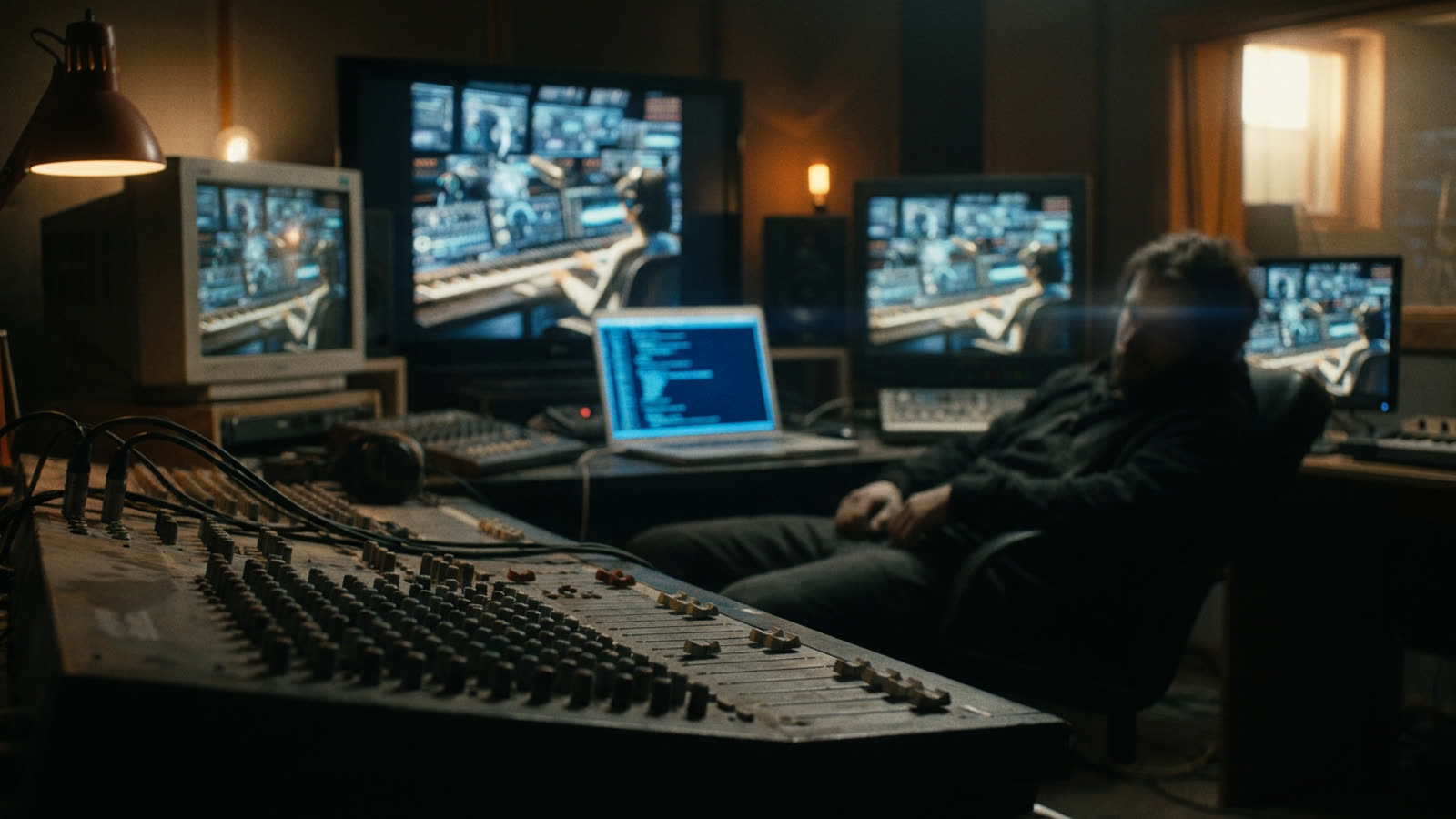
The professional recording studio, once the gatekeeper of commercial music quality, is facing an existential reckoning. Not from streaming royalties or piracy, but from software that can master a track in seconds, generate session musicians on demand, and isolate vocals from decades-old recordings with forensic precision. The transformation is not theoretical. It is happening now, and it is rewriting the economics of an industry that has barely recovered from the last digital revolution.
The collapse began quietly. Pro Tools, the industry-standard digital audio workstation, introduced AI-assisted mixing tools that could balance levels, apply compression, and suggest EQ curves based on genre conventions. iZotope's Neutron and Ozone plugins began offering one-click mastering that rivaled the work of mid-tier engineers. Then came tools like LANDR, which automated the entire mastering process for a fraction of the cost of a human session. These were dismissed as toys for amateurs. They were not toys. They were the opening salvo.
The human bottleneck is gone
Traditional music production required layers of specialized labor: tracking engineers to capture performances, mixing engineers to balance and shape the sound, mastering engineers to prepare the final product for distribution. Each layer added cost and time. A professional mix could take days and cost thousands of dollars. Mastering added another week and another bill. The result was a natural barrier to entry that protected incumbents and ensured that only well-funded projects reached commercial quality.
AI has removed that barrier entirely. Modern tools can now isolate individual instruments from a stereo mix, a task that was once impossible without access to the original multitrack session. Vocal removal, once the domain of expensive software and skilled engineers, is now a free feature in consumer apps. Stem separation — breaking a finished song into drums, bass, vocals, and melody — is trivial. This means that anyone with a laptop can now perform tasks that once required a studio full of equipment and a decade of training.
The implications extend beyond cost. Speed matters in commercial music. A producer who can deliver a polished track in hours instead of days has a structural advantage. AI does not need sleep, does not miss deadlines, and does not charge overtime. The middle tier of the industry — the competent but not legendary engineers who made a living on volume — is being priced out of existence.
The creative question remains unanswered
The optimistic narrative is that AI will democratize music production, allowing more artists to compete on merit rather than budget. The pessimistic narrative is that it will flood the market with mediocrity, making it harder for exceptional work to surface. Both are probably true. What is certain is that the economic model that supported a generation of audio professionals is collapsing.
The tools are not perfect. AI-generated music still lacks the ineffable quality that makes a great record great — the happy accidents, the human imperfections, the decisions that defy logic but serve the song. But perfection is not the standard. Good enough is the standard, and AI has crossed that threshold for most commercial applications. The question is not whether AI can replace a legendary producer like Rick Rubin or Quincy Jones. The question is whether it can replace the thousands of working engineers who never become legends but who built careers on competence and reliability. The answer is yes.
Our take
The music industry has survived technological upheaval before — the shift from analog to digital, from physical to streaming. It will survive this. But survival does not mean the same people survive. The engineers and producers who adapt, who learn to wield AI as a creative tool rather than fear it as a replacement, will thrive. The rest will find themselves in the same position as session musicians after MIDI, or studio photographers after Instagram: technically skilled, economically obsolete. The studio is not dead. But the studio as a commercial necessity is dying, and no amount of nostalgia will resurrect it.