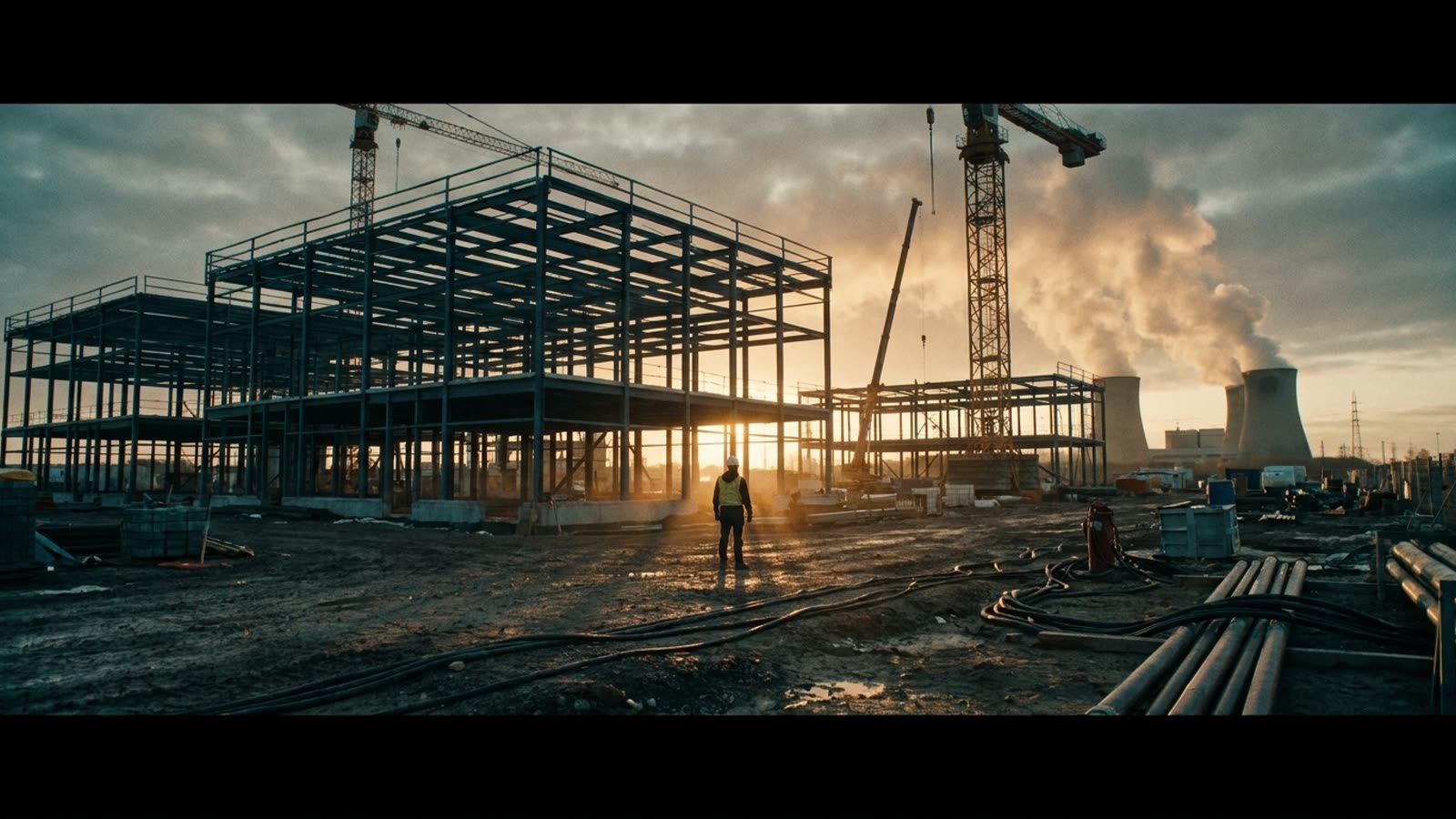
The AI boom was supposed to be different from previous technology manias. This time, the thinking went, the underlying technology was so transformative that the usual laws of infrastructure economics would bend to accommodate it. They have not.
Across the United States, the $10 trillion wager on AI infrastructure is running headlong into constraints that no amount of venture capital or government enthusiasm can immediately solve: electricity that does not exist, water that is already spoken for, construction timelines that stretch into the next decade, and supply chains that were never designed to deliver this much specialized equipment this quickly. The result is a growing gap between AI's computational ambitions and the physical world's stubborn refusal to cooperate.
The power problem has no quick fix
The numbers are stark. A single advanced AI data center can consume as much electricity as a small city. The collective appetite of facilities planned or under construction would require the equivalent of dozens of new nuclear plants—capacity that takes a decade or more to build. Grid operators in Virginia, Texas, and Arizona are already warning that they cannot guarantee power for facilities seeking to come online before 2030. Some developers have resorted to on-site natural gas generation, undermining the clean-energy commitments that many AI companies have loudly trumpeted.
Meanwhile, the competition for sites with adequate power, water, and fiber connectivity has driven land prices in favored corridors to levels that make the economics of all but the largest hyperscalers increasingly difficult. Smaller players are being priced out or pushed to locations with their own infrastructure deficits.
Supply chains are the hidden bottleneck
Beyond real estate and electricity, the physical components of AI infrastructure face their own constraints. High-bandwidth memory, advanced packaging, and the specialized cooling systems required for next-generation chips are all in short supply. Lead times for critical electrical equipment—transformers, switchgear, backup generators—have stretched from months to years. Contractors capable of building to the exacting specifications of modern data centers are booked solid.
The irony is palpable: an industry built on the premise of exponential digital scaling is being throttled by the linear, capital-intensive realities of construction and manufacturing.
Our take
None of this means the AI infrastructure buildout will fail. It means it will be slower, more expensive, and more geographically concentrated than the breathless projections of two years ago suggested. The companies that succeed will be those with the patience, capital, and operational discipline to navigate a world where atoms still matter as much as algorithms. For investors and policymakers, the lesson is older than computing itself: revolutions are easier to announce than to build.