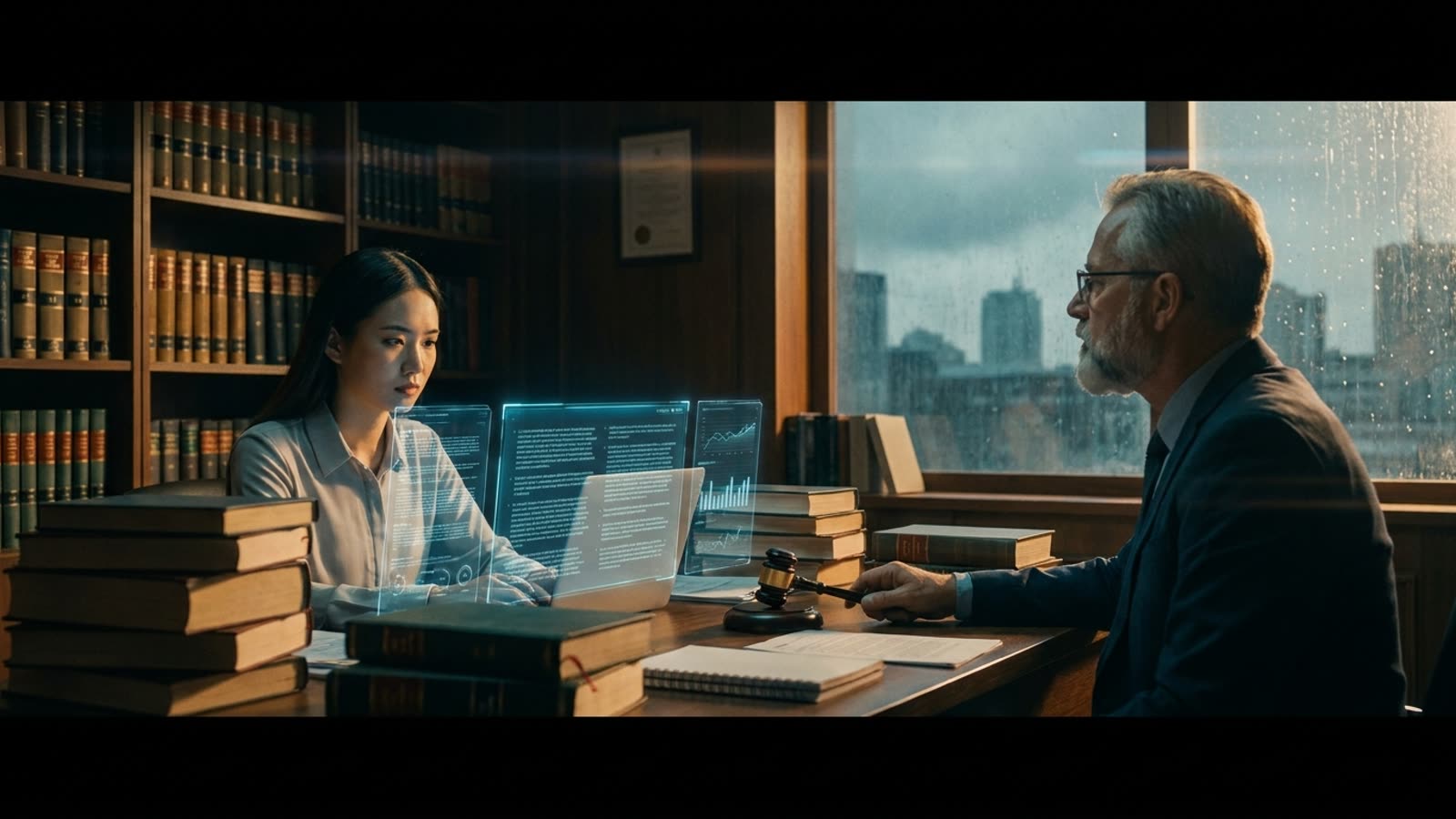
The transformation happened so gradually that many paralegals only noticed when they looked up from their screens and realized the nature of their work had fundamentally changed. Where they once spent hours combing through depositions, contracts, and case law, they now spend those same hours reviewing what AI systems have already found — checking for hallucinations, verifying citations, and catching the subtle contextual errors that machines reliably make.
This is not the dramatic displacement that automation prophets predicted. It is something stranger: a profession that has retained its headcount while losing its core identity.
The review becomes the reviewed
Large language models and specialized legal AI tools now perform in minutes what once took paralegals days. Contract analysis, document summarization, initial case research — these tasks have been compressed into prompts and outputs. But the legal industry's fundamental conservatism, its terror of malpractice liability and its reverence for precedent, has created an unexpected bottleneck: someone still needs to verify that the machine got it right.
This verification work requires deep legal knowledge, pattern recognition, and the kind of judgment that comes from years of reading badly drafted contracts. In other words, it requires experienced paralegals. The cruel irony is that the skills needed to check AI output are precisely the skills that AI was supposed to replace.
Law firms have discovered that junior paralegals trained primarily on AI-assisted workflows lack the foundational expertise to catch machine errors. They can operate the tools fluently but cannot evaluate whether the output makes sense. The profession now faces a training paradox: it needs people who learned the old way to supervise the new way, but fewer people are learning the old way.
The psychological toll of demotion
Paralegals who entered the field for its intellectual rigor — the satisfaction of finding the needle in the documentary haystack — describe a creeping sense of purposelessness. The machine finds the needle now. Their job is to confirm that it is, in fact, a needle and not a splinter the AI mistook for one.
This shift from primary investigator to quality assurance inspector carries real psychological weight. Professional identity matters, and many paralegals report feeling like they have been demoted within their own jobs. The title remains, the salary remains, but the work has been subtly degraded.
Some have adapted by moving upstream, taking on tasks that require client interaction, strategic judgment, and the kind of contextual understanding that AI handles poorly. Others have become de facto AI trainers, their expertise extracted to improve the very systems that diminished their roles. A smaller cohort has left entirely, unwilling to spend their careers as referees for algorithmic output.
What the legal profession reveals
The paralegal experience offers a preview of how AI reshapes knowledge work more broadly. Wholesale elimination is rare; piecemeal transformation is common. Jobs persist in name while changing in substance, and the workers who remain often find themselves in an uncomfortable middle ground — too skilled to be replaced, too constrained to feel autonomous.
The legal industry's response has been characteristically cautious. Major firms have implemented AI tools while maintaining staffing levels, treating the technology as augmentation rather than replacement. This hedging reflects genuine uncertainty about liability, quality, and the long-term reliability of AI legal research. It also reflects the profession's deep institutional inertia.
Our take
The paralegal profession is not dying; it is being transmuted into something less satisfying and more essential. The work has become a form of intellectual janitorial service — necessary, skilled, and fundamentally unglamorous. This is probably the honest future of many knowledge jobs: not unemployment, but underemployment of the spirit. The machines will do the interesting parts, and humans will clean up after them.