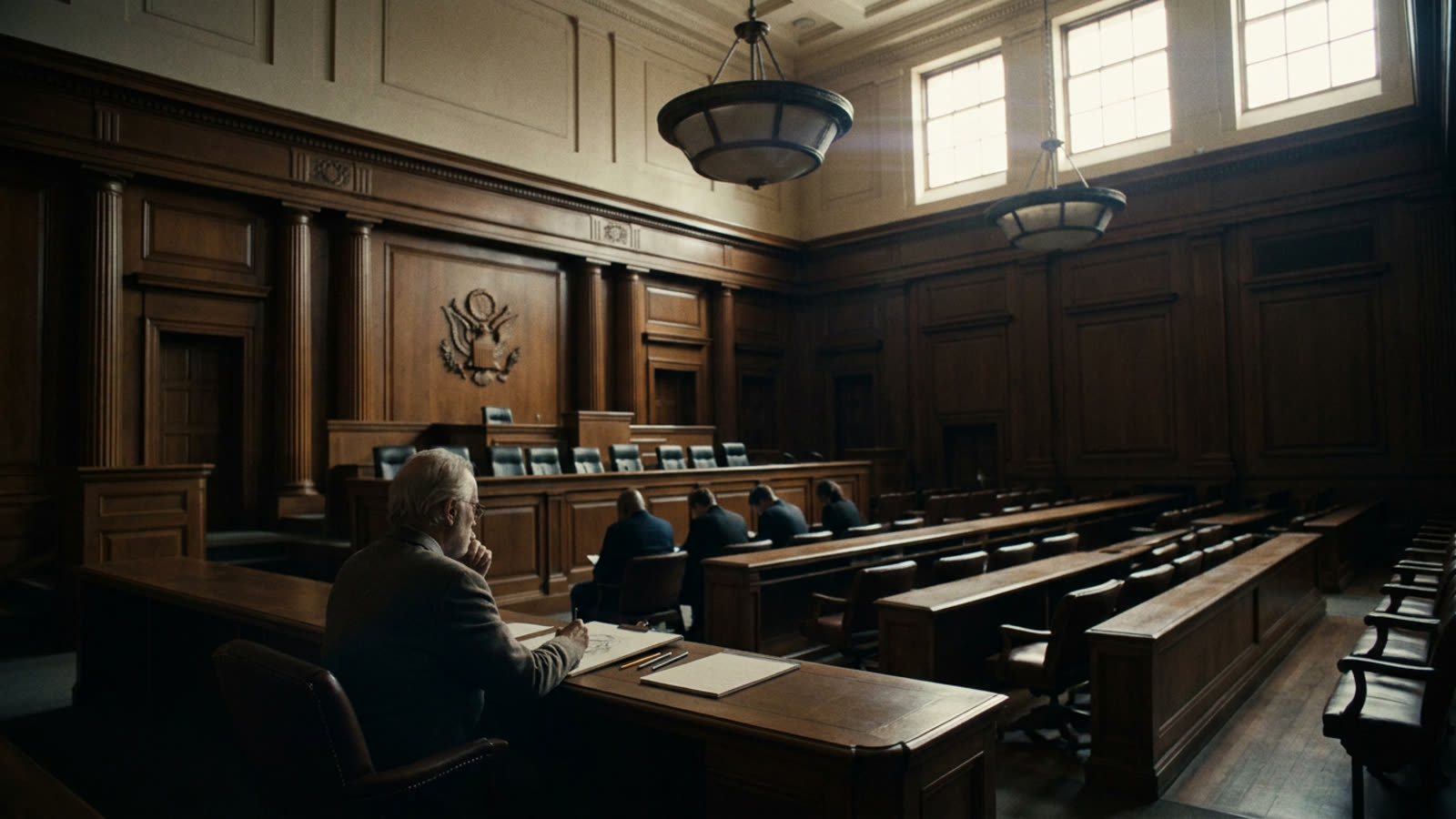
The courtroom sketch artist occupies a peculiar niche in visual journalism: part reporter, part portraitist, wholly dependent on the continued prohibition of cameras in certain judicial proceedings. For the better part of a century, these artists have been the public's eyes in high-stakes trials, their pastel renderings of defendants, judges, and weeping witnesses becoming iconic documents of legal history. The profession survived television, digital photography, and the smartphone. It may not survive generative AI.
The threat is not that AI produces better courtroom art—it manifestly does not. The threat is that it produces art that is good enough, fast enough, and cheap enough to satisfy editors operating under relentless deadline pressure and shrinking budgets. A media organization that once paid a skilled artist several hundred dollars per trial day can now generate dozens of stylized courtroom scenes for essentially nothing. The aesthetic quality is inferior, the emotional truth is absent, but the economics are irresistible.
A profession built on prohibition
Courtroom sketch artists exist because of a legal accident. In 1935, the sensationalized coverage of the Lindbergh kidnapping trial prompted many jurisdictions to ban cameras from courtrooms entirely. The prohibition created a market for artists who could capture proceedings in real time, working from memory and quick observation to produce images that newspapers and later television networks desperately needed. At the profession's peak, major metropolitan areas supported dozens of working courtroom artists, some commanding substantial fees for high-profile trials.
The work requires a rare combination of skills: the ability to capture a likeness quickly, an understanding of legal procedure, the stamina to sit through tedious testimony while remaining alert for the dramatic moment, and the discretion to work unobtrusively in spaces where a misplaced gesture can draw a judge's rebuke. Artists speak of the peculiar intimacy of the work—sitting close enough to defendants to see their hands tremble, watching jurors' faces as evidence is presented, translating human drama into marks on paper.
The economics of good enough
Generative AI disrupts this ecosystem not through superior quality but through radical cost reduction. A news organization can now prompt an image generator to produce a "courtroom scene showing a middle-aged man in a suit at the defense table, federal judge presiding, jury visible" and receive something publishable within seconds. The result lacks the specific truth of a sketch artist's observation—the particular slump of a defendant's shoulders, the skeptical tilt of a juror's head—but it fills the visual space that editors need filled.
The remaining courtroom artists, now numbering perhaps a few dozen active professionals in the United States, report dwindling assignments. Some have pivoted to legal illustration for trial preparation, creating exhibits and demonstratives for attorneys. Others have found work in documentary production, where their archival sketches carry historical weight that AI-generated images cannot replicate. But the core practice of sitting in courtrooms and drawing what happens there is becoming economically unviable.
What gets lost
The disappearance of courtroom sketch artists represents something larger than the decline of one small profession. It marks a shift in how society documents its most consequential proceedings. A sketch artist's rendering of a defendant is an act of witness—a human being observing another human being at a moment of crisis and translating that observation into visual form. An AI-generated courtroom scene is a statistical composite, a plausible arrangement of elements that references nothing real.
The legal system itself seems largely indifferent to this distinction. Judges and attorneys have more pressing concerns than the provenance of media illustrations. The public, consuming news through screens that make all images equally flat, may not notice or care whether the courtroom scene accompanying a story was drawn by a person who was present or generated by software that was not.
Our take
There is something fitting about courtroom sketch artists being among AI's early professional casualties. They have always been translators between the legal system and the public, converting the inaccessible into the visible. Now they are being replaced by a technology that excels at producing the appearance of things without their substance—a technology that, like much of modern media, prioritizes speed and cost over truth and presence. The sketches that remain in archives will become more valuable precisely because they document something that actually happened, observed by someone who was actually there. That distinction will matter more as it becomes rarer.