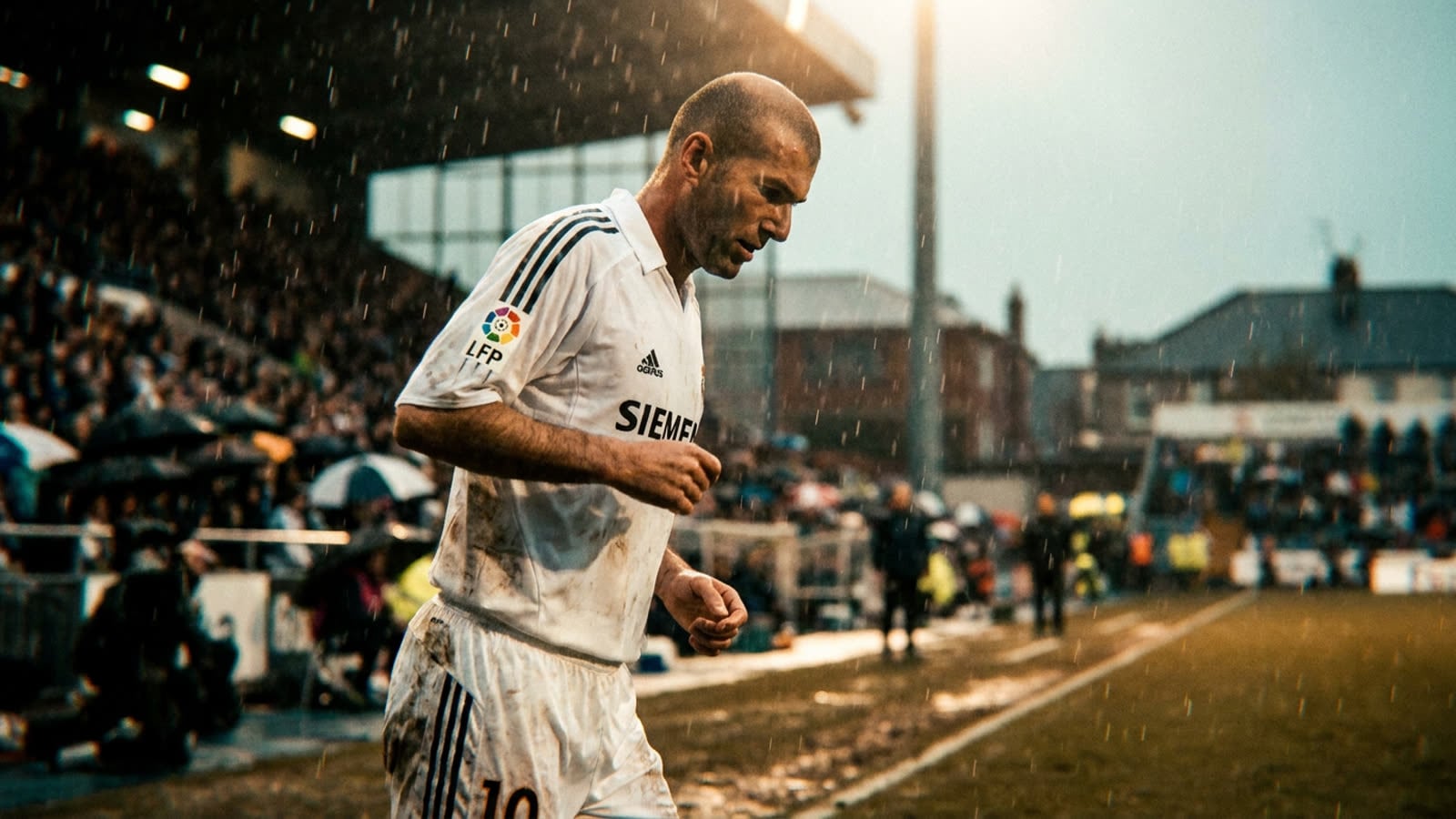
No athlete has ever chosen a stranger way to end a career at its absolute apex. In the 110th minute of the 2006 World Cup final, with the score level and penalties looming, Zinedine Zidane—widely considered the finest midfielder of his generation, playing the final match of his professional life—lowered his bald head and drove it into the chest of Italian defender Marco Materazzi. The red card was automatic. France lost the shootout. Zidane walked past the trophy he would never touch, disappeared down the tunnel, and into a retirement that began in disgrace and somehow transmuted into legend.
The provocation and its irrelevance
Materazzi admitted to insulting Zidane's sister, though accounts of the precise words have varied over the years. The provocation was real, crude, and deliberate—the kind of verbal needling that happens in every high-stakes match. What made Zidane's response so jarring was not its violence but its timing. This was a man who had delivered one of the great World Cup final performances just four years earlier, who had scored a nerveless Panenka penalty in this very match, who possessed preternatural composure under pressure. The headbutt was not a loss of control in the ordinary sense. It was a conscious decision, executed with the same precision Zidane brought to everything else on a football pitch. He knew exactly what he was doing and what it would cost.
Why mythology absorbed it
The incident should have tarnished Zidane's legacy. Instead, it somehow enhanced it. Part of this is simple aesthetics: the image of his slow, deliberate walk past the World Cup trophy, eyes fixed forward, became iconic precisely because it was so cinematically strange. But the deeper reason is that the headbutt confirmed something audiences had always sensed about Zidane—that beneath the balletic elegance was something feral and ungovernable, a capacity for self-destruction that made his genius feel more human. The great players who retire gracefully are admired. The ones who immolate themselves at the moment of maximum visibility become myths.
French public opinion, which might have turned on him, instead rallied. Polls showed overwhelming support. President Chirac called him a man of heart and conviction. The headbutt became not a stain but a signature—proof that Zidane played by internal rules that superseded trophies, logic, and even his own interests.
Our take
The headbutt endures because it refuses to resolve. It was neither purely heroic nor purely shameful, neither justified nor inexplicable. Zidane has never fully explained it, and his silence has allowed the moment to accumulate meaning like a Rorschach test for how we think about pride, masculinity, and the limits of self-mastery. In an era when athletes are coached to be anodyne, Zidane's final act was radically, bewilderingly authentic. He chose his dignity over the World Cup, and we are still not sure whether that was noble or insane. Perhaps both. Perhaps that is the point.