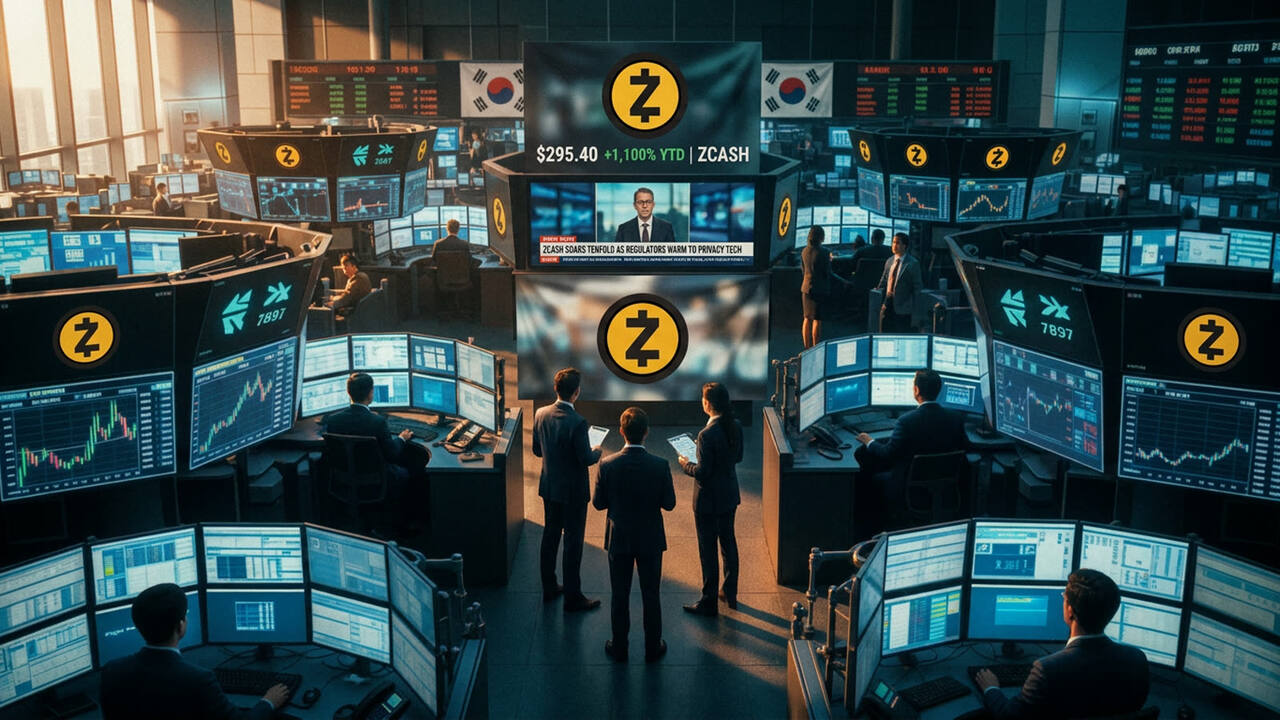
The privacy coin that spent years in regulatory purgatory is now trading above $460, up more than 1,000 percent over the past twelve months. Zcash's resurrection is not a meme-driven pump or a speculative frenzy — it is the market's verdict on a fundamental shift in how governments and institutions think about financial privacy.
For most of the 2020s, privacy-focused cryptocurrencies occupied a precarious position. Exchanges delisted them preemptively, fearing regulatory blowback. The Financial Action Task Force lumped them together with mixer services as high-risk instruments. Zcash, despite being founded by serious cryptographers and operating with a transparent corporate structure through the Electric Coin Company, suffered guilt by association with truly anonymous coins that had no compliance pathway.
The zero-knowledge pivot
What changed was not Zcash itself but the broader technological landscape. Zero-knowledge proofs — the cryptographic technique that allows Zcash to verify transactions without revealing sender, recipient, or amount — have become essential infrastructure across the blockchain industry. Ethereum's scaling solutions depend on them. Financial institutions exploring tokenization need them for confidential settlements. The same mathematics that made Zcash suspicious now makes it prescient.
Regulators, particularly in the United States and European Union, have begun drawing distinctions between privacy-preserving technology and unregulated anonymity. Zcash's "selective disclosure" feature, which allows users to share transaction details with auditors or tax authorities while keeping them hidden from the public blockchain, has emerged as a model for compliant confidentiality. Several jurisdictions have signaled that privacy coins with such disclosure mechanisms may be treated differently from those without.
Institutional interest awakens
The price surge reflects more than regulatory thaw. Institutional investors who once avoided the entire category are now allocating to privacy-preserving assets as a hedge against both surveillance overreach and the increasing transparency of public blockchains. When every Bitcoin transaction is traceable and analyzable by chain-analysis firms, there is genuine demand for financial privacy that does not require trusting a centralized intermediary.
Zcash's market capitalization remains modest compared to the giants — it sits around the fifteenth rank globally — but its year-over-year performance outstrips nearly every major cryptocurrency. The token's relatively small supply and the technical sophistication of its community have created conditions for sharp repricing when sentiment shifts.
Our take
The rehabilitation of Zcash is a reminder that regulatory clarity, even when it takes years to arrive, eventually prices in. The privacy coin category was never as dangerous as its critics claimed or as doomed as its obituaries suggested. What looked like a permanent discount for regulatory risk turned out to be a temporary mispricing of technological inevitability. Zero-knowledge proofs are now too useful to ban, and the coins that pioneered them are finally being valued accordingly.