Movie theater pricing operates on a business model that would seem absurd in almost any other industry: the core product is sold at or near a loss, while the real profits come from selling overpriced snacks to a captive audience. This peculiar arrangement has shaped the entire economics of cinema exhibition for nearly a century.
The studio's cut comes first
When you buy a $15 movie ticket, the theater keeps far less than you might imagine. For major blockbusters in their opening weeks, studios typically claim 60-70% of ticket revenue, sometimes more. Disney has been known to demand up to 65% of ticket sales for Marvel releases, plus additional fees. This percentage usually decreases over time—by week four or five, the split might reach 50-50 or even favor the theater—but by then, most of the audience has already seen the film.
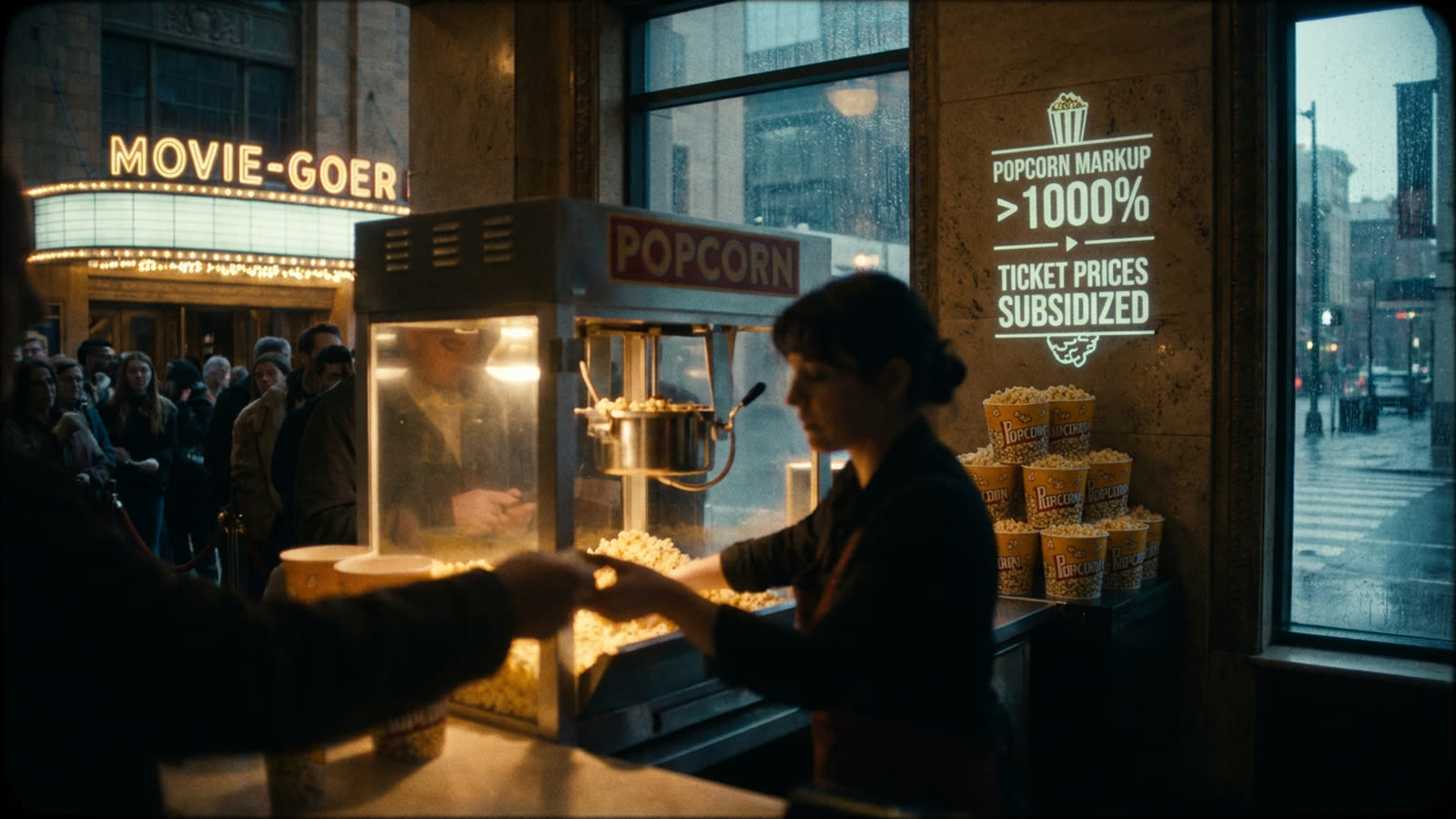
This harsh revenue split explains why theaters push concessions so aggressively. A large popcorn that costs the theater perhaps $0.50 in raw materials might sell for $8. The margin on that popcorn effectively subsidizes the right to show the movie at all. Without concession sales, most theaters would operate at a loss.
Real estate and the multiplex model
Theater chains face another fundamental challenge: real estate. A modern multiplex requires significant square footage in high-traffic locations. The rent on a 50,000-square-foot theater complex in a suburban mall or urban center represents a massive fixed cost that must be covered whether seats are full or empty.
This real estate pressure drove the shift from single-screen theaters to multiplexes in the 1960s and 1970s. By showing multiple films simultaneously, operators could optimize their expensive footprint and hedge against any single film's failure. It also enabled more flexible scheduling—a poorly performing film could be moved to a smaller auditorium while a surprise hit expanded to multiple screens.
Dynamic pricing arrives slowly
Unlike airlines or hotels, movie theaters have been remarkably slow to adopt dynamic pricing. A Tuesday matinee and a Saturday evening show of the same film typically differ in price by only a few dollars, despite vastly different demand levels. This resistance to market-based pricing stems partly from consumer expectations and partly from the complexity of negotiations with studios, who often have approval rights over pricing strategies.
Some chains have begun experimenting with more sophisticated pricing models. AMC's Sightline pricing charges more for optimal seats, while services like MoviePass (before its collapse) and AMC Stubs A-List have introduced subscription models that change the consumer's relationship with individual ticket prices entirely.
Our take
The movie theater business model is caught between the past and future. Studios increasingly view theatrical releases as marketing for streaming services rather than profit centers, while theaters cling to a concession-based model that feels increasingly antiquated. The survivors will likely be those who reimagine the movie theater as a premium experience worth paying for—think Alamo Drafthouse's dine-in model or IMAX's technical superiority—rather than those who simply try to squeeze a few more dollars from popcorn markup. The fundamental question isn't really why movie tickets cost what they do, but whether the traditional theater experience offers enough value to justify any price at all in an era of 65-inch home TVs and same-day streaming releases.