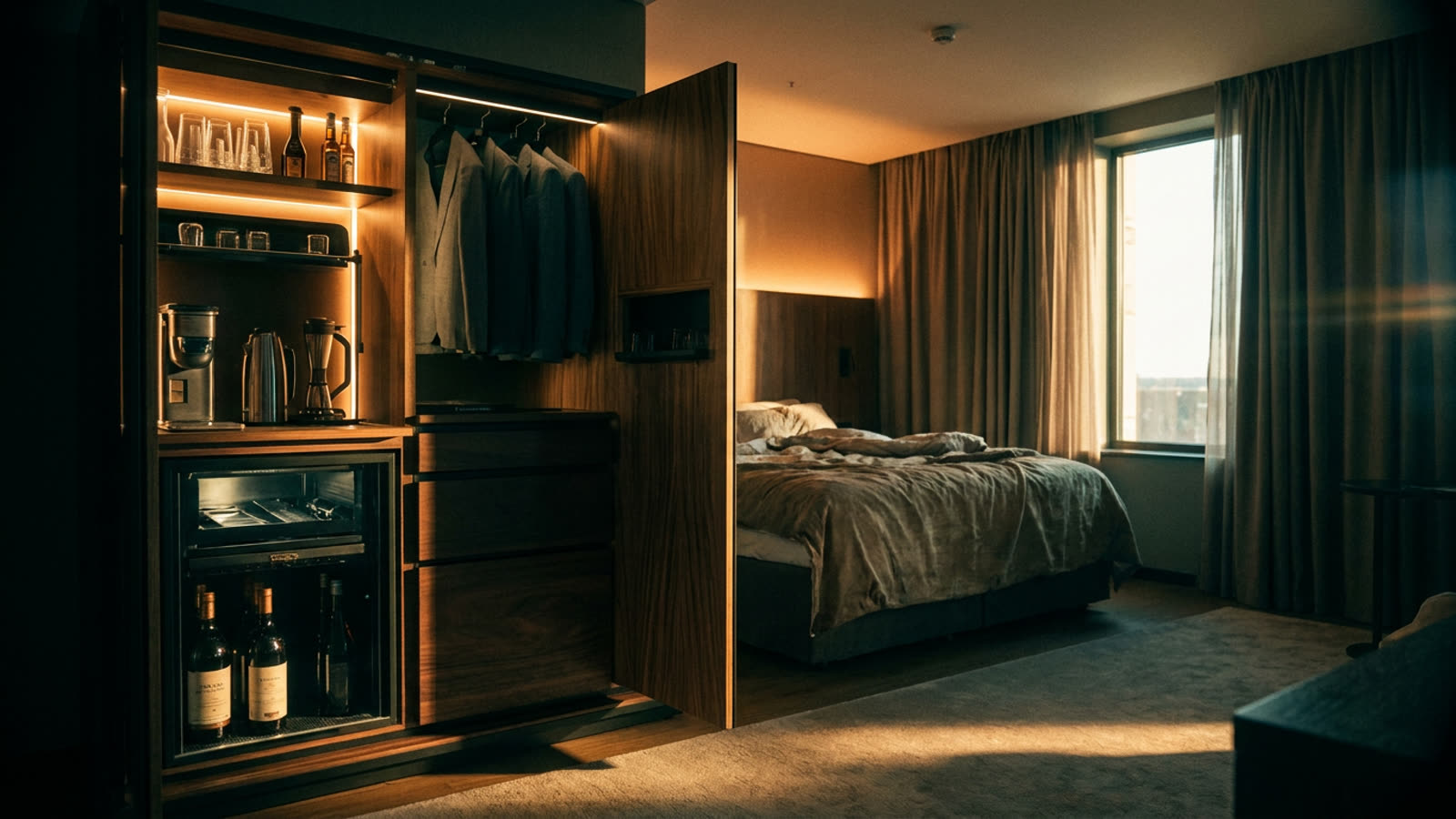
The minibar is objectively absurd. A tiny bottle of vodka for the price of a decent bottle of wine. A can of Pringles marked up to the cost of a restaurant appetizer. A motion sensor that charges you for merely inspecting the merchandise. And yet the minibar endures, a relic of mid-century travel glamour wedged into an era of Uber Eats and 24-hour convenience stores within walking distance of nearly every urban hotel on earth.
This persistence is not inertia. It is strategy—and, more interestingly, psychology.
The golden age of captive consumption
The minibar emerged in the 1970s, credited to Hong Kong's Hilton, which installed refrigerated cabinets stocked with spirits and snacks. The concept spread rapidly because it solved a genuine problem: business travelers arriving after room service closed, in cities where late-night options were scarce or unsafe. The markup was the price of convenience, and guests paid it willingly.
For two decades, the minibar printed money. Hotels reported that a well-stocked unit could generate hundreds of dollars in ancillary revenue per room annually. The economics were elegant: no additional labor after stocking, no kitchen overhead, pure margin on impulse purchases made by people on expense accounts who would never scrutinize a receipt.
The convenience collapse
Then the world changed. Smartphones summoned food to any door. Airports sprouted luxury lounges. Cities never slept. The minibar's core value proposition—access when nothing else was available—evaporated. Simultaneously, travelers grew wise to the markup and resentful of the motion-sensor billing controversies that plagued the industry. Occupancy rates for minibar purchases cratered. Many properties ripped them out entirely, converting the space to empty refrigerators guests could stock themselves.
Yet the minibar did not vanish. Luxury properties doubled down, curating artisanal selections and local products at prices that signaled exclusivity rather than gouging. Budget chains replaced alcohol with bottled water and energy bars, reducing the friction. The minibar adapted, segmenting itself by market tier.
The psychology of the tiny bottle
What remains fascinating is why anyone still opens one. Behavioral economists would recognize the minibar as a masterclass in friction reduction and temporal discounting. The guest knows the markup is absurd. The guest also knows that walking to a store requires pants, an elevator, and ten minutes of effort. At midnight, after a long flight, the psychic cost of that journey exceeds the dollar cost of the tiny Toblerone. The minibar sells not chocolate but the absence of effort.
There is also something faintly transgressive about it—the small rebellion of overpaying deliberately, of treating oneself without justification. The minibar is permission granted in advance, inventory that whispers you are on vacation or you have earned this or simply no one is watching.
Our take
The minibar is hospitality's cockroach: mocked, periodically declared extinct, and quietly thriving in the walls. Its survival says less about hotels than about us. We are not purely rational consumers optimizing for value. We are tired mammals who will pay a premium to avoid putting on shoes. The minibar knows this. It has always known.