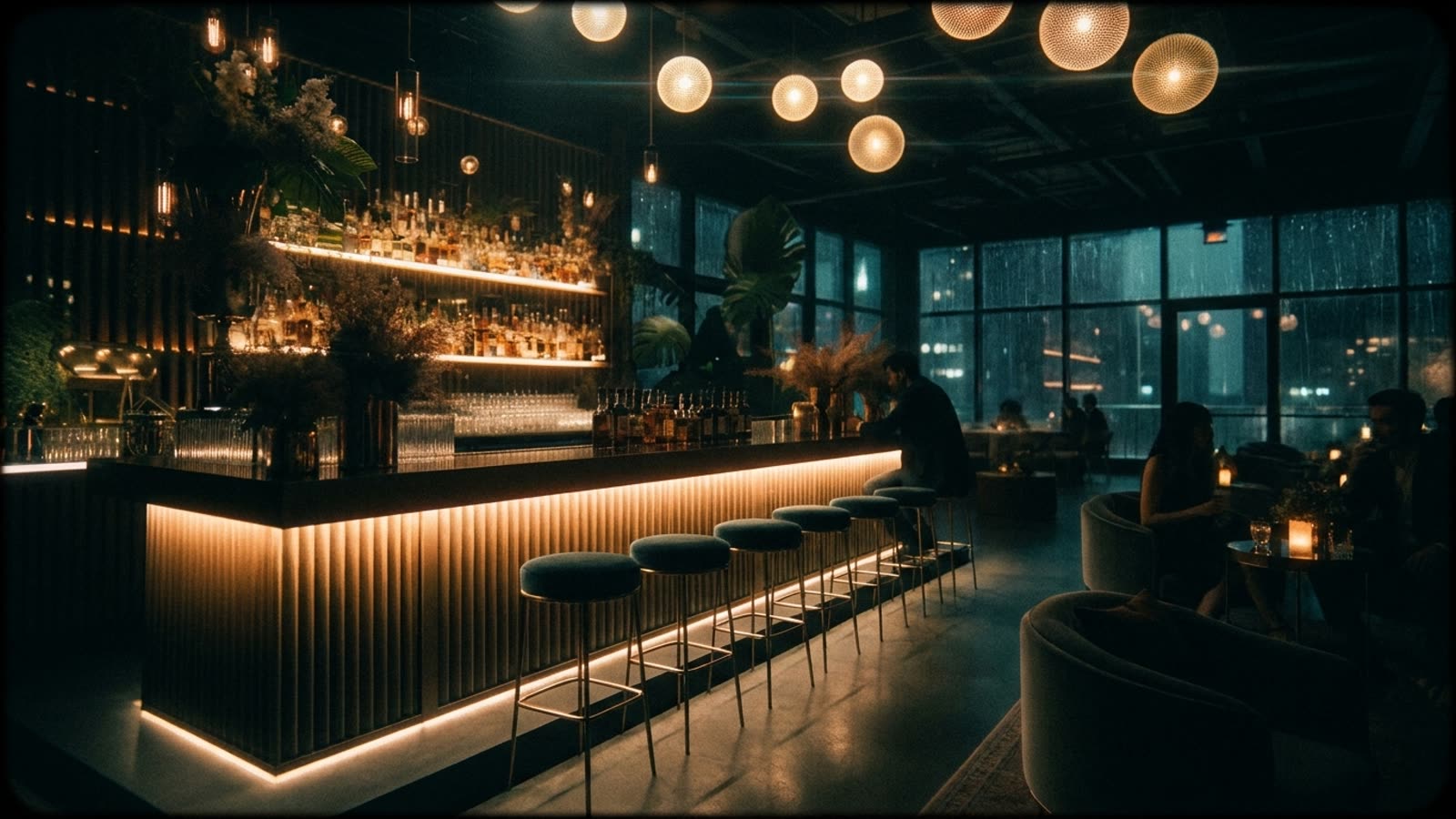
Walk into any serious cocktail bar and you will notice the same thing: you cannot quite see. The menu requires your phone's flashlight. Your companion's face exists in suggestion rather than detail. This is not an accident, nor is it merely aesthetic. The persistent dimness of drinking establishments represents one of hospitality's most enduring and least examined design choices, a decision that shapes behavior, spending, and social interaction in ways both subtle and profound.
The modern cocktail bar inherits its darkness from necessity turned tradition. During Prohibition, American speakeasies kept lights low for practical reasons—patrons needed to slip in and out unrecognized, and a raid was easier to escape in shadow. But what began as survival became psychology. Bar owners discovered that dim lighting made customers stay longer, drink more, and tip better.
The science of shadow
Research in environmental psychology has consistently shown that reduced lighting lowers inhibition and increases intimacy. People speak more freely in darkness. They lean closer. They order another round. The effect operates on multiple levels: dim light literally dilates pupils, which humans unconsciously read as attraction, while simultaneously providing the psychological cover that encourages risk-taking. A brightly lit bar is a cafeteria; a dark one is a confessional.
This explains why fast-casual restaurants blast fluorescent light while fine dining establishments barely illuminate the plate. The lighting telegraphs the expected behavior. Brightness says efficiency, turnover, transaction. Darkness says linger, indulge, forget the clock. Hotel bars understand this instinctively—the lobby may gleam, but the bar tucked behind it will swallow you in velvet shadow.
The economics of obscurity
There is also a commercial logic to cocktail-bar darkness that operators rarely discuss openly. Dim lighting is forgiving. It hides the scratches on vintage furniture, the dust on high shelves, the slight imperfections in glassware that would glare under examination. It makes a fifteen-dollar cocktail feel like an experience rather than a transaction. The darkness is not hiding flaws so much as refusing to let them matter.
Moreover, low light encourages a particular kind of attention. Unable to scroll phones comfortably or read easily, patrons focus on conversation and consumption. The environment becomes self-selecting: those who want brightness and efficiency go elsewhere, leaving a clientele predisposed to the unhurried spending that high-margin establishments require.
Our take
The great cocktail bars understand something that most hospitality ventures forget: environment is argument. Every lumen is a choice about what kind of experience you are selling and what kind of customer you want to attract. The darkness is not atmosphere—it is thesis. It says that what happens here is different from the lit world outside, that time moves differently, that the rules are softer. Whether this represents sophisticated design or gentle manipulation depends entirely on how much you enjoyed your evening.