The economy grew by three percent last year, and yet somehow nobody you know feels three percent richer. This is not a failure of perception but a feature of the metric itself. Gross domestic product was never designed to measure wellbeing, quality of life, or the distribution of prosperity — it was built to count production during wartime, and we have been misusing it as a national report card ever since.
Simon Kuznets, the economist who developed the national income accounting framework that became GDP, warned explicitly against this conflation. In his report to Congress in 1934, he cautioned that the welfare of a nation could scarcely be inferred from a measure of national income. The warning went unheeded. By the postwar boom, GDP growth had become synonymous with national success, and politicians discovered that a rising number provided convenient cover for almost any policy.
What the number actually counts
GDP measures the market value of all final goods and services produced within a country's borders over a given period. This sounds comprehensive until you consider what it excludes. Unpaid domestic labor, estimated to represent a substantial share of economic activity in most countries, registers as zero. Environmental degradation appears as a positive: an oil spill generates cleanup spending, which adds to GDP. A nation that depletes its natural resources or runs down its infrastructure can post impressive growth figures while becoming objectively poorer.
Conversely, activities that improve lives often fail to register. Wikipedia, which displaced expensive encyclopedias and democratized knowledge, contributes almost nothing to GDP. Open-source software powers much of the modern internet yet barely appears in national accounts. When a product becomes free, GDP treats this as a loss rather than a gain.
The distribution problem
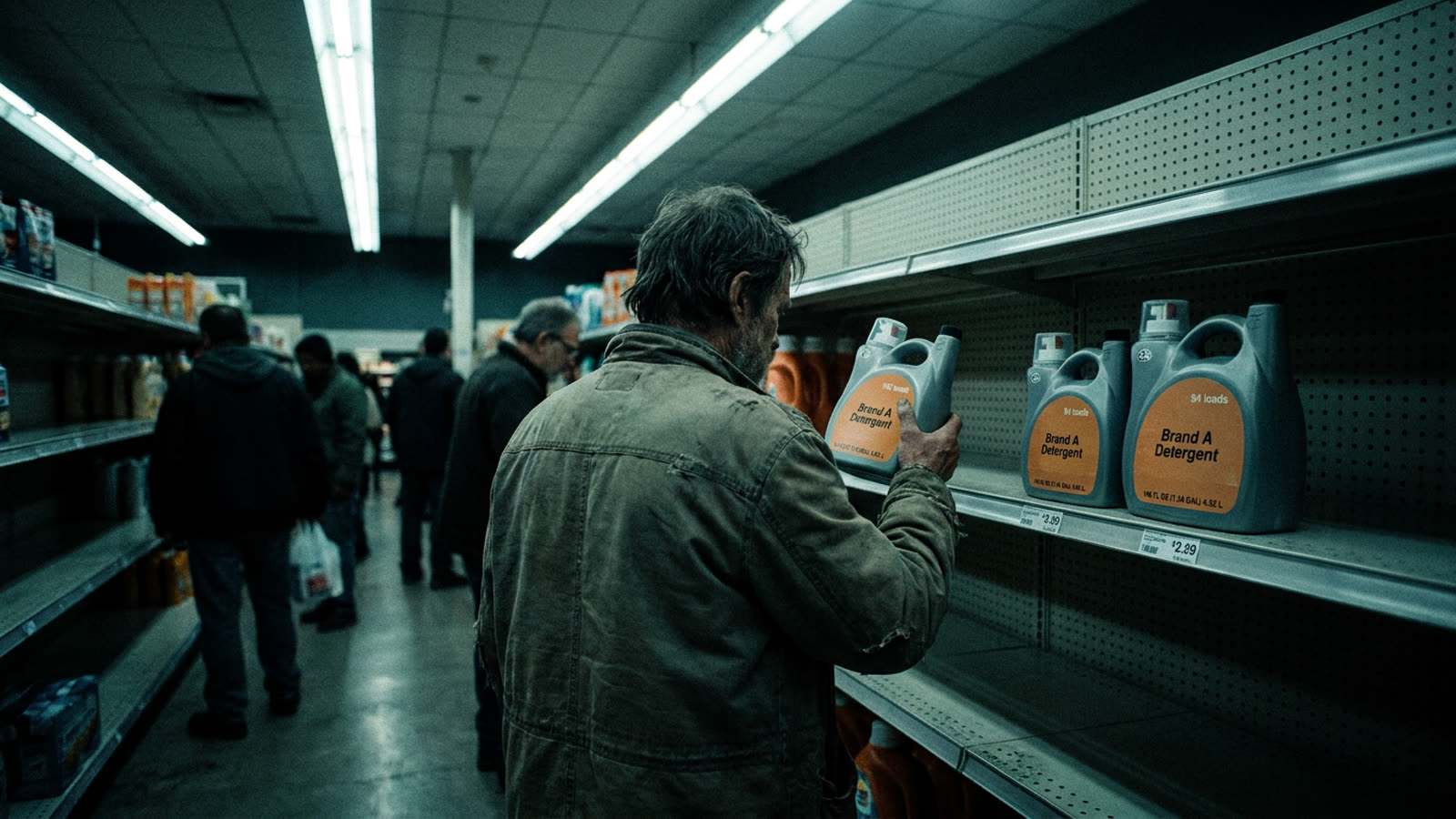
Perhaps the most glaring limitation is that GDP is an aggregate, indifferent to how growth is distributed. A country where all gains accrue to the top decile will post the same growth rate as one where prosperity is broadly shared. This was less problematic when growth was widely distributed, but the past several decades have seen an increasing divergence between aggregate statistics and median experience in many advanced economies.
The result is a credibility gap. When officials celebrate strong GDP numbers while voters report economic anxiety, the disconnect is not irrational — it reflects a metric that has become untethered from the lived reality of most households.
The search for alternatives
Economists have proposed numerous supplements: the Genuine Progress Indicator, which adjusts for inequality and environmental costs; Bhutan's Gross National Happiness index; the OECD's Better Life Index. None has achieved the simplicity or universality of GDP, partly because any broader measure requires value judgments about what matters, and democracies struggle to agree on such judgments.
The more practical path may be not to replace GDP but to stop treating it as a comprehensive scorecard. It remains useful for what it was designed to measure: the total market output of an economy. The error lies in expecting it to tell us whether that output is making people's lives better.
Our take
GDP is a thermometer, not a diagnosis. It tells you the economy is running hot or cold, not whether the patient is healthy. The political obsession with a single number has distorted policy for generations, encouraging governments to optimize for growth at the expense of sustainability, equity, and the unglamorous work of maintenance. The fix is not a better number but a more honest conversation about what prosperity actually means — and an admission that no single statistic can capture it.