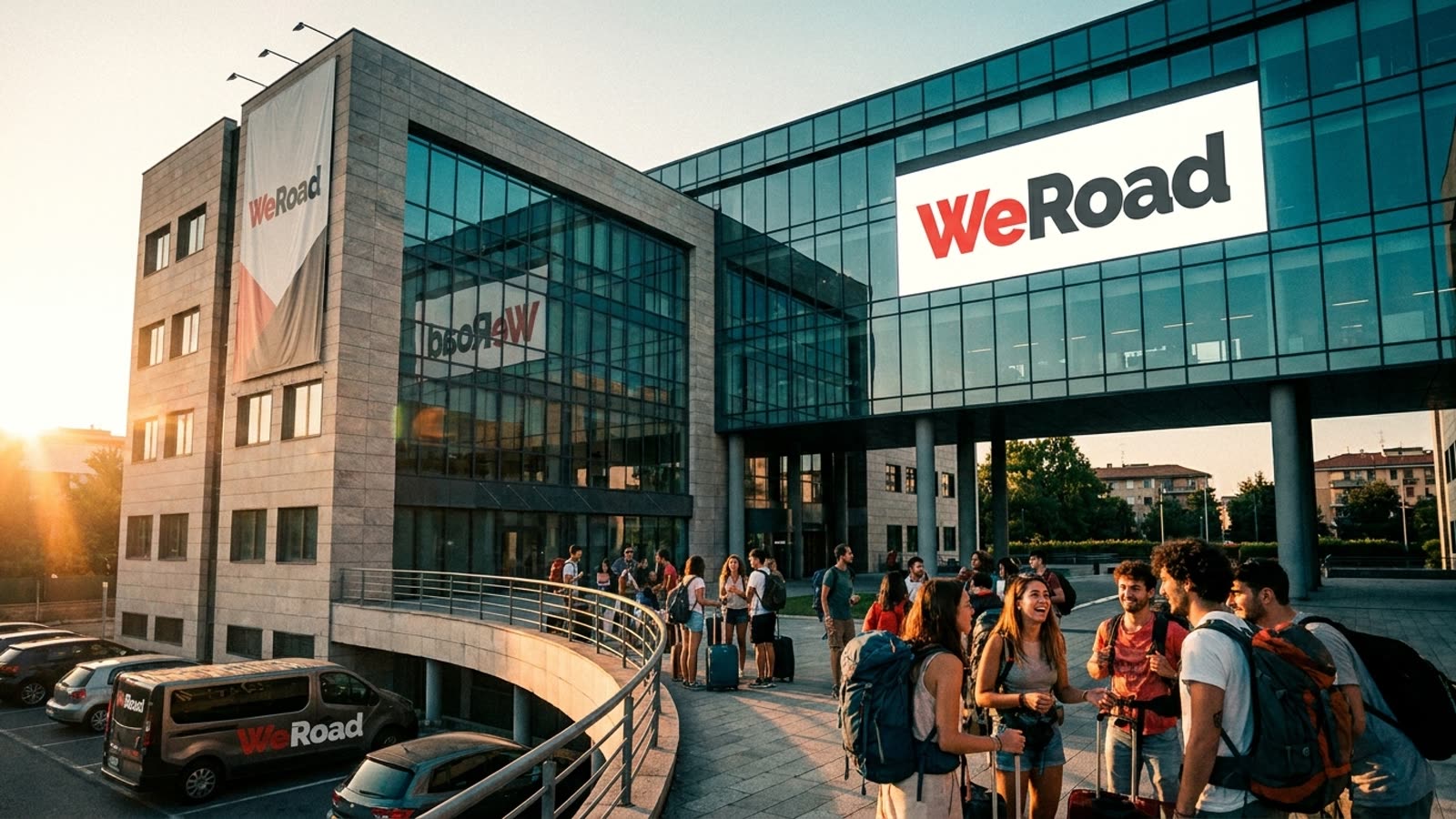
The premise sounds like a social experiment designed by a particularly optimistic therapist: pay a company to match you with fifteen strangers, then spend two weeks traversing Morocco or Japan together. WeRoad, the Milan-based startup that has built a business on exactly this proposition, just raised $58 million in a Series B round led by Airbnb, with participation from existing backers including Iyo Capital and 360 Capital Partners. The company plans to use the funds to expand aggressively into the United States, betting that American travelers are just as lonely—and just as willing to pay for curated companionship—as their European counterparts.
The investment marks Airbnb's first significant move into group travel, a tacit acknowledgment that the sharing-economy giant's core product—access to other people's homes—doesn't solve the fundamental problem facing its fastest-growing demographic. Solo travelers now account for roughly a quarter of all leisure bookings globally, but the experience of traveling alone has become, for many, a performative exercise in Instagram-ready solitude rather than genuine adventure.
The loneliness arbitrage
WeRoad's model is disarmingly simple. The company organizes group trips of eight to fifteen travelers, typically aged 25 to 45, led by a "coordinator" who handles logistics and, crucially, social dynamics. Trips range from ten days to three weeks and cost between €1,500 and €4,000, depending on destination. The company claims to have sent more than 300,000 travelers on trips since its 2017 founding, generating what sources familiar with the matter describe as north of €100 million in annual bookings.
The pitch to investors is straightforward: WeRoad is monetizing the gap between what young professionals say they want (spontaneity, adventure, connection) and what they're actually capable of organizing themselves (very little). The company's internal data reportedly shows that more than 60 percent of its customers are traveling solo for the first time, and that repeat booking rates exceed 40 percent—figures that suggest WeRoad is less a travel company than a subscription service for temporary community.
Why Airbnb cares
Airbnb's participation is the more interesting signal. The company has spent years trying to expand beyond accommodations into "experiences"—local tours, cooking classes, the sort of activities that fill the hours between check-in and checkout. Those efforts have produced modest results at best. WeRoad offers something Airbnb has struggled to build: a reason for travelers to choose the platform before they've decided where to go.
The American expansion will test whether WeRoad's European success translates across the Atlantic. The company is reportedly targeting major coastal cities—New York, Los Angeles, San Francisco—where young professionals combine disposable income with acute social isolation. Early marketing materials emphasize the "no planning required" angle, a tacit acknowledgment that American work culture leaves little bandwidth for the kind of elaborate trip coordination that previous generations considered part of the fun.
Our take
There's something faintly melancholy about a business model predicated on the idea that adults need professional help making friends on vacation. But WeRoad has identified a genuine market failure: the tools that were supposed to make solo travel easier—translation apps, ride-sharing, instant booking—have also made it lonelier. Airbnb's bet is that the next phase of travel isn't about where you stay, but who you're with. That's either a profound insight into human nature or a very expensive misreading of why people actually travel. The American market will provide the answer.