Few garments have managed to be simultaneously proletarian and aspirational, rebellious and conformist, timeless and trend-driven. The blue jean has done all of this for over a century, and its current moment—caught between heritage revivals, sustainable innovations, and the stubborn persistence of the vintage market—suggests we are nowhere near finished negotiating what denim means.
The conversation around "defining" jeans tends to collapse into nostalgia: Levi's 501s on James Dean, Gloria Vanderbilt's designer revolution in the 1970s, the low-rise catastrophe of the early 2000s. But the more interesting question is why denim remains the default canvas for cultural projection when virtually every other workwear category has been relegated to costume.
The authenticity paradox
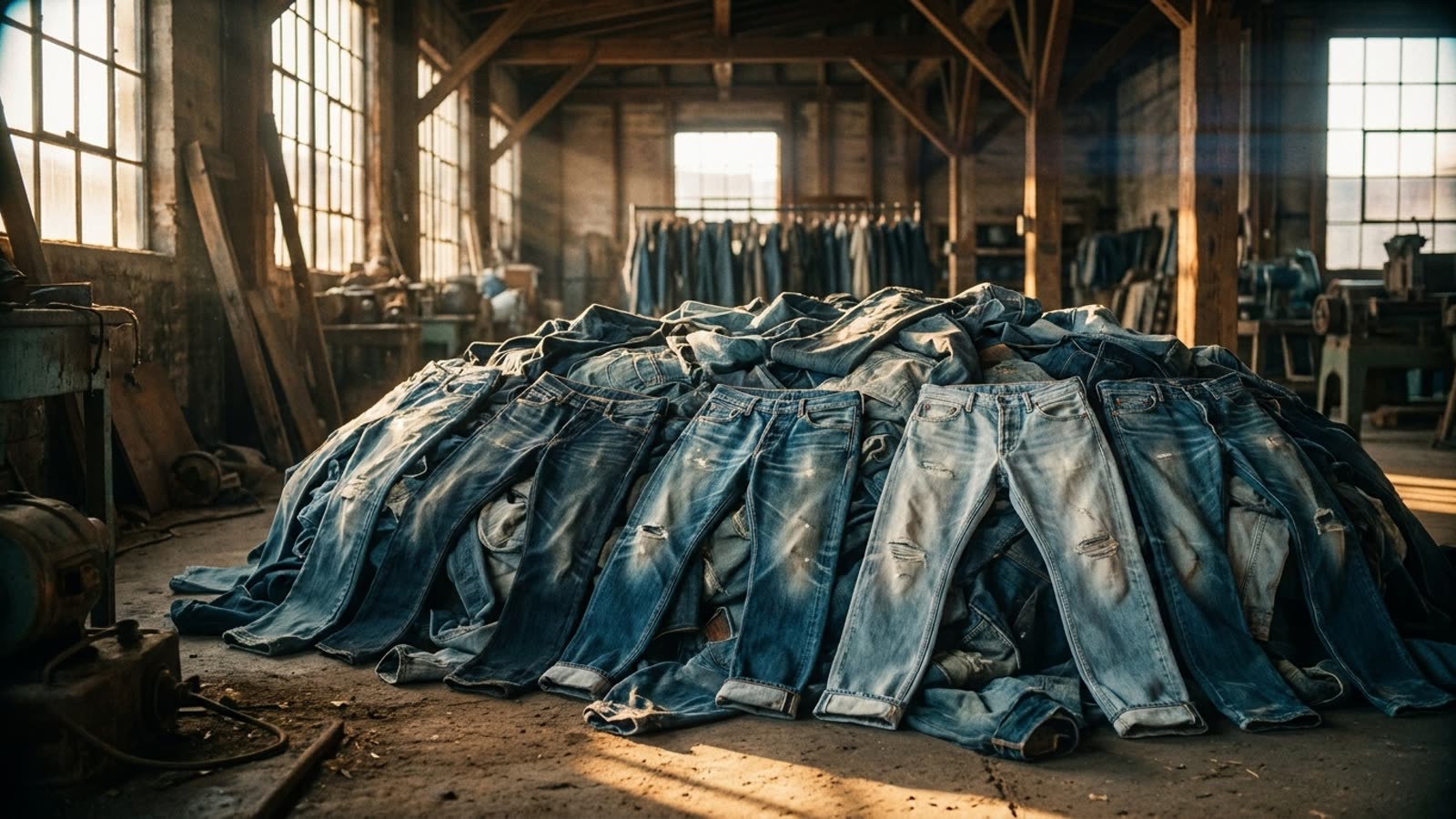
Denim's enduring appeal rests on a contradiction. We want our jeans to signal effortlessness while paying premium prices for precisely calibrated distressing. The Japanese selvedge market, now a multi-billion dollar global industry, has perfected this tension: artisanal construction methods from Okayama mills command four-figure prices for fabric that will eventually look like something pulled from a thrift bin. The labor is invisible; the carelessness is the point.
This paradox has only intensified as sustainability concerns reshape fashion consumption. Denim production is notoriously water-intensive—a single pair of conventional jeans requires thousands of liters to produce. Yet the secondhand denim market has exploded, with vintage Levi's regularly fetching prices that would have seemed absurd a decade ago. The environmental argument and the authenticity argument have merged: old jeans are both greener and more "real."
Class signals in cotton twill
What makes denim particularly fascinating is its class mobility. Born as workwear for miners and laborers, jeans became countercultural uniform in the 1950s, suburban staple in the 1980s, and luxury item by the 2000s. Today, a pair of jeans can cost anywhere from fifteen dollars to fifteen hundred, and the price differential often has little to do with durability or even aesthetics.
The current market reflects this fragmentation. Heritage brands trade on nostalgia and perceived authenticity. Fast fashion offers trend-responsive cuts at disposable prices. Designer labels charge premiums for fit innovations and subtle branding. And the resale market creates its own hierarchy, where provenance and patina matter more than newness.
Our take
Denim's staying power is not despite its contradictions but because of them. The garment that once signified manual labor now signifies the aspiration to appear unbothered by status—which is itself a status move. Every generation believes it has discovered jeans anew, whether through raw selvedge obsession or Y2K low-rise revival. The jeans that "defined" any era are really just mirrors, reflecting back whatever we needed to believe about ourselves at the time. The fabric is incidental; the mythology is everything.