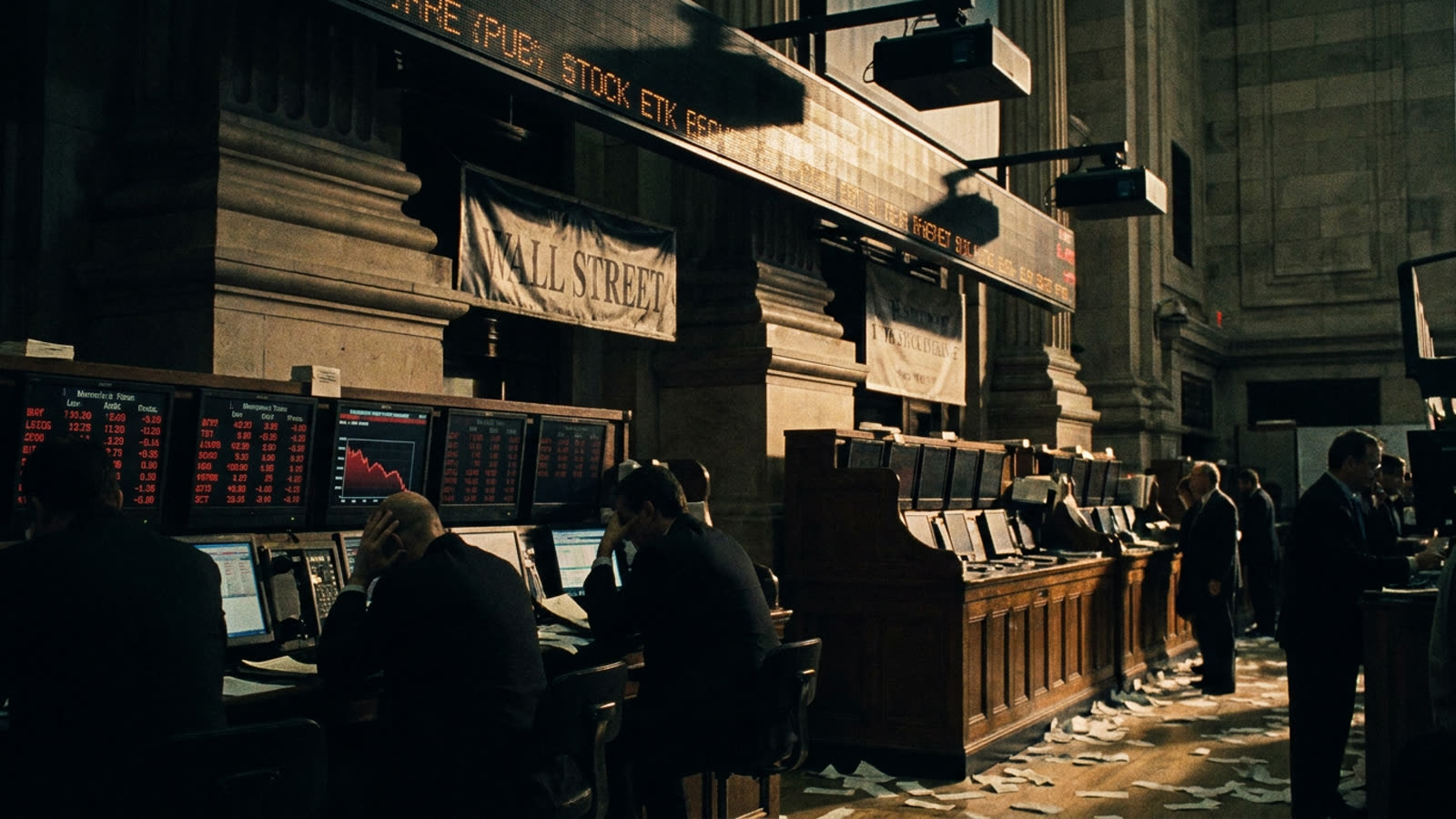
For months, equity markets operated on a comforting fiction: inflation was yesterday's problem, and the Federal Reserve would soon reward patience with lower borrowing costs. Tuesday's sell-off suggests that narrative has run out of road.
The S&P 500 closed lower after the Fed held rates steady but released projections showing nearly half of policymakers now see at least one rate increase before year-end. The dollar extended gains, Treasury yields ticked up, and the mood on trading floors shifted from cautious optimism to something closer to resigned acceptance. The pivot trade is dead; the inflation trade is back.
The dot plot's quiet bombshell
The Fed's summary of economic projections—the so-called dot plot—revealed a committee more hawkish than Wall Street had priced in. While the median projection still points to rates holding steady, the distribution of individual forecasts skewed unmistakably upward. That seven or eight officials now pencil in a hike is not a guarantee of action, but it is a clear warning: the bar for cuts has risen, and the bar for hikes has lowered.
Chair Kevin Warsh, notably, appears to have abstained from submitting a dot, a move that preserves his optionality but also denies markets the guidance they crave. His silence speaks loudly: the new Fed leadership is less interested in hand-holding than its predecessors.
Why equities flinched
Stocks had been pricing in a benign scenario—growth resilient enough to support earnings, inflation cool enough to justify easing. Tuesday's data complicated both halves of that equation. If inflation remains sticky enough to keep rate hikes on the table, corporate margins face pressure from higher financing costs. If the Fed's hawkish tilt reflects genuine concern about price stability, the soft-landing narrative looks increasingly fragile.
The sell-off was orderly, not panicked, but breadth was weak. Rate-sensitive sectors—real estate, utilities, small caps—led the decline. Mega-cap tech, which had carried indexes through much of the year, offered little shelter.
The dollar's quiet victory lap
Currency markets, often quicker to digest macro signals than equities, responded predictably. The dollar index extended gains as traders recalibrated rate differentials. A Fed willing to hike while the European Central Bank and Bank of Japan remain cautious widens the yield gap that has supported the greenback for years. For multinational earnings and emerging-market borrowers, a stronger dollar is an unwelcome headwind.
Our take
The Fed is telling markets something they do not want to hear: inflation is not yet vanquished, and the cost of complacency could be a rate hike nobody planned for. Investors who spent the spring chasing risk on the assumption that the next move would be down, not up, are now recalculating. The prudent response is not panic but realism—and perhaps a belated respect for a central bank that has stopped pretending the hard work is done.