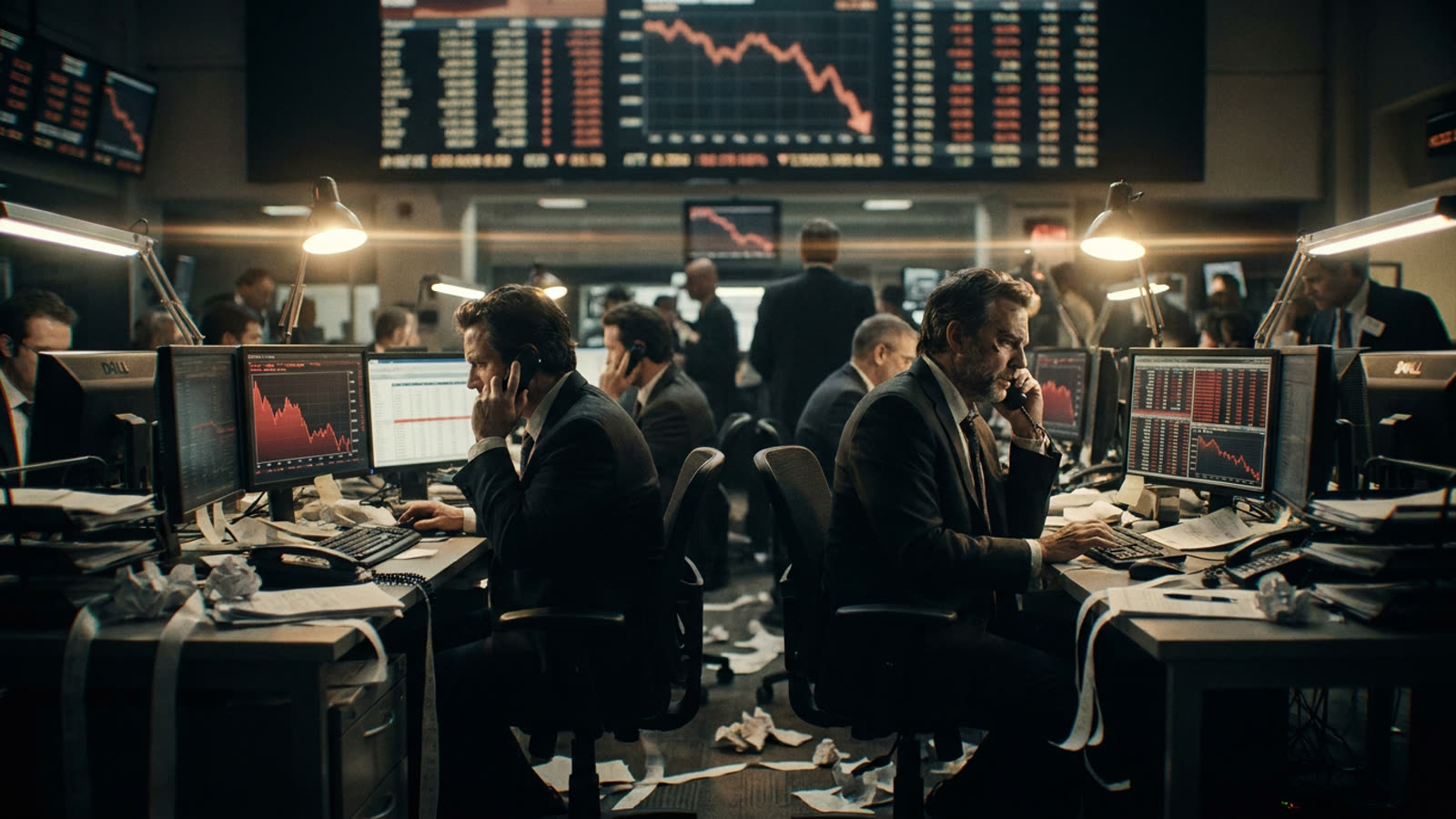
The stock market's spring optimism died on Friday, buried under a pile of better-than-expected employment figures and worse-than-expected implications. The S&P 500 posted its sharpest single-day decline since the regional banking scare of 2023, while the Nasdaq suffered even more as semiconductor stocks—the market's beloved leaders—suddenly became its heaviest anchors.
The proximate cause was a jobs report that showed the American labor market remains stubbornly, almost defiantly strong. For workers, this is good news. For investors who had convinced themselves that the Federal Reserve would begin cutting rates by autumn, it was a rude awakening. The futures market now prices in at least one additional rate hike before year-end, with some traders positioning for two.
The chip wreck
Semiconductor stocks bore the brunt of Friday's carnage, with the Philadelphia Semiconductor Index dropping more than six percent. The sector had been the market's primary engine for nearly two years, propelled by artificial intelligence euphoria and the insatiable demand for advanced chips. But rate-sensitive growth stocks are particularly vulnerable when the cost of capital rises, and chip valuations—stretched by any historical measure—offered no margin of safety.
Nvidia, the poster child of the AI boom, shed roughly eight percent of its market capitalization in a single session. AMD, Broadcom, and Qualcomm followed with declines ranging from five to seven percent. The selling was indiscriminate, punishing companies with strong fundamentals alongside those with shakier narratives.
The labor paradox
The jobs report that triggered this repricing was, by most measures, excellent news for the real economy. Payroll growth exceeded forecasts by a comfortable margin, unemployment ticked down, and wage gains remained solid without accelerating into inflationary territory. In a normal cycle, this would be cause for celebration.
But we are not in a normal cycle. The Fed has spent two years trying to cool an economy that refuses to cooperate, and each strong data point pushes the central bank further from the pivot investors have been anticipating. The bond market responded accordingly: the two-year Treasury yield spiked, the yield curve steepened, and rate-cut expectations evaporated like morning fog.
What comes next
The Fed meets in two weeks, and while no one expects action at that gathering, the tone of Chair Powell's commentary will be scrutinized for any hint of hawkish escalation. The central bank finds itself in an uncomfortable position: inflation has stopped falling but hasn't resumed climbing, growth remains resilient, and the labor market shows no signs of cracking. The textbook response is patience, but markets are demanding clarity that the data simply doesn't provide.
Our take
Friday's selloff was overdue. Markets had priced in a soft landing so perfect it bordered on fantasy—inflation vanquished, rates falling, earnings rising, recession avoided. Reality is messier. The economy is strong, which is genuinely good, but strong economies don't need emergency-era monetary accommodation. Investors who built portfolios assuming imminent rate cuts are now learning that good economic news can be bad market news. This tension won't resolve quickly, and the summer ahead looks considerably more volatile than the spring that preceded it.