The numbers tell a story that defies every principle of consumer convenience. Vinyl records now outsell compact discs, a format that is objectively superior in durability, portability, and audio fidelity. Streaming services offer tens of millions of songs for a monthly fee less than the cost of a single LP. And yet record pressing plants operate at capacity, with wait times stretching months for independent artists. The vinyl resurgence is not a nostalgia trip. It is a deliberate rejection of optimization itself.
The standard explanation—that vinyl sounds warmer, richer, more authentic—collapses under scrutiny. Most contemporary records are mastered from digital files, pressed onto vinyl, then played through systems that cannot possibly reproduce the theoretical advantages of analog. The warmth people describe is often distortion, the crackle of dust, the mechanical imperfections of a needle dragging through grooves. In blind tests, listeners consistently fail to distinguish vinyl from high-quality digital. The audiophile defense is, at best, selective; at worst, confabulation.
The friction is the feature
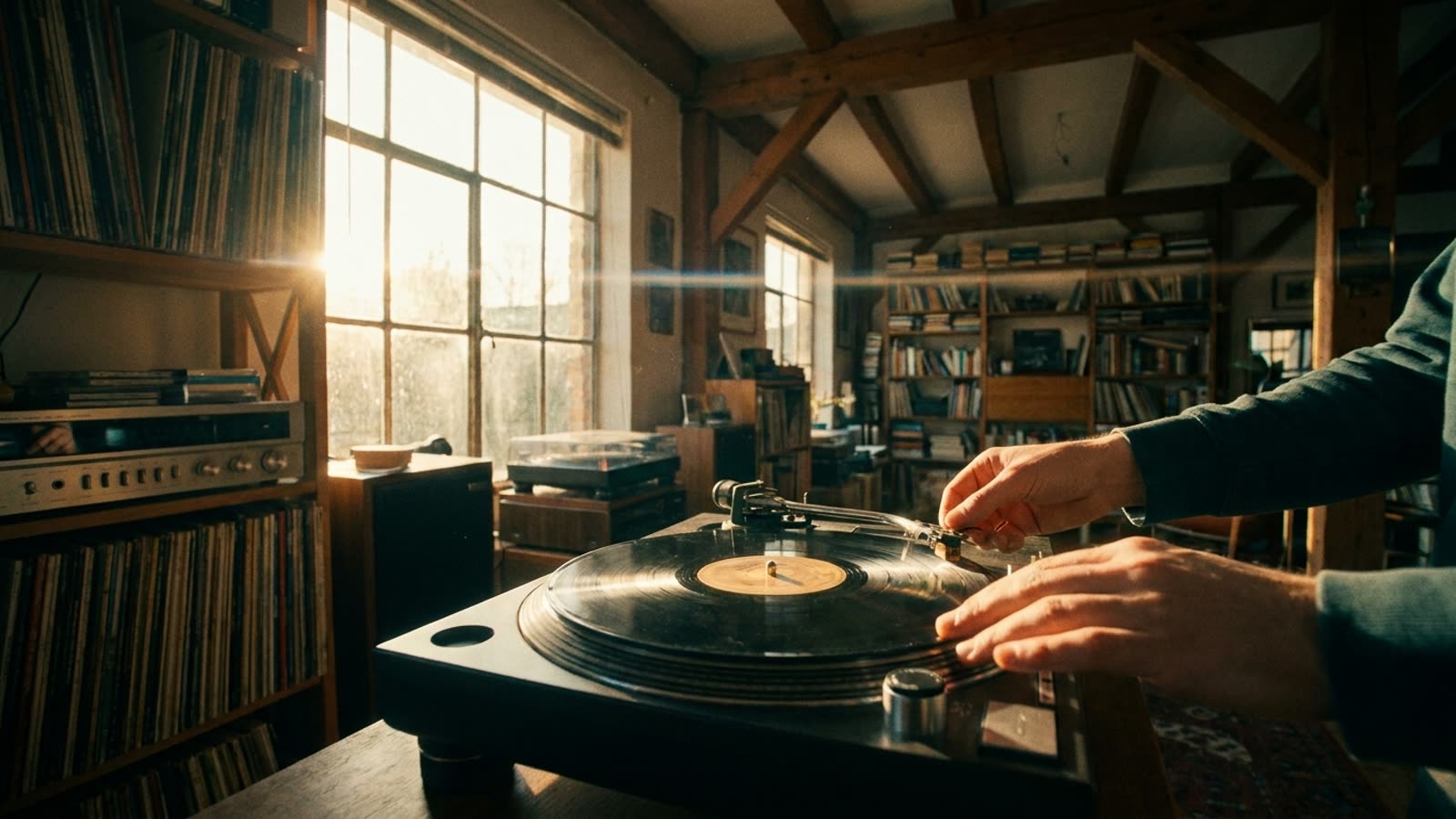
What vinyl actually offers is resistance. You cannot skip tracks without physically lifting a tonearm. You cannot shuffle. You must flip the record halfway through, an interruption that forces engagement rather than passive consumption. The album as artistic statement—sequenced, paced, designed to be heard in order—survives only on vinyl, where the alternative requires effort.
This friction extends to acquisition. Buying a record means choosing it, carrying it home, finding shelf space. The object has weight, dimension, consequence. It cannot be deleted, cannot be lost in a library of ten thousand songs you added and forgot. Collectors describe their shelves as autobiographies, each spine a marker of who they were when they bought it.
The economics of inconvenience
The music industry has noticed. New vinyl releases now routinely arrive months before streaming availability, a reversal of the digital-first model that dominated the past decade. Limited pressings in colored variants create artificial scarcity, driving collectors to purchase multiple copies of albums they already own. The average price of a new LP has climbed steadily, yet sales continue rising. Consumers are paying a premium for less convenience, which suggests they are buying something other than music.
Record stores, too, have adapted. The survivors are not competing with streaming on selection or price but on curation and experience—the staff recommendation, the listening station, the Saturday afternoon spent flipping through bins. They sell discovery as a physical act rather than an algorithmic suggestion.
Our take
Vinyl's persistence reveals something uncomfortable about our relationship with convenience. We have optimized nearly every friction out of daily life and find ourselves, paradoxically, seeking it back. The record is a permission structure—a reason to sit, to listen, to do one thing instead of everything. Its inconvenience is not a bug tolerated for superior sound. It is the entire product. In a world where everything streams, the act of choosing to be less efficient has become a small, defiant luxury.