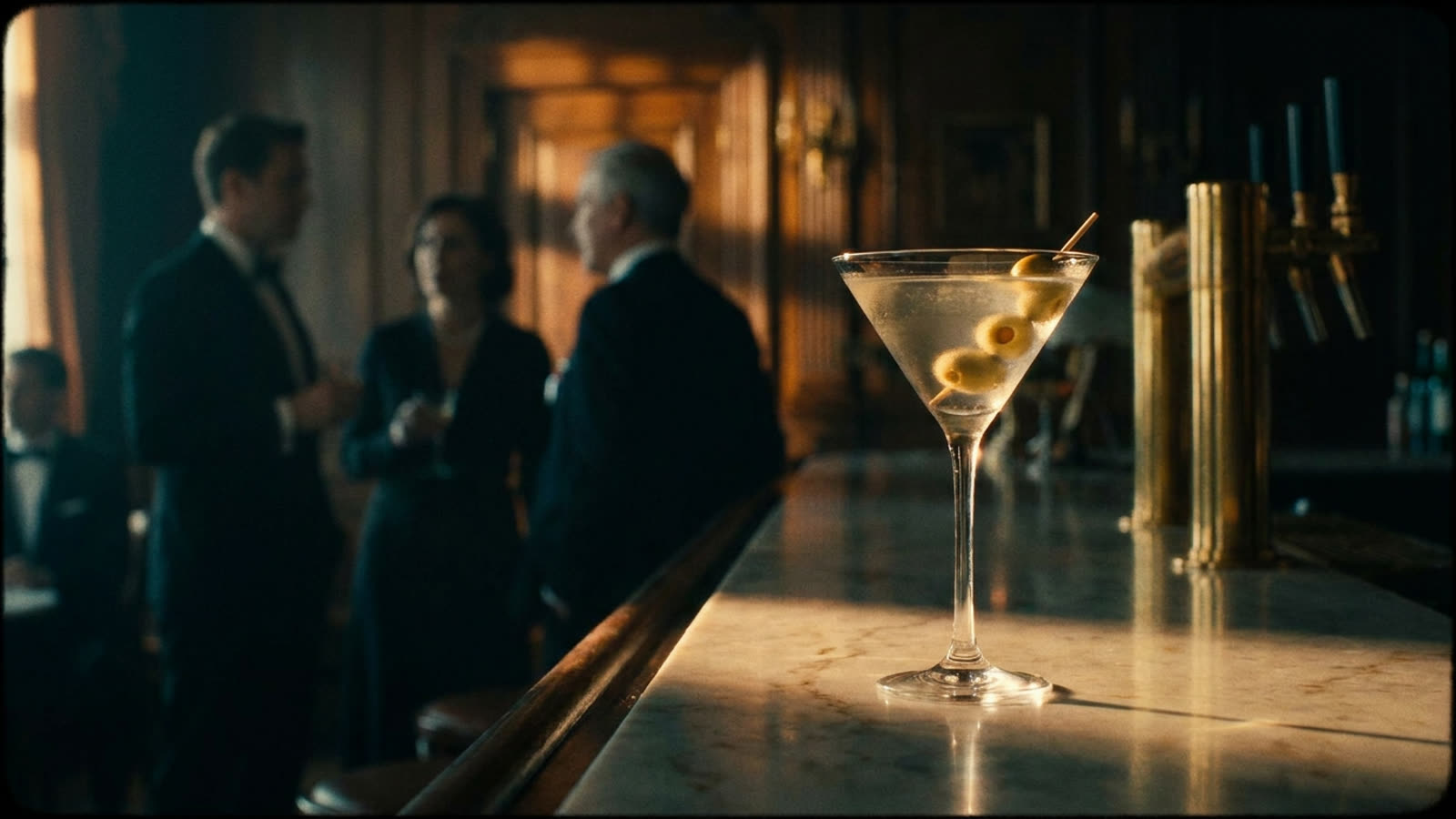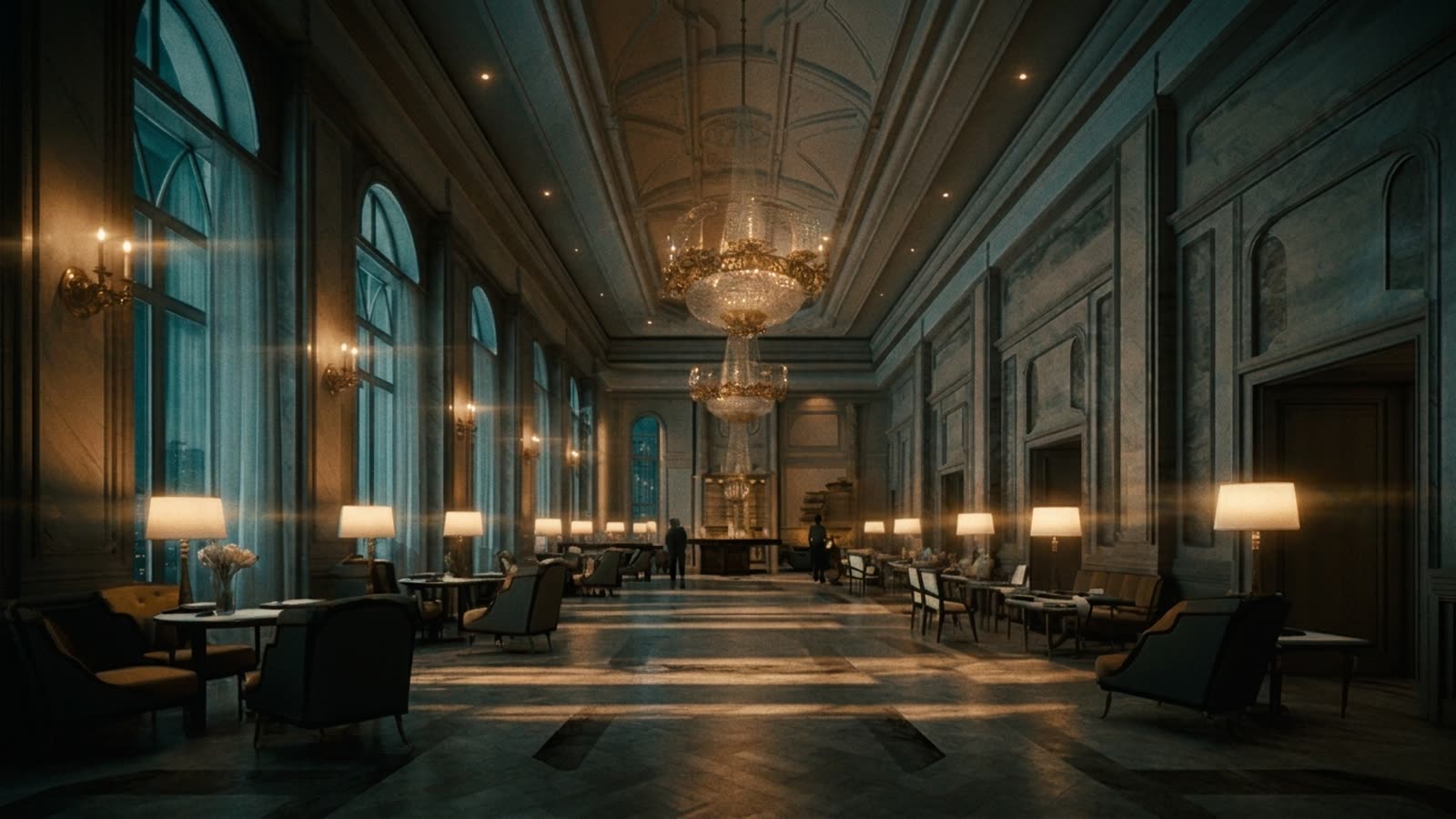
The lobby of a grand hotel is one of the last spaces in modern life where strangers of wildly different circumstances occupy the same room with mutual consent. A tech founder waits for a car. A film star avoids eye contact. A tourist pretends to read a newspaper. A local takes a meeting they'd rather not have at their office. Everyone is performing, and everyone knows it.
This is the genius of the form. The grand hotel lobby emerged in the nineteenth century not as a waiting room but as a social technology—a space that permitted encounter without obligation, visibility without intimacy. The Savoy in London, the Plaza in New York, the Raffles in Singapore: these were not merely places to sleep but theaters where the emerging global bourgeoisie could rehearse their membership in a new kind of cosmopolitan class.
The architecture of anonymity
The design was deliberate. High ceilings created acoustic privacy even in crowded rooms. Seating arrangements allowed observation without confrontation. The desk was positioned to see and be seen, but the transaction itself—money for room—was handled with discretion. You could be anyone in a grand hotel lobby, which meant you could become someone.
This was revolutionary. Before the grand hotel, public gathering spaces were either commercial (the market, the coffeehouse) or ceremonial (the church, the court). The lobby offered something new: a space of pure social circulation, where presence itself was the product. Writers from Henry James to Joan Didion understood this. The lobby scene became a literary shorthand for characters in transition, people whose identities were not yet fixed.
The slow erosion
Something has shifted. The lobbies remain, often more expensively appointed than ever, but the social function has atrophied. Partly this is security—the velvet rope, the keycard, the concierge who asks if you're a guest. Partly it's the smartphone, which gives everyone a reason to look down. Partly it's the rise of the members' club, which offers the same social theater but with the friction of exclusivity that the grand lobby deliberately avoided.
The Chateau Marmont in Los Angeles, long the last holdout of the lobby as genuine public space, has pivoted to members-only. The Carlyle in New York feels more like a museum than a crossroads. Even the newer luxury properties—the Aman Tokyo, the Edition chain—design their lobbies for Instagram geometry rather than human encounter. They are beautiful. They are also sterile.
Our take
The grand hotel lobby was an improbable democratic experiment: a space where money bought access but not control, where the performance of sophistication was open to anyone willing to dress the part and hold their nerve. Its decline is not merely architectural nostalgia. It reflects a broader retreat from shared public space into curated private enclaves. We have traded the productive discomfort of strangers for the algorithmic comfort of our own kind. The lobbies still gleam. But the theater has gone dark.