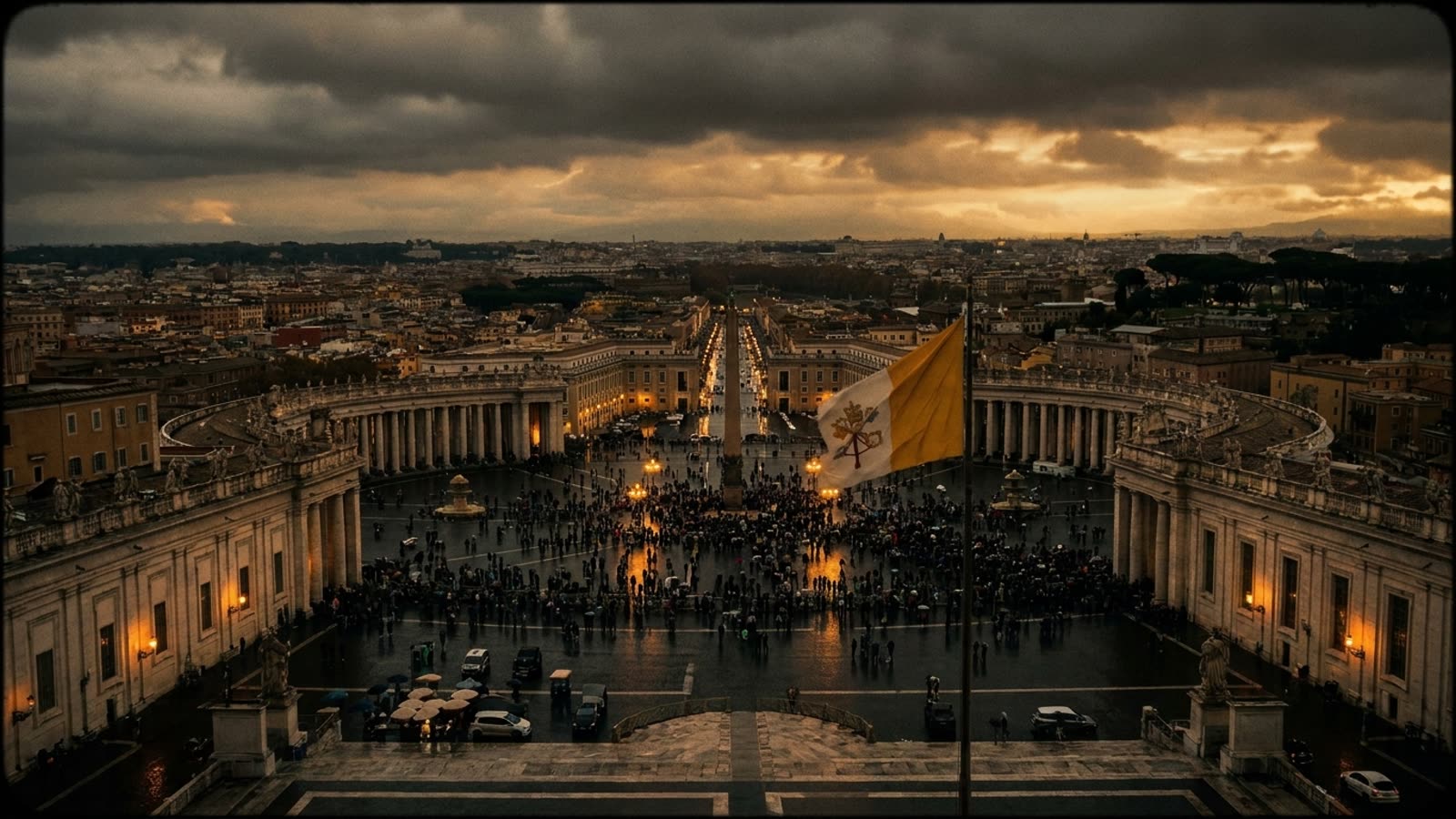
Vatican City is simultaneously the world's smallest independent nation-state and the headquarters of an institution claiming spiritual authority over 1.3 billion Catholics. This paradox — a tiny enclave wielding outsized global influence — makes it one of the most unusual political entities on Earth, and one of the least understood.
The Vatican's sovereignty dates to the 1929 Lateran Treaty with Mussolini's Italy, which resolved decades of tension following Italian unification. That agreement created a new country where the Pope would hold absolute authority, free from interference by any secular government. Nearly a century later, the arrangement persists: the Holy See maintains diplomatic relations with over 180 countries, more than almost any other state, and holds permanent observer status at the United Nations.
The machinery of a microstate
Vatican City operates as an absolute elective monarchy — the only one remaining in Europe. The Pope serves as head of state, head of government, and supreme legislator, with no constitutional constraints on his authority within Vatican territory. Upon a Pope's death or resignation, sovereignty transfers to the College of Cardinals until a new pontiff is elected in the Sistine Chapel conclave.
The actual administration runs through the Roman Curia, a bureaucracy that has evolved over centuries into something resembling a cabinet government. The Secretariat of State handles foreign relations and internal coordination. The Prefecture for the Economic Affairs oversees finances. Various dicasteries manage everything from doctrine to charitable works. Approximately 4,500 people work for the Vatican, though only around 800 actually live within its walls.
The legal system blends canon law with Italian civil law, adapted as needed. Vatican courts handle internal matters, though serious crimes are typically referred to Italian authorities by agreement. The state issues its own passports, mints euro coins with Vatican designs, and operates postal and banking services — the latter having attracted uncomfortable scrutiny over transparency in recent decades.
Diplomacy without divisions
The Holy See's diplomatic influence derives not from military or economic power but from moral authority and institutional permanence. Papal nuncios — the Vatican's ambassadors — often serve as neutral intermediaries in conflicts where other powers cannot. The Holy See mediated between Chile and Argentina in a territorial dispute that nearly led to war in the late 1970s. More recently, it has facilitated dialogue between the United States and Cuba.
This soft power comes with constraints. The Vatican must balance its universal spiritual mission against the political interests of local Catholic communities, which sometimes conflict. Relations with China remain complicated by disagreements over bishop appointments. Positions on social issues can strain ties with progressive Western governments while strengthening them with conservative ones elsewhere.
Our take
The Vatican represents something genuinely strange in the international system: a government whose primary export is legitimacy itself. Its survival as a sovereign entity depends entirely on the perception that it stands apart from ordinary politics, even as it engages in them constantly. Whether mediating conflicts or issuing encyclicals on climate change, the Holy See trades on a currency no other state possesses — the claim to speak for eternal truths rather than temporary interests. That this arrangement emerged from a deal with a fascist dictator and persists through sheer institutional momentum is itself a lesson in how power actually operates.