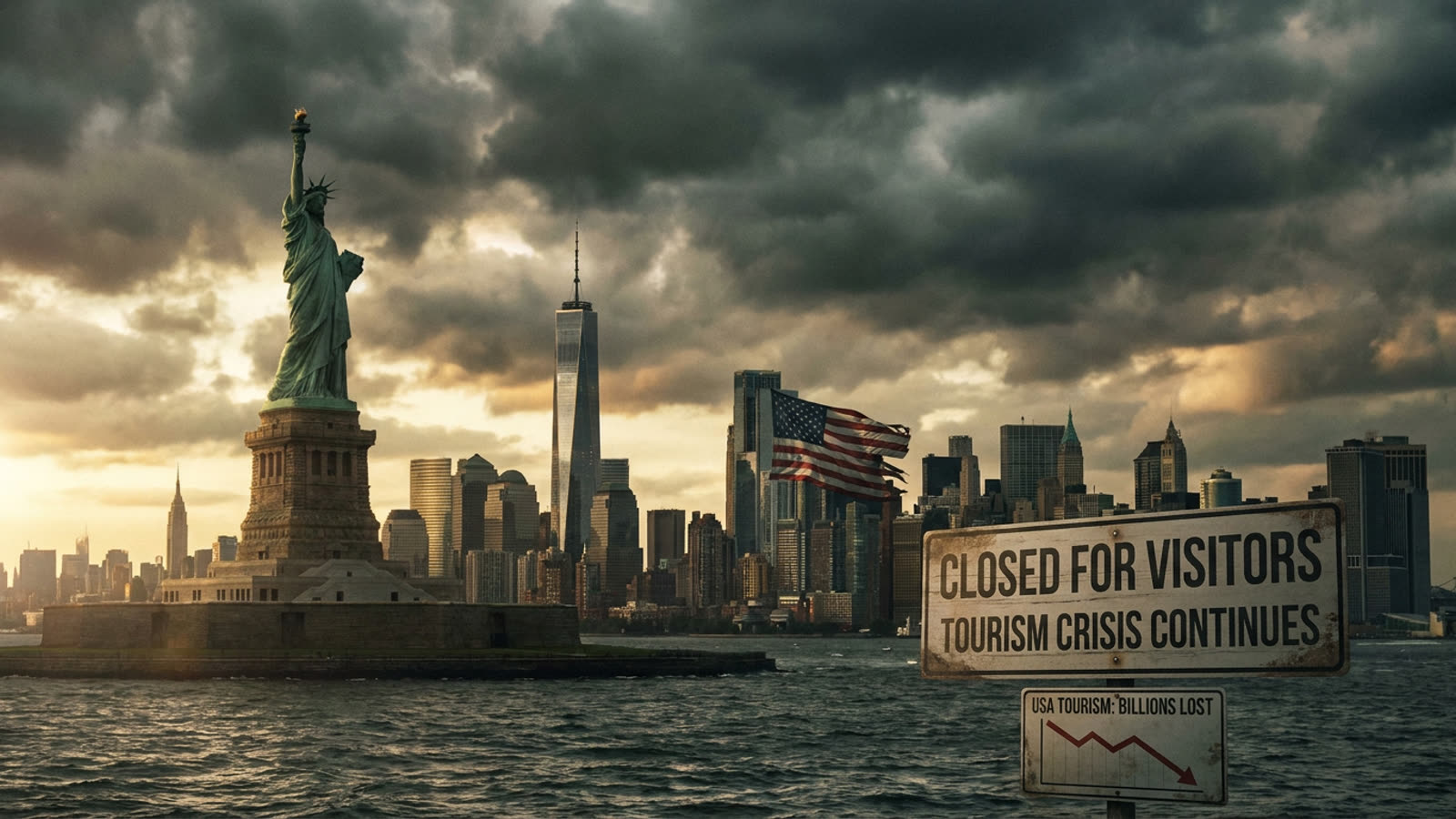
The United States is experiencing a tourism recession that has nothing to do with interest rates, inflation, or a weakening dollar. International arrivals have cratered, hotel bookings from overseas travelers are down double digits, and the economic toll is measured in billions—not because Americans have stopped spending, but because the rest of the world has stopped showing up.
The numbers are stark. Compared to the post-pandemic recovery peak, millions fewer international visitors are arriving on American shores each year. The ripple effects touch airlines, hotels, restaurants, retailers, and the countless small businesses in gateway cities that depend on foreign spending. New York, Los Angeles, Miami, and Las Vegas—cities that had finally clawed back their pre-2020 tourism economies—are watching occupancy rates and per-visitor spending decline in ways that defy the otherwise resilient domestic consumer.
The perception premium
Tourism economists have long understood that destination appeal is a fragile asset. A country's brand—its perceived safety, openness, and cultural welcome—can take decades to build and months to erode. The current American predicament is a case study in soft-power depreciation. Surveys of potential travelers in Europe, Asia, and Latin America consistently cite concerns about political instability, immigration enforcement unpredictability, and a general sense that the United States has become a more hostile environment for visitors.
This is not mere sentiment. Visa processing delays, high-profile incidents at borders, and a drumbeat of international headlines about domestic unrest have created a feedback loop. Travel advisories from allied nations, once unthinkable, have become more common. The practical effect is that a German family planning a two-week holiday or a Japanese business delegation scheduling a conference increasingly looks elsewhere—to Portugal, to Australia, to anywhere that feels less fraught.
The economic math
International tourists spend, on average, significantly more per trip than domestic travelers. They stay longer, book higher-end accommodations, and purchase goods to bring home. Losing millions of these visitors annually translates to tens of billions in foregone economic activity. The job losses are diffuse but real: housekeepers, tour guides, retail clerks, and restaurant workers in tourism-dependent regions are feeling the pinch even as the broader labor market remains tight.
The fiscal implications extend further. State and local governments that rely on hotel taxes and sales tax revenue from tourist corridors are revising budgets downward. Convention centers built on the assumption of robust international attendance are running below capacity. The knock-on effects for commercial real estate in hospitality zones are only beginning to materialize.
Our take
What makes this tourism slump so vexing is that it defies the usual policy toolkit. The Federal Reserve cannot cut rates to make America seem friendlier. Congress cannot appropriate its way to a better global image. The damage is reputational, and reputations heal slowly—if at all. The United States is learning, in real time, that soft power has hard economic consequences. The billions being lost are not a bug of some external shock; they are the price of how the country has chosen to present itself to the world.