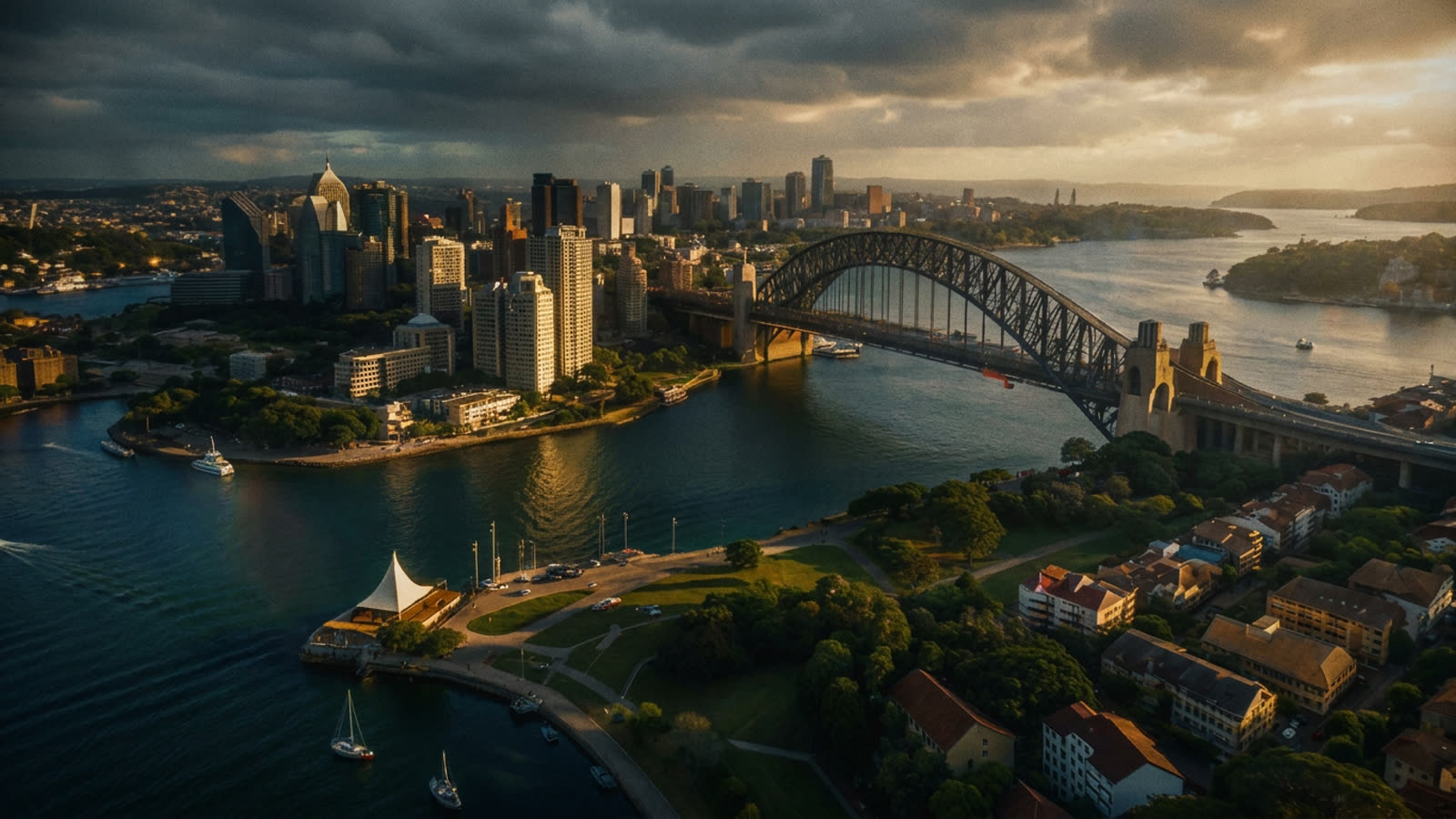
The Australian dream was always a house with a backyard, a Hills Hoist clothesline, and a barbecue within earshot of the cricket. That dream now costs roughly thirteen times the median household income in Sydney and Melbourne—a ratio that makes San Francisco look accessible and London look like a bargain. The country that pioneered mass suburban homeownership in the postwar era has become a cautionary tale in how democracies can price their young out of the social contract.
The numbers are jarring even by global standards. Australia's national price-to-income ratio has climbed past twelve, comfortably exceeding the United Kingdom, Canada, and the United States. In Sydney, the median house price hovers around A$1.6 million. A dual-income couple earning the median household wage would need to save for more than fifteen years just to accumulate a twenty percent deposit—assuming, generously, that they spend nothing on rent, food, or existence in the meantime.
The policy architecture of unaffordability
Australia's housing crisis is not an accident of geography or a natural consequence of desirability. It is the predictable outcome of policy choices that have compounded over decades. Negative gearing—the tax provision allowing property investors to deduct losses on rental properties against other income—has turned residential real estate into a favored vehicle for wealth accumulation among the already-wealthy. Capital gains tax discounts further sweeten the deal, encouraging speculative holding rather than productive use.
Meanwhile, local councils wield extraordinary power over zoning and development approvals, and they wield it conservatively. Existing homeowners, who vote in local elections, have strong incentives to block new supply that might dilute their property values. The result is a chronic undersupply of housing in the cities where jobs actually exist, pushing prices ever higher.
The generational fracture
The political economy of Australian housing now cleaves cleanly along generational lines. Boomers and older Gen-Xers who bought in the 1990s or early 2000s have watched their net worth multiply while doing nothing more strenuous than paying their mortgages. Millennials and Gen-Z face a choice between permanent renting, relocating to regional towns with fewer opportunities, or relying on parental wealth—the so-called "Bank of Mum and Dad"—to enter the market at all.
This is not merely an economic inconvenience; it is a social restructuring. Homeownership rates among Australians under 35 have fallen sharply over two decades. The implications ripple outward: delayed family formation, reduced geographic mobility, growing wealth inequality, and a fraying of the egalitarian self-image that Australians have long cherished.
Our take
Australia's housing dysfunction is a masterclass in how democracies can fail the future while serving the present. Every policy lever—tax treatment, zoning, infrastructure investment—has been pulled in the direction of protecting incumbent homeowners at the expense of aspiring ones. The political courage required to reverse course is substantial, and neither major party has shown much appetite for it. Until that changes, the Australian dream will remain what it has become: an inheritance, not an aspiration.