The first week of June brings two events that rarely share a news cycle but now share a thesis: the American regulatory apparatus is finally, grudgingly, deciding what to do about digital assets, and the labor market will determine how much latitude it has to act.
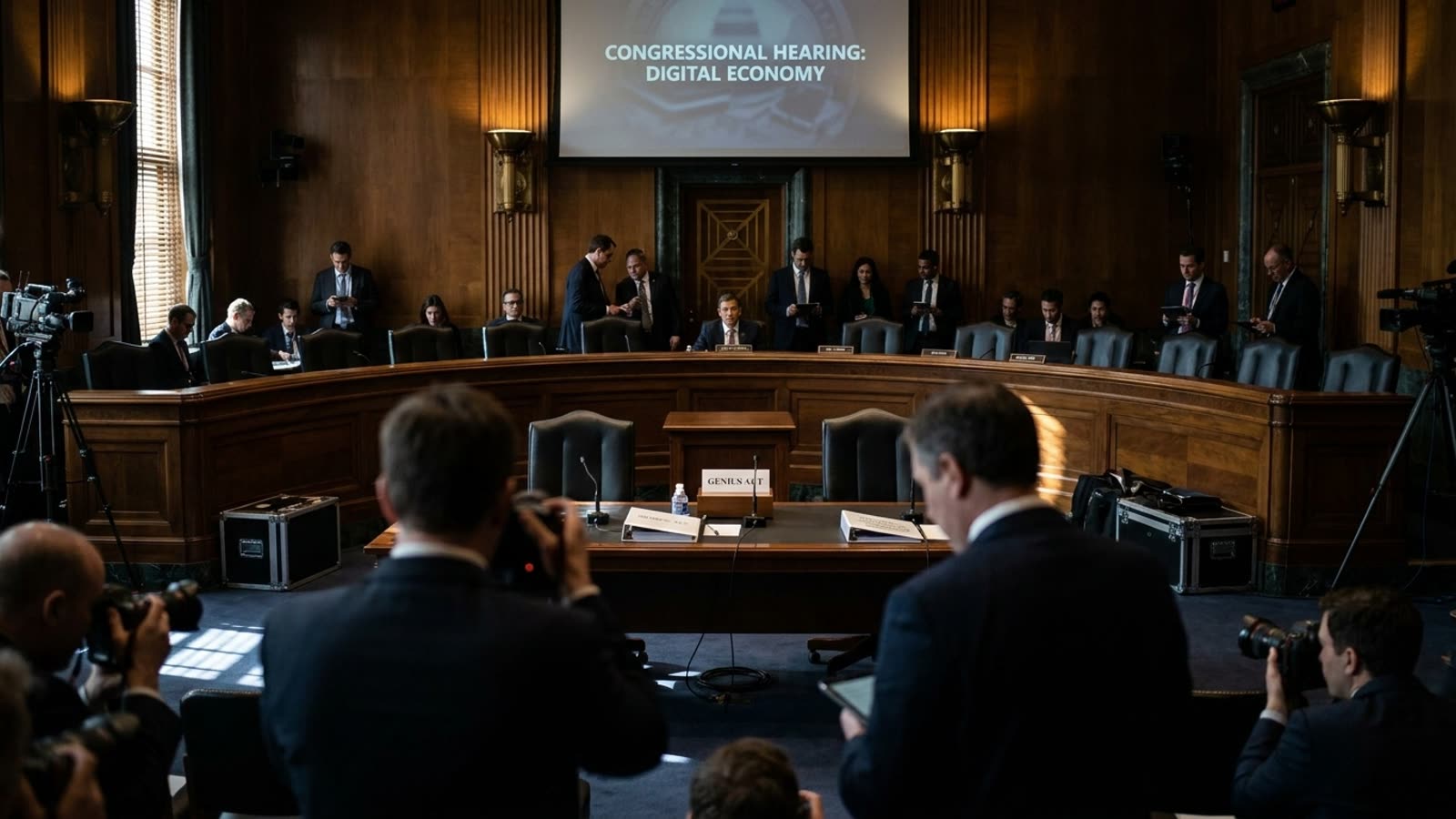
Congress returns Monday from its Memorial Day recess with the GENIUS Act—the stablecoin framework that cleared the Senate Banking Committee in April—near the front of the legislative queue. The public comment period on the bill's implementing guidance closed over the weekend, and Senate leadership has signaled floor time before the July 4 recess. For an industry that has spent three years begging for rules, the silence is about to end.
The GENIUS Act's moment
The bill would create a two-tier licensing regime for stablecoin issuers: federally chartered "payment stablecoin" licenses for coins above a certain market-cap threshold, and state-level oversight for smaller players. Critics call it a gift to incumbents like Circle and Tether; supporters argue it is the minimum viable framework to prevent another Terra-style collapse. Either way, it represents the first serious attempt to codify what a dollar-pegged token actually is under American law.
The comment period drew thousands of submissions, and lobbyists on both sides spent the holiday weekend parsing them. Expect amendments on reserve requirements and audit standards before the bill reaches the floor.
Friday's employment test
None of this happens in a vacuum. The May jobs report lands Friday morning, and the Fed's June meeting follows two weeks later. Chair Powell has spent the spring telegraphing patience—holding rates steady while inflation drifts toward target—but a blowout payrolls number could scramble the calculus. Markets are pricing roughly 60 percent odds of a cut by September; a surprise above 200,000 new jobs would push that probability lower and tighten financial conditions just as Congress tries to write rules for a sector that thrives on cheap capital.
The interplay matters. Stablecoin legislation is partly a bet on the dollar's continued dominance in digital finance. If the Fed is forced into a hawkish pivot, the dollar strengthens, and the case for dollar-backed tokens becomes easier to make abroad. If the labor market softens and cuts arrive sooner, risk assets rally, and crypto's speculative wing—not its payments infrastructure—captures the headlines again.
Our take
Washington is not moving fast, but it is moving. The GENIUS Act is imperfect, probably too friendly to large issuers, and almost certainly destined for a conference committee slog with the House. But its existence is the point: after years of regulation-by-enforcement, Congress is attempting to legislate. The jobs report will set the mood music. A soft number gives the Fed cover and lets crypto bulls dream of rate cuts; a hot number reminds everyone that monetary policy still sets the boundaries of financial innovation. Either way, the adults are back in the room.