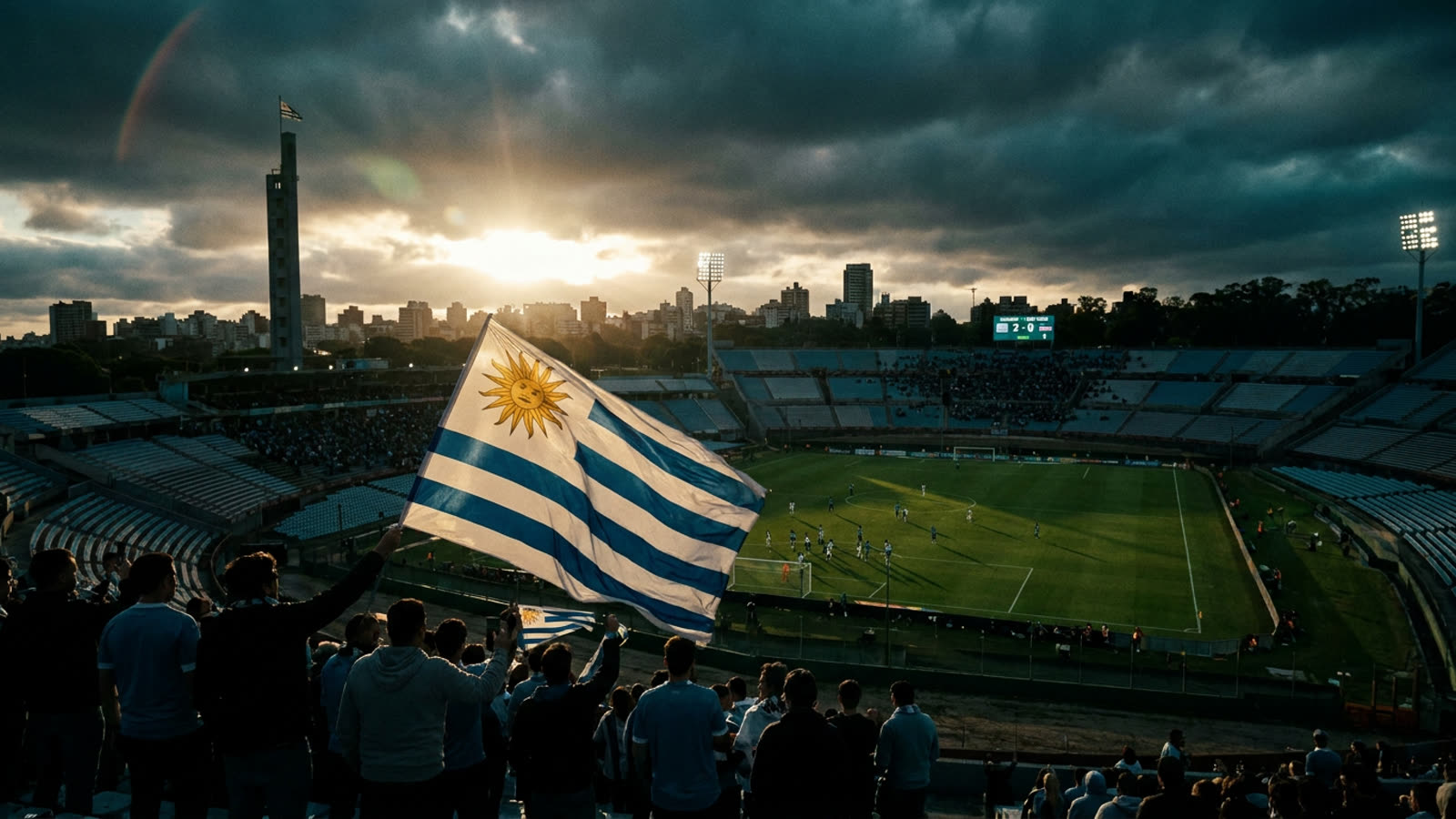
Uruguay do not seduce. They strangle, efficiently and without apology, and their two-goal halftime lead against Cape Verde on Saturday is a masterclass in the difference between teams that charm neutrals and teams that win World Cups.
The Atlantic islanders arrived in the United States as the tournament's most improbable qualifiers, a nation of barely 600,000 whose diaspora outnumbers its residents. Their group-stage opener against Morocco had produced a heroic draw that sent social media into raptures. Against Uruguay, they discovered what happens when sentiment meets South American cynicism honed across more than a century of competitive football.
The Suárez question answered
Luis Suárez, now 39 and carrying the weight of what is almost certainly his final World Cup, opened the scoring with a poacher's goal that required perhaps four meters of movement and thirty years of accumulated cunning. The strike silenced those who questioned whether Uruguay's aging talisman could still deliver when it mattered. Cape Verde's goalkeeper had no chance—not because the shot was unstoppable, but because Suárez had already decided where the ball would go before anyone else in the stadium understood the sequence of play.
The second goal, arriving twelve minutes later, bore the fingerprints of Marcelo Bielsa's relentless pressing system. A turnover in Cape Verde's defensive third led to a three-pass sequence that ended with Darwin Núñez finishing into an empty net. The Liverpool striker's celebration was muted, almost apologetic—the goal felt inevitable from the moment possession changed hands.
Cape Verde's structural problem
The Blue Sharks' midfield, so compact and disciplined against Morocco, found itself pulled apart by Uruguay's patient circulation. Bielsa's side completed 89% of their passes in the opening 45 minutes, a figure that would be unremarkable for Spain or Germany but represents a tactical evolution for a nation historically content to defend deep and counter.
Cape Verde's coach, Bubista, faces an impossible second-half decision: push forward and risk the humiliation of a rout, or accept a manageable defeat that preserves goal difference for the final group match. Neither option offers much hope of advancing.
Our take
Cape Verde's World Cup story was always going to include a chapter like this. The romance of qualification, the pride of representation, the joy of competing—these matter enormously, and no scoreline can diminish them. But Uruguay exist to remind dreamers that football's oldest truths remain operative: experience beats enthusiasm, and the teams that have won things know how to keep winning them. La Celeste have not lifted the trophy since 1950, yet they play every match as if the ghost of Obdulio Varela is watching from the technical area, arms crossed, demanding results over aesthetics.