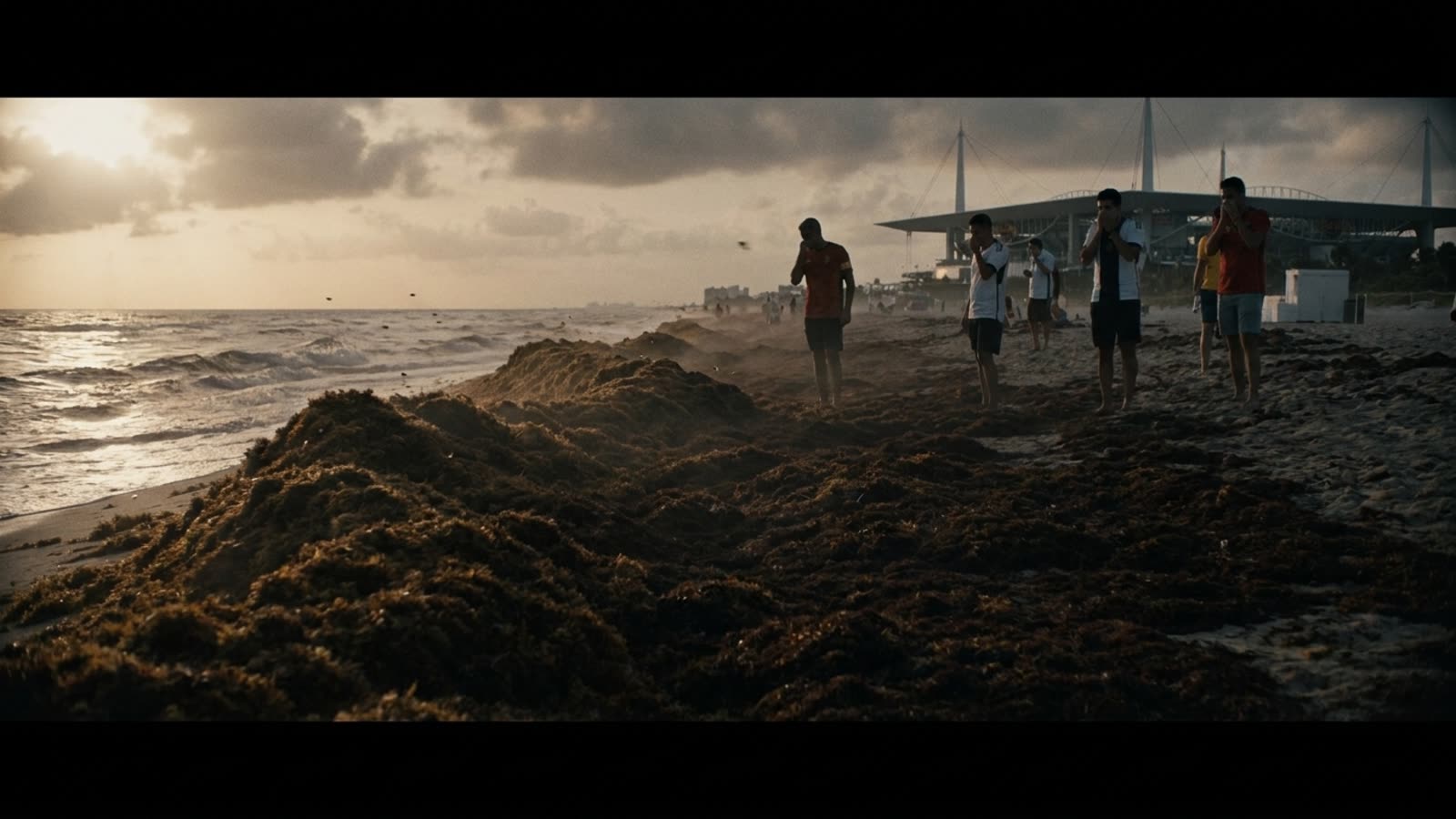
The promotional videos showed turquoise water and powder-white sand. What they did not show was the smell — a sulfurous, rotting-egg odor that hits you before you even see the beach. Thousands of World Cup fans who traveled to Miami expecting the postcard version of South Florida are instead encountering mountains of brown sargassum seaweed, some piles several feet high, decomposing in the June heat.
The timing could not be worse for a host city that staked its World Cup identity on beach culture. Miami's matches at Hard Rock Stadium have drawn supporters from across Europe, South America, and beyond, many of whom scheduled extra days specifically to experience the famous coastline. Instead, they are finding stretches of shore that look less like paradise and more like a compost facility.
A bloom years in the making
Sargassum is not new to Florida, but the scale of recent blooms has been extraordinary. The Great Atlantic Sargassum Belt, a 5,000-mile mass of floating seaweed stretching from West Africa to the Gulf of Mexico, has been growing since scientists first identified it in 2011. Nutrient runoff from agriculture, rising ocean temperatures, and shifting currents have all contributed to what researchers now consider an annual phenomenon rather than an anomaly.
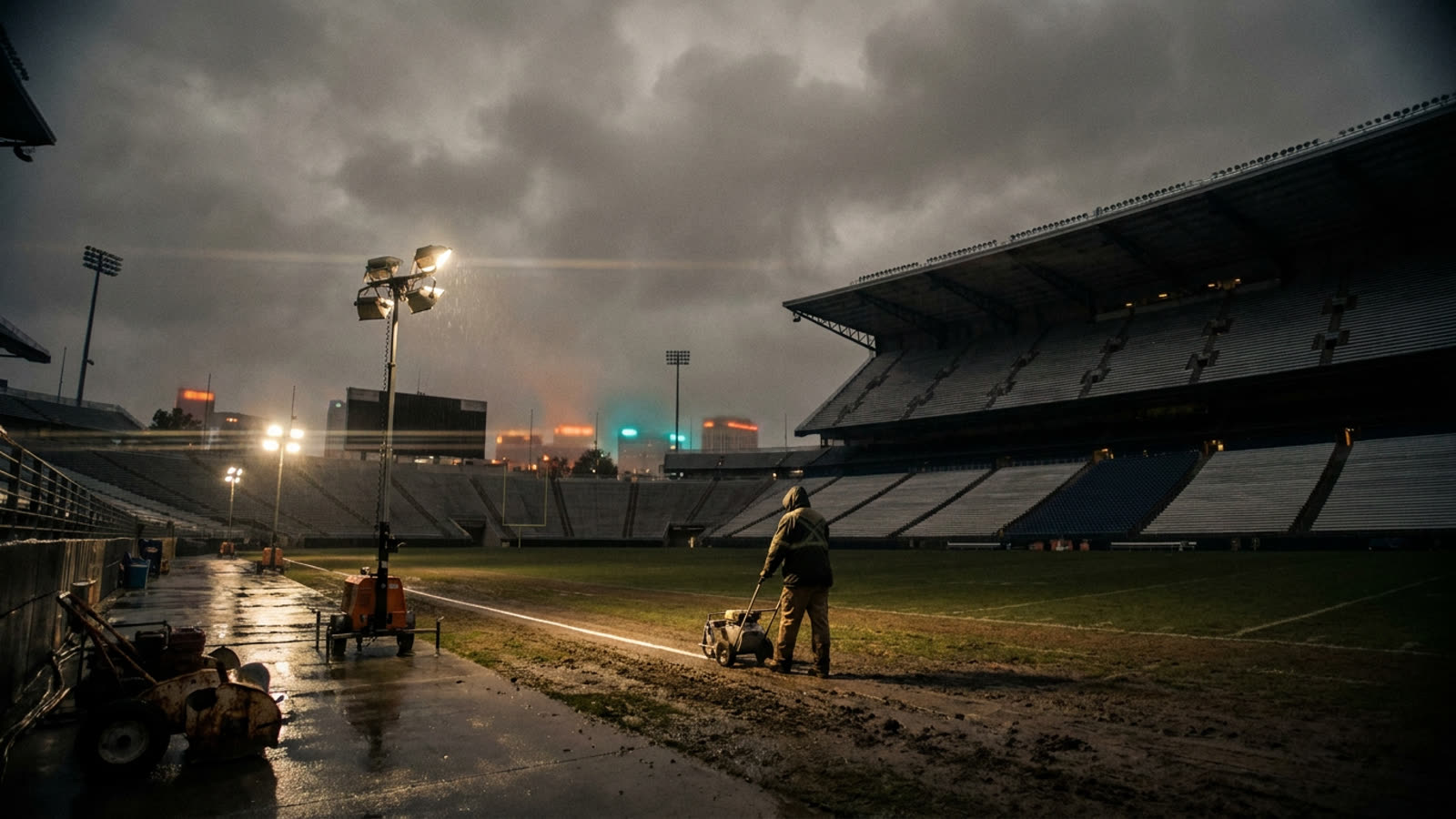
For Miami Beach, the problem is both aesthetic and economic. The city spends millions each year on removal efforts, deploying tractors and crews to clear the sand before peak tourist hours. But during heavy bloom periods, the seaweed arrives faster than it can be hauled away. And once it starts decomposing, it releases hydrogen sulfide — the compound responsible for that distinctive rotten-egg smell.
The hospitality scramble
Hotels along Collins Avenue and Ocean Drive have been fielding complaints from guests who booked rooms specifically for beach access. Some properties have begun offering transportation to cleaner stretches of coast farther north, while others are emphasizing pool amenities and air-conditioned alternatives. Restaurant patios that normally command premium prices for ocean views are seeing customers request interior seating.
Social media has amplified the disconnect between expectation and reality. Videos posted by visiting fans show them approaching the water's edge only to retreat, hands over noses, as the smell becomes overwhelming. Comments sections have become impromptu travel advisories, with locals explaining that this is simply what June in Miami can look like.
The irony is that sargassum, in the open ocean, is ecologically valuable — a floating habitat for fish, sea turtles, and countless marine species. It is only when it washes ashore and begins to rot that it transforms from nursery to nuisance.
Our take
Miami sold itself as a beach destination, and the World Cup bought it. But climate-driven phenomena do not pause for tournament schedules, and the sargassum belt is not going anywhere. The city's response — frantic removal, apologetic hotels, hopes for favorable winds — feels like a metaphor for how coastal communities everywhere are learning to manage environmental realities that marketing cannot wish away. The fans will survive a smelly beach. The harder question is whether host cities can keep promising an experience that nature increasingly refuses to deliver.