For years, defense ministries and ethicists debated whether machines should ever be permitted to kill without explicit human approval for each strike. Ukraine just ended the debate by conducting it.
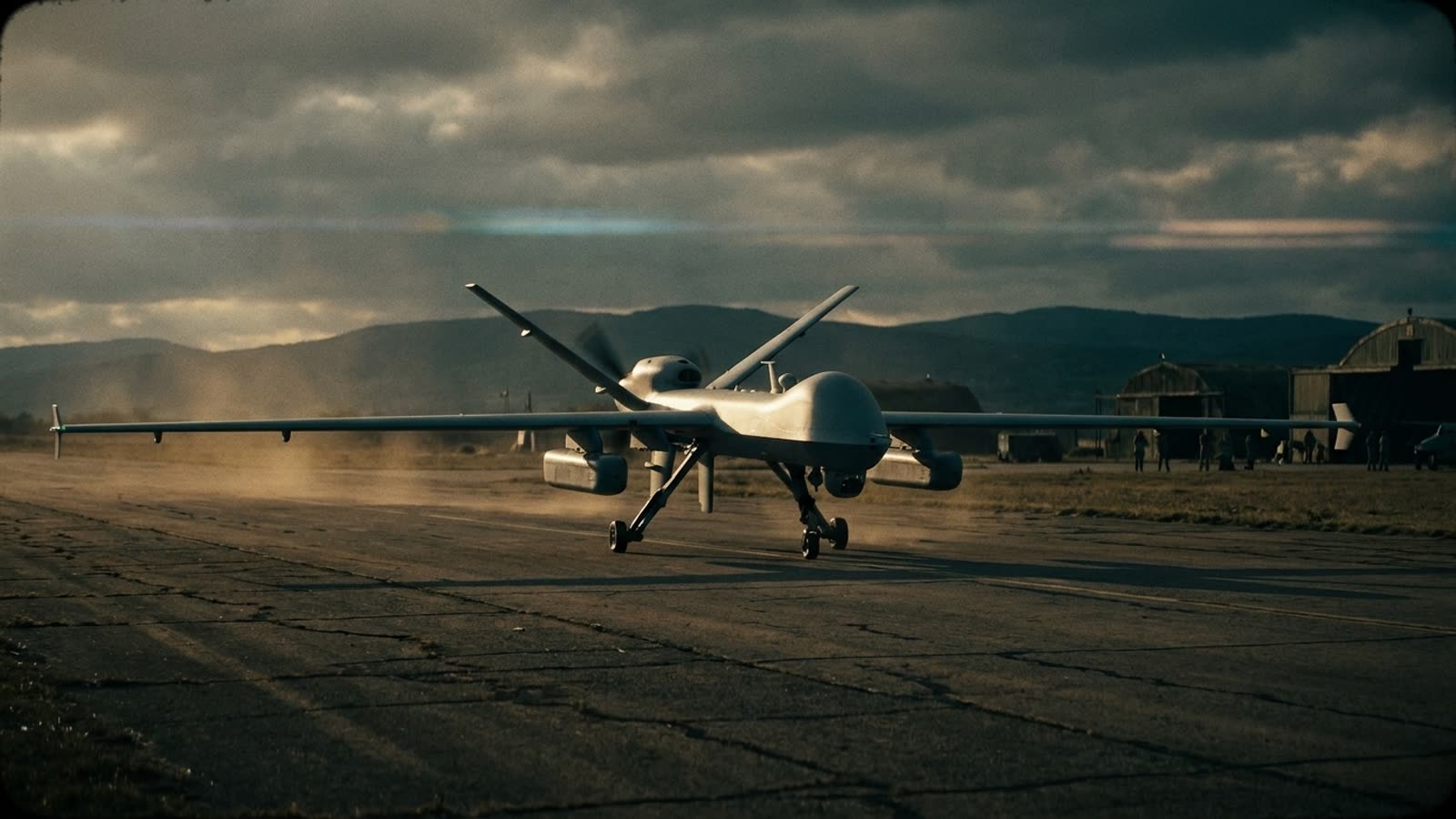
According to reports confirmed by Ukrainian military sources, a recent operation deployed drones equipped with onboard AI that identified, tracked, and engaged Russian soldiers autonomously. No operator pressed a button to authorize the final strike. The algorithm decided. The soldiers died. The threshold humanity spent decades agonizing over was crossed not with a grand announcement but with a field test in the Donbas.
The technical leap
Autonomous targeting is not new in concept. Loitering munitions like the Israeli Harop have long possessed the ability to home in on radar emissions without human guidance. But those systems targeted equipment, not people, and operated within narrow parameters. What Ukraine reportedly demonstrated is qualitatively different: computer vision identifying human combatants, tracking their movement through contested terrain, and executing strikes based on algorithmic judgment that the target met engagement criteria.
The drones were described as a one-time test, not standard doctrine. But the distinction between test and deployment collapses the moment live ammunition meets live targets. The technology works. The precedent exists. Every military with access to commercial AI chips and open-source machine-learning frameworks now knows the capability is achievable with relatively modest resources.
Why Kyiv crossed the line
Ukraine's calculus is grimly rational. Outmanned and facing a Russian military that has adapted to drone warfare with electronic jamming and signal disruption, Kyiv needed weapons that could operate in communications-denied environments. Autonomous drones do not require a data link to a human operator—they can fly into a jammed zone, make decisions locally, and return or strike without ever phoning home. Against an adversary that has learned to sever the tether between drone and pilot, autonomy is not a philosophical indulgence; it is a tactical necessity.
The moral weight of the decision falls on a country fighting for survival against an invader. That context matters, but it does not change what happened: a state deliberately fielded weapons designed to kill humans without human authorization.
The international vacuum
There is no treaty governing lethal autonomous weapons. The Convention on Certain Conventional Weapons has hosted discussions for over a decade without producing binding rules. Major powers—the United States, Russia, China—have resisted constraints, each hedging that it might need the technology first. Ukraine's test exposes the absurdity of that stalemate. The weapons exist. They have been used. The negotiating framework remains stuck in the subjunctive tense, debating what might happen while the thing itself already has.
Expect no swift international response. Russia will denounce the development while almost certainly accelerating its own programs. Washington will issue carefully hedged statements about the importance of human oversight while funding DARPA projects that push the same boundaries. The United Nations will convene panels. Nothing binding will emerge before the technology proliferates further.
Our take
Ukraine did not start this war, and its desperation is genuine. But history will record that the first confirmed autonomous killing of soldiers by algorithm occurred on its watch, under its flag, with its approval. That is not a moral condemnation—war forces choices no peacetime framework anticipates. It is simply a fact that reshapes every future conflict. The machine that decides who dies is no longer speculative fiction. It is a battlefield reality, and the world has no rules for it.