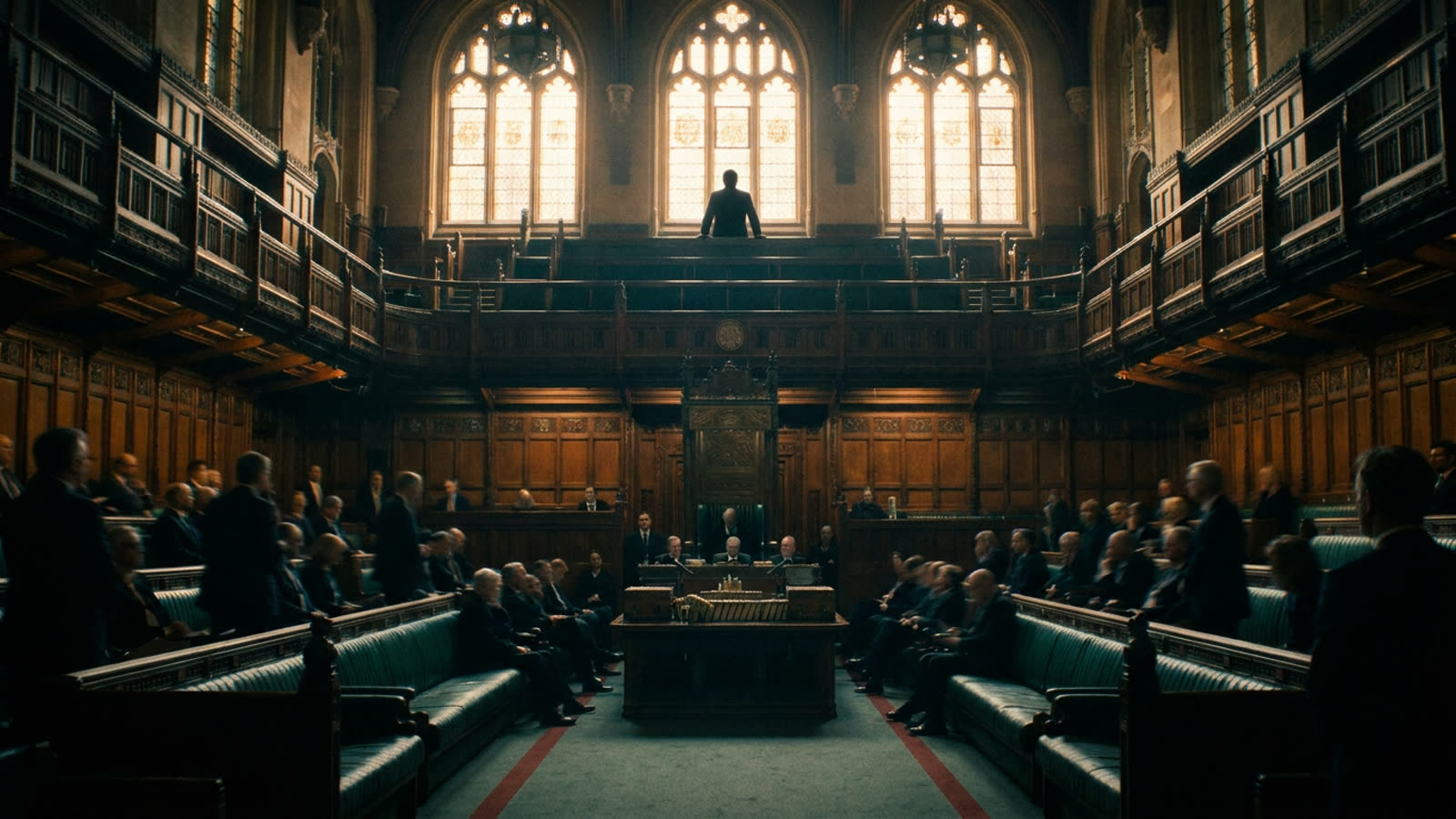
The British Cabinet meets every Tuesday morning at 10 Downing Street, and what happens inside that room is supposed to stay there forever. Not because of any law — there isn't one — but because of a constitutional convention so powerful that violating it has toppled ministers, fractured parties, and occasionally brought down governments. Cabinet collective responsibility is the invisible architecture of Westminster democracy, and understanding how it actually operates reveals something profound about the nature of political power.
The principle is deceptively simple: once the Cabinet reaches a decision, every member must publicly support it or resign. A minister may argue passionately against a policy in private, but the moment they step outside, they must defend it as if it were their own idea. The alternative is the exit door.
The mechanics of enforced unity
Collective responsibility serves several interlocking purposes that explain its remarkable durability. First, it prevents the opposition and media from exploiting internal divisions — if voters knew which ministers opposed which policies, governing would become nearly impossible. Second, it forces genuine deliberation; ministers know that once a decision is made, they own it, which concentrates minds wonderfully during discussion. Third, it protects the prime minister from being undermined by ambitious colleagues who might otherwise position themselves as the reasonable alternative to unpopular policies.
The convention extends beyond Cabinet itself. Parliamentary private secretaries, junior ministers, and government whips are all bound by it, creating a disciplined bloc that can reliably deliver votes in the House of Commons. The entire machinery of British government depends on this voluntary self-censorship.
When the fiction cracks
The most dramatic breaches tend to occur over European questions, which have a peculiar capacity to override normal political calculations. Harold Wilson suspended collective responsibility during the 1975 European Community referendum, allowing Cabinet ministers to campaign on opposite sides. David Cameron did the same for the 2016 Brexit referendum, a decision that looks increasingly like a catastrophic miscalculation — once ministers discovered they could publicly disagree with each other, putting the genie back in the bottle proved impossible.
Resignations over collective responsibility have produced some of Westminster's most memorable political theatre. Geoffrey Howe's devastating resignation speech in 1990, delivered after he could no longer defend Margaret Thatcher's European policy, triggered the leadership contest that ended her premiership. The speech worked precisely because Howe had spent years loyally defending positions he disagreed with; when he finally broke, the accumulated credibility made his critique devastating.
The unwritten made real
What makes collective responsibility genuinely fascinating is its purely conventional nature. No statute requires it. No court enforces it. A minister who breaches it faces no legal penalty whatsoever. Yet the convention persists because everyone involved understands that abandoning it would make government unworkable. It is, in essence, a massive collective action problem solved by shared understanding and mutual self-interest.
The Ministerial Code, updated by each incoming prime minister, now codifies the expectation, but this is description rather than law. A prime minister could theoretically abolish the convention tomorrow. None has, because doing so would be political suicide — a government that cannot present a united front cannot govern.
Our take
Collective responsibility is British constitutionalism at its most characteristic: a rule that exists only because everyone agrees to pretend it exists, yet which shapes political reality more powerfully than most actual laws. It rewards loyalty, punishes dissent, and forces politicians to take ownership of collective decisions rather than positioning themselves as perpetual critics of their own government. Whether this produces better policy is debatable. That it produces more coherent government is not. In an age when political fragmentation threatens democratic effectiveness everywhere, the Westminster system's insistence that ministers either defend the government or leave it looks less like quaint tradition and more like hard-won institutional wisdom.