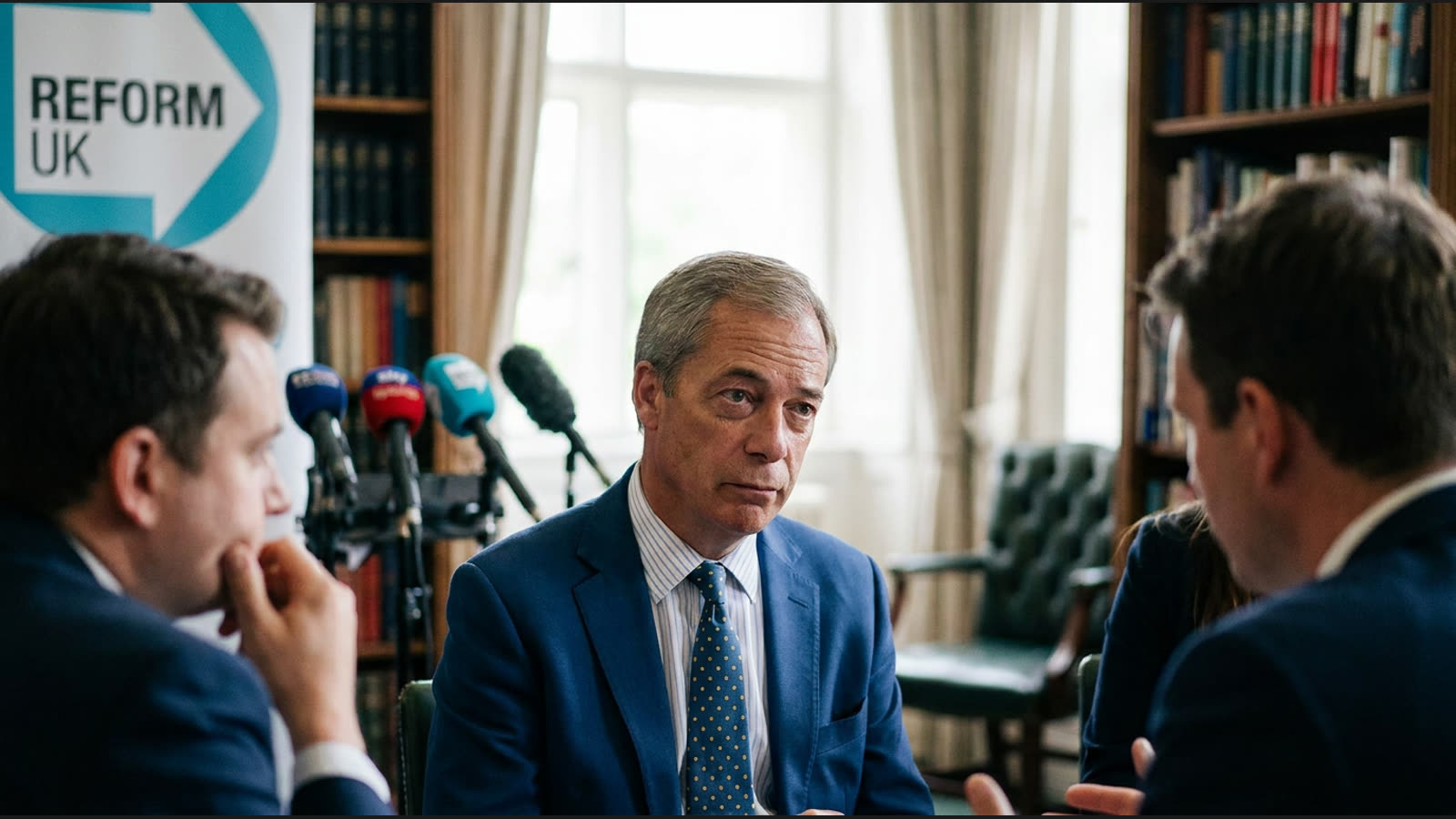
By the time results finished trickling in on Friday morning, Britain had a new political map. Nigel Farage's Reform UK had won 30% of the seats declared across English council contests—more than any other party—and Labour had lost control of the Welsh Senedd for the first time since devolution began in 1999. In Scotland, the SNP was preparing to claim victory. The Conservatives were down 137 seats. Labour was down 250.
Sir John Curtice, the country's most respected election analyst, called it plainly: politics in the United Kingdom has fragmented. The result is not a swing, not a correction, not a midterm rebuke. It is a structural break.
What the numbers actually say
Reform averaged 26% of the vote across a sample of more than 500 wards where detailed figures are available. In wards where more than 60% voted Leave in 2016, Reform averaged 41%—a number that looks less like a local grievance and more like a consolidated political identity. In wards that voted against Brexit, the party managed just 10%. The geography of 2016 is now the geography of 2026.
Labour, meanwhile, collapsed where it was strongest. Its vote was down 16 points on 2022 and 19 points on its own 2024 general-election performance. The falls were sharpest in constituencies with significant Muslim populations—a quiet indictment of Sir Keir Starmer's handling of Gaza that the party has spent eighteen months insisting would not materialize at the ballot box.
The Conservatives have no story
Kemi Badenoch's party lost more than a quarter of the seats it was defending. The single bright spot—retaking Westminster Council—was driven almost entirely by Labour collapse, not Tory recovery. In places where Reform surged hardest, Conservative support fell hardest. That is a cannibalization pattern, not a realignment in the Conservatives' favor.
Farage's long game
Reform gained outright control of Newcastle-under-Lyme, its first council. That is the smallest part of the story. The larger story is that Farage has now assembled, at the local level, the governing infrastructure that UKIP never built and the Brexit Party never attempted. A party that polls in the mid-twenties nationally and wins 30% of declared seats is no longer a spoiler. It is a first-order actor.
Our take
Britain spent a decade insisting that Brexit-era politics was a phase. The 2026 locals make clear it was a foundation. Labour's loss of Wales, the Conservative hollowing in the North, Reform's council in the Midlands—these are not disconnected tremors. They are the same earthquake, finally fully recorded.