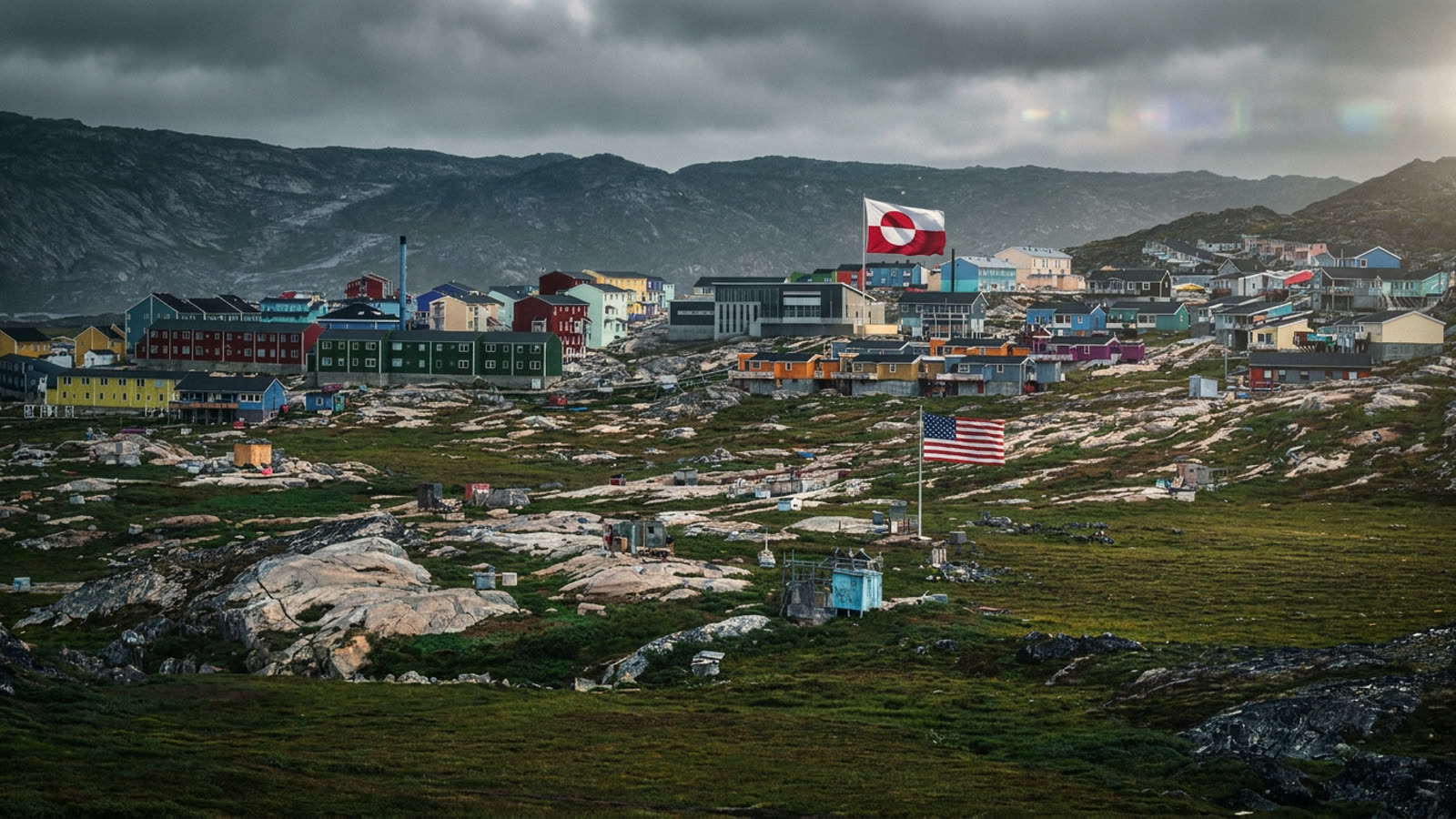
The United States has opened a consulate in Nuuk, Greenland's capital, marking the first permanent American diplomatic presence on the world's largest island and the clearest indication yet that the Trump administration's interest in the territory is not a passing fancy but a sustained geopolitical project.
The move, announced quietly by the State Department, comes amid mounting unease in Copenhagen over Washington's intentions. Denmark, which has administered Greenland as an autonomous territory since 1953, has watched with increasing alarm as American officials have shifted from vague expressions of interest to concrete infrastructure. A consulate is not a land grab, but it is a flag planted—a daily reminder to Greenland's 56,000 residents that Washington sees their future as bound to American strategic interests.
The Arctic's new great game
Greenland sits atop vast reserves of rare earth minerals, uranium, and oil, resources that have become central to great-power competition as supply chains fracture along geopolitical lines. More immediately, the island's position makes it invaluable for missile defense and Arctic shipping routes that climate change is rendering navigable for longer portions of the year. The Pituffik Space Base, formerly Thule Air Base, already hosts American early-warning radar systems; a consulate in Nuuk extends Washington's presence to the civilian and political sphere.
China has spent the past decade courting Greenlandic officials with infrastructure investment proposals, most of which Copenhagen has blocked on security grounds. Russia, meanwhile, has been rebuilding Soviet-era Arctic military installations at a pace that has alarmed NATO planners. In this context, the consulate is less about Greenland itself than about ensuring that neither Beijing nor Moscow gains a foothold in territory the Pentagon considers essential to North American defense.
Copenhagen's impossible position
Denmark finds itself caught between alliance loyalty and sovereignty. The Danish government has repeatedly stated that Greenland is not for sale, a position that has only hardened as Trump's rhetoric has grown more insistent. Yet Denmark depends on the United States for its security umbrella and cannot afford a genuine rupture with Washington. The consulate forces Copenhagen into an awkward stance: publicly welcoming American engagement while privately fretting that each new American initiative erodes Danish authority over the territory.
Greenland's own government, led by the Inuit Ataqatigiit party, has pursued a careful path toward eventual independence, a goal that requires economic diversification away from Danish subsidies. American investment could accelerate that timeline, which is precisely what worries Copenhagen—and precisely what intrigues some Greenlandic politicians.
Our take
The consulate is a bureaucratic fact with imperial undertones. Trump may never acquire Greenland, but he has already succeeded in reframing the conversation: the question is no longer whether America has interests in the Arctic, but how aggressively it will pursue them. Denmark's discomfort is real, but so is its limited leverage. Greenland, meanwhile, may discover that being courted by a superpower comes with its own constraints. The flag is up; the negotiation has begun.