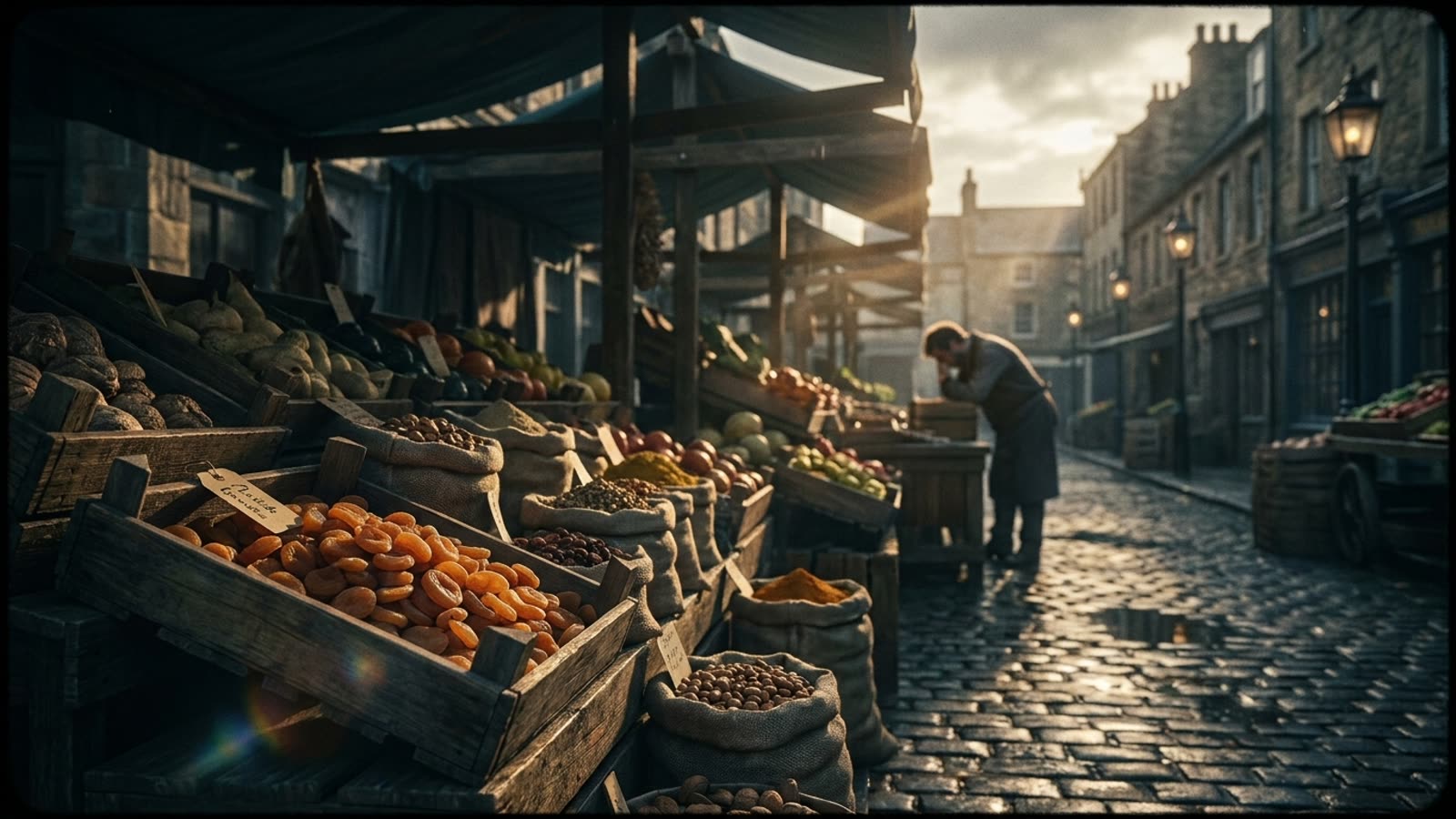
When a 12-kilogram box of dried apricots triples in price within a single year, you are no longer looking at inflation—you are looking at a supply chain in distress. That is the reality now facing independent food traders across Britain, who describe a "vicious circle" of compounding costs that threatens to push specialty retail toward a breaking point.
The testimony comes from cheesemongers, delicatessen owners, and market stallholders who have watched wholesale prices climb relentlessly while consumer spending power contracts. Dried apricots—a staple of cheese boards and gift hampers—have become an unlikely bellwether: £35 per box a year ago, £100 today. The arithmetic is brutal for businesses operating on thin margins.
Where the pressure originates
Multiple forces are converging. Global commodity markets remain volatile, with poor harvests in Turkey—the world's dominant apricot producer—tightening supply. Sterling weakness amplifies the pain for UK importers paying in dollars or euros. Meanwhile, domestic costs keep climbing: energy bills, business rates, wages, and packaging have all risen faster than retailers can pass on to customers already feeling squeezed.
The result is a margin trap. Raise prices too aggressively and footfall disappears; absorb the costs and profitability collapses. Many traders report cutting product lines, reducing staff hours, or simply accepting lower incomes.
Why specialty retail matters
Britain's independent food sector punches above its weight culturally and economically. Cheesemongers, fishmongers, and artisan bakers anchor high streets, attract tourism, and sustain domestic producers who cannot access supermarket supply chains. When these businesses struggle, the effects ripple outward—to small-scale farmers, to local employment, to the character of town centres already hollowed out by online retail.
The current crisis is not merely a story of expensive apricots. It is a stress test for an entire ecosystem of food businesses that lack the scale to negotiate bulk discounts or the capital to weather prolonged margin compression.
Our take
Governments love to celebrate artisan food culture in speeches and tourism campaigns; they are rather less enthusiastic about the unglamorous policy interventions—rate relief, energy support, supply chain investment—that might actually preserve it. The £100 apricot box is a warning shot. If policymakers wait for the high street obituaries before acting, they will have missed the point entirely.