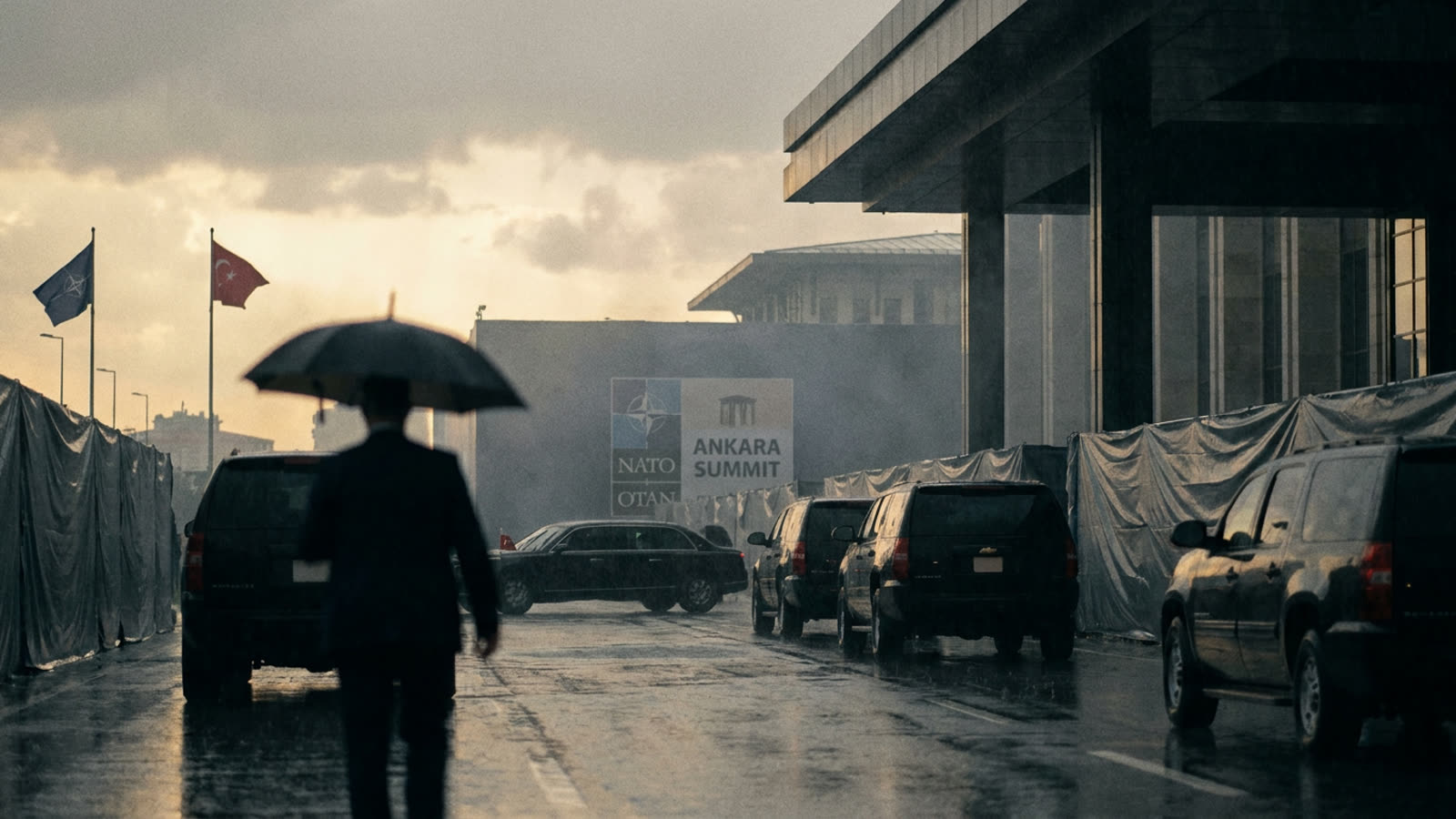
The NATO summit in Ankara this week was supposed to be about collective defense in an era of renewed great-power competition. Instead, it became a masterclass in how one leader can dominate an alliance of thirty-two nations through sheer force of spectacle.
Donald Trump's arrival at the Turkish capital carried all the subtlety of a reality television finale. The motorcade, the bilateral photo opportunities arranged to maximize his centrality, the pointed comments about which allies had "paid up" and which remained delinquent—every element was choreographed to reinforce a single message: NATO exists at American sufferance, and that sufferance has conditions.
The spending scramble
European leaders arrived with their homework done, or at least with impressive-looking binders suggesting they had. Defense ministers from Germany, France, and the Netherlands all presented updated spending trajectories showing accelerated paths toward the 2% GDP benchmark that Trump has made his singular metric for alliance worthiness. Poland, already spending well above 4%, received the presidential benediction. Others received pointed silences.
The irony is that European defense spending has genuinely increased since Russia's full-scale invasion of Ukraine in 2022. Germany's Zeitenwende, once dismissed as rhetorical, has translated into real procurement contracts. France has expanded its defense industrial base. Even traditionally pacifist Nordic states have militarized their postures. But none of this matters if the presentation fails to satisfy the audience of one.
The Greenland shadow
Trump's rekindled interest in Greenland—first floated during his initial term as a seemingly absurd trial balloon—has returned as a genuine irritant in transatlantic relations. Danish officials spent the summit's margins explaining, again, that Greenland is not for sale, while American officials made clear that the president's interest in Arctic real estate has not diminished. The strategic logic is not entirely without merit: Greenland's position makes it valuable for early-warning systems and Arctic shipping routes. But treating an ally's territory as a potential acquisition does little to reinforce the notion that NATO is a partnership of equals.
The Iran complication
The summit coincided with renewed U.S.-Iran tensions following tanker attacks in the Gulf, adding genuine security substance to what might otherwise have been pure political theater. The reinstated sanctions on Iranian oil sales represent a return to maximum-pressure tactics, and European allies—still nominally committed to preserving some diplomatic channel to Tehran—found themselves once again caught between American demands and their own strategic preferences. NATO's southern flank has never been more complicated.
Our take
Alliances survive on shared interests and mutual trust, not on theatrical dominance and transactional scorekeeping. Trump's approach to NATO—treating it as a protection racket requiring regular tribute—may extract short-term spending commitments, but it corrodes the deeper bonds that make collective defense credible. European leaders who arrived in Ankara hoping to demonstrate their seriousness left having demonstrated mainly their willingness to perform for an audience that may never be satisfied. The alliance will endure this summit. Whether it can endure this approach indefinitely is another question.