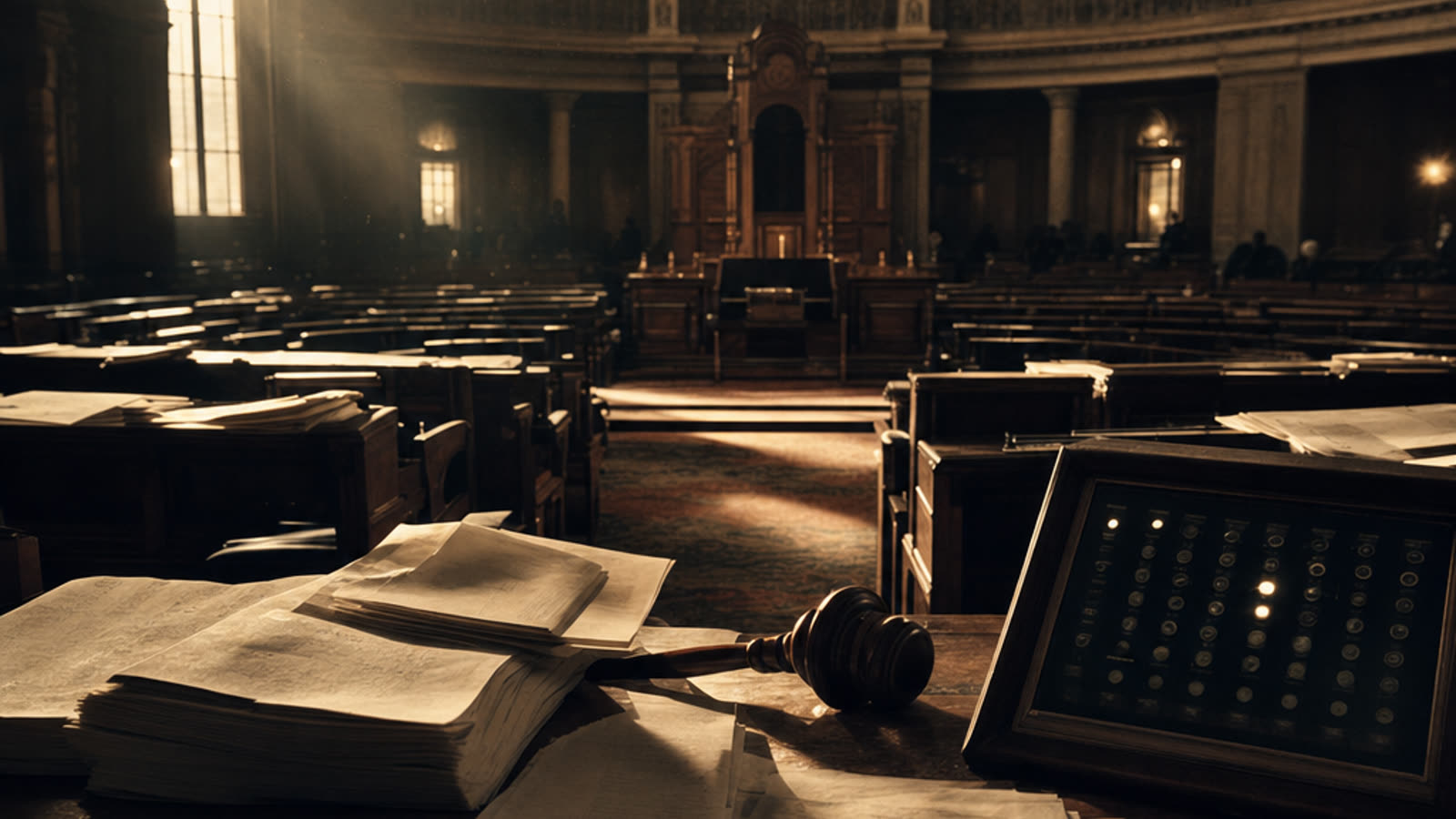
The most dangerous moment for a democracy is not the coup or the invasion. It is the quiet Tuesday afternoon when a parliament votes to limit its own power, convinced it is acting in the national interest.
This is the paradox at the heart of democratic backsliding: the institutions designed to check executive overreach are often complicit in their own marginalization. Scholars call it "autocratic legalism"—the use of formally legal mechanisms to hollow out democratic substance while preserving its shell. The process is rarely dramatic. It is incremental, procedural, and wrapped in the language of reform.
The three-act structure
The playbook has been refined over a century, but its basic architecture remains stable. Act one involves capturing the referees: electoral commissions, constitutional courts, audit offices. These bodies derive their legitimacy from independence, which makes them vulnerable to arguments that they are "unaccountable" or "out of touch." Packing courts with loyalists or restructuring oversight agencies under executive control rarely provokes mass protest because the changes seem technical.
Act two targets the information environment. Independent media outlets face regulatory pressure, tax investigations, or acquisition by government-aligned businessmen. Public broadcasters are restructured. The goal is not total censorship—that would be too obvious—but rather the creation of enough noise and confusion that citizens cannot easily distinguish fact from propaganda.
Act three is the constitutional revision. By this point, the courts have been neutralized and the media landscape tilted. Changes to electoral rules, term limits, or parliamentary procedures face little effective opposition. The legislature, having surrendered its watchdog functions piecemeal, discovers it has voted itself into irrelevance.
Why parliaments comply
The puzzle is not why autocrats attempt this sequence but why parliaments cooperate. Part of the answer is partisan loyalty: legislators from the ruling party convince themselves that temporary compromises serve a greater good. Part is institutional fragmentation—opposition parties squabble among themselves while the executive moves methodically. And part is simple miscalculation. Each individual step seems reversible; the cumulative effect becomes clear only in retrospect.
Viktor Orbán's Fidesz party in Hungary provides the canonical contemporary example. After winning a constitutional supermajority in 2010, Fidesz rewrote the constitution, restructured the judiciary, and altered electoral rules to entrench its advantage—all through formally democratic votes. Polish legislators followed a similar path under the Law and Justice party before European Union pressure and electoral defeat partially reversed the trend. Turkey under Erdoğan, Venezuela under Chávez and Maduro, and more recently El Salvador under Bukele have all exhibited variations on the theme.
The warning signs
Political scientists have identified several early indicators: attacks on the legitimacy of elections the incumbent lost, attempts to politicize civil service appointments, rhetoric framing political opponents as existential threats rather than legitimate competitors, and efforts to weaken legislative committee oversight. None of these is sufficient on its own; together, they form a pattern.
The uncomfortable truth is that constitutional design offers limited protection. Weimar Germany had one of the most sophisticated constitutions of its era. What matters more is political culture—the willingness of legislators, judges, and citizens to defend institutional norms even when doing so is politically costly. Democracies do not die because their constitutions are poorly drafted. They die because too many people decide that winning is more important than the rules of the game.
Our take
The optimistic reading is that awareness of the playbook has spread. Scholars, journalists, and civil society groups now recognize the warning signs faster than they did a generation ago. The pessimistic reading is that recognition has not translated into prevention. Aspiring autocrats have learned to move slowly, to wrap their actions in legality, and to exploit the very openness that democracies prize. The real defense is not a cleverer constitution but a political class that understands what it stands to lose—and a citizenry that holds them accountable before the third act begins.