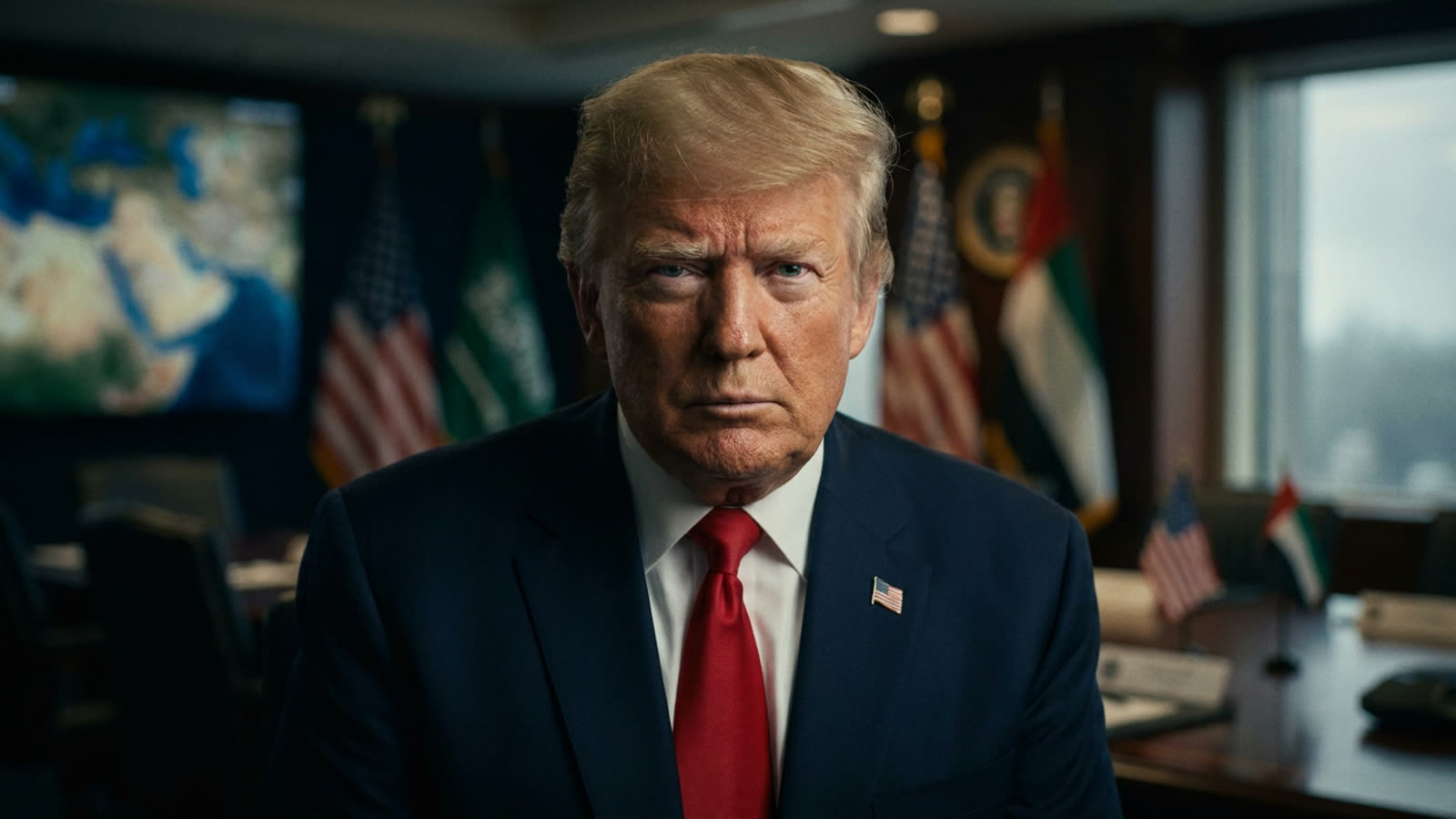
The United States was hours away from launching a military operation against Iran when President Trump announced he had agreed to postpone it. The reason: America's Gulf partners asked him to wait.
The revelation, which Trump disclosed publicly rather than through diplomatic channels, marks a striking moment in the escalating standoff with Tehran. It suggests that even as Washington prepares for potential conflict, its regional allies are not uniformly eager for the conflagration that would follow. The UAE, Saudi Arabia, and Qatar—countries with far more to lose from Iranian retaliation than the continental United States—appear to be pumping the brakes.
The calculus in Riyadh and Abu Dhabi
For years, Gulf states have urged Washington to take a harder line on Iran. But urging and welcoming are different things. Saudi Arabia's Vision 2030 economic transformation requires stability; its nascent tourism sector and megaprojects like Neom are not designed to weather missile strikes on Aramco facilities. The UAE, which has spent a decade positioning itself as a business and logistics hub, faces similar exposure. Qatar, which shares a gas field with Iran, has always maintained a more ambivalent posture toward Tehran.
The request for a "two or three days" delay is diplomatically modest but strategically revealing. These governments want time—whether to move assets, secure backchannels, or simply register that they were not consulted before the operation was planned.
What Trump's disclosure signals
That the president announced the pause publicly, naming the countries involved, is itself notable. It could be read as Trump demonstrating restraint and alliance management. It could also be read as him shifting responsibility—if the strike eventually proceeds and goes badly, he has established that allies had their chance to object. The ambiguity is probably intentional.
The disclosure also complicates the position of the Gulf states themselves, who now must explain to domestic and regional audiences why they intervened to delay American action against a government they have long characterized as an existential threat.
The Iran question remains unanswered
The pause does not resolve the underlying tension. If the administration believes military action is necessary, a 72-hour delay changes little strategically while creating new uncertainties. Tehran now knows an attack was imminent and may adjust its own posture accordingly. The element of surprise, to whatever extent it existed, has been traded for coalition optics.
Our take
This episode reveals the uncomfortable truth about American power projection in the Gulf: the United States can strike Iran whenever it chooses, but it cannot control what happens afterward without regional buy-in. The Gulf states, for all their hawkish rhetoric over the years, are now demonstrating that they prefer a cold peace to a hot war they would have to live with long after American attention moves elsewhere. Trump's willingness to pause suggests he understands this, even if his public framing suggests otherwise.