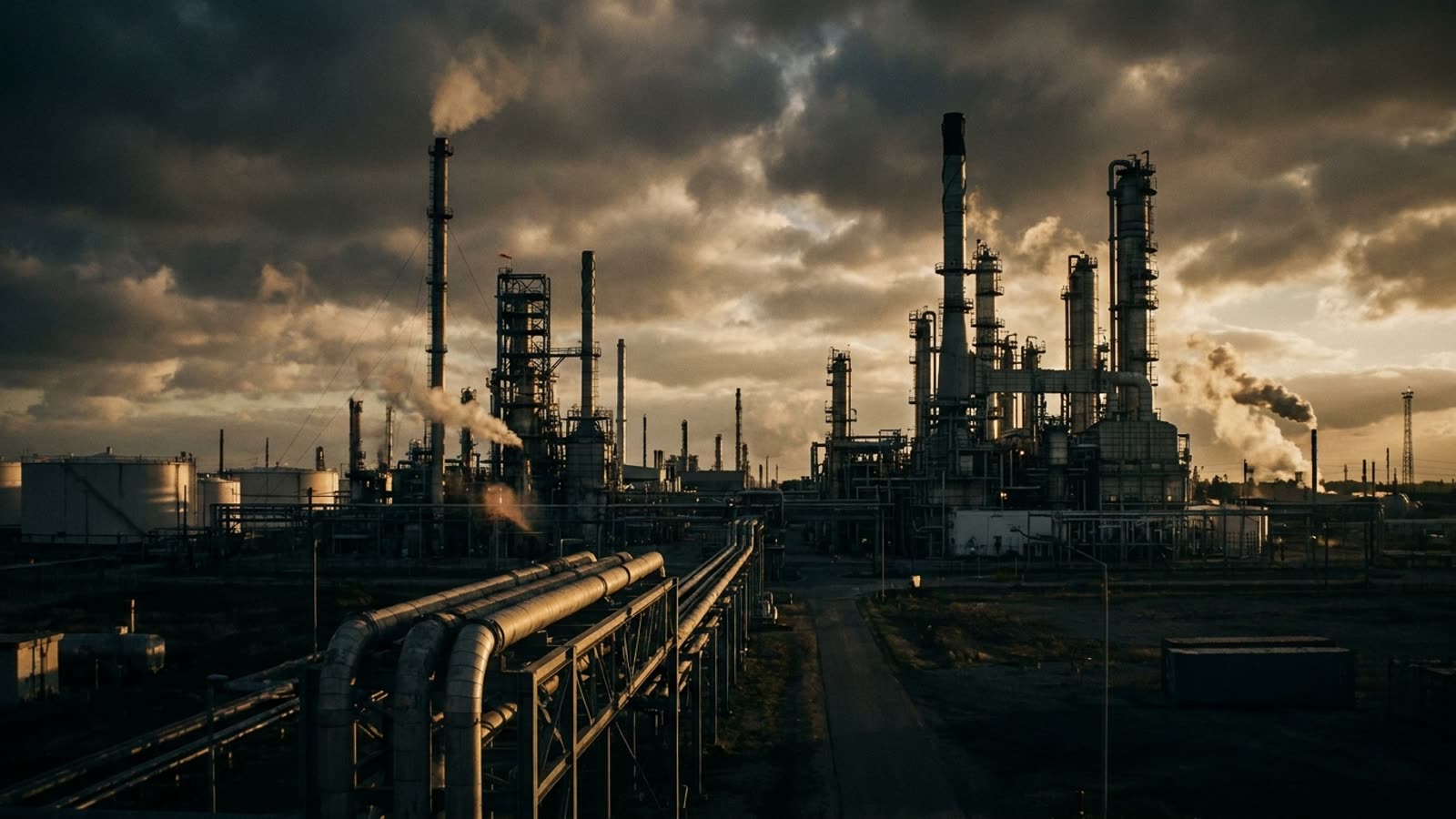
The phrase "exploding oil" is not, to be clear, a recognized term in commodity trading, petroleum engineering, or geopolitical analysis. Yet President Trump deployed it this week in remarks that left energy analysts, traders, and apparently his own staff scrambling to decode what, exactly, American energy policy is supposed to be.
The comments came as Brent crude settled into a cautious equilibrium following the fragile US-Iran truce, with markets having already priced in reduced disruption risk in the Strait of Hormuz. Into this relative calm, the President injected a burst of rhetorical static that managed to reference production levels, refinery capacity, and some form of petroleum volatility without cohering into anything resembling a policy position.
The Translation Problem
White House officials, speaking on background, suggested the President was referring to domestic production growth—America's shale output has indeed expanded considerably over the past several years. Others interpreted the remarks as commentary on price volatility, though prices have been notably stable since the truce took hold. A third faction believed he was discussing actual refinery incidents, of which there have been none of significance recently.
The confusion matters because energy markets are exquisitely sensitive to policy signals. When the world's largest oil producer and consumer sends garbled messages about its intentions—particularly during a delicate geopolitical moment—traders must price in uncertainty premiums that ultimately flow through to consumers and industrial users.
Market Implications
Crude futures showed modest volatility following the remarks before settling back, suggesting traders have developed a certain immunity to presidential rhetorical flourishes. But the pattern is corrosive over time. Refiners making capital allocation decisions, petrochemical companies planning expansions, and foreign producers calibrating their own output all require some baseline confidence that American policy statements mean something.
The administration's energy posture has oscillated between "drill, baby, drill" maximalism and occasional protectionist impulses regarding imports. The incoherence extends to climate policy, strategic reserve management, and export licensing—each area featuring contradictory signals that force market participants to essentially ignore official guidance and trade on fundamentals alone.
Our take
Presidential communication has always involved a certain amount of theater, and markets have long discounted political noise. But there is a difference between strategic ambiguity—which can serve diplomatic purposes—and genuine confusion, which serves no one. The "exploding oil" episode is a minor embarrassment in isolation; as part of a pattern, it represents the slow erosion of American credibility as a predictable actor in global energy markets. That credibility, once lost, is expensive to rebuild.