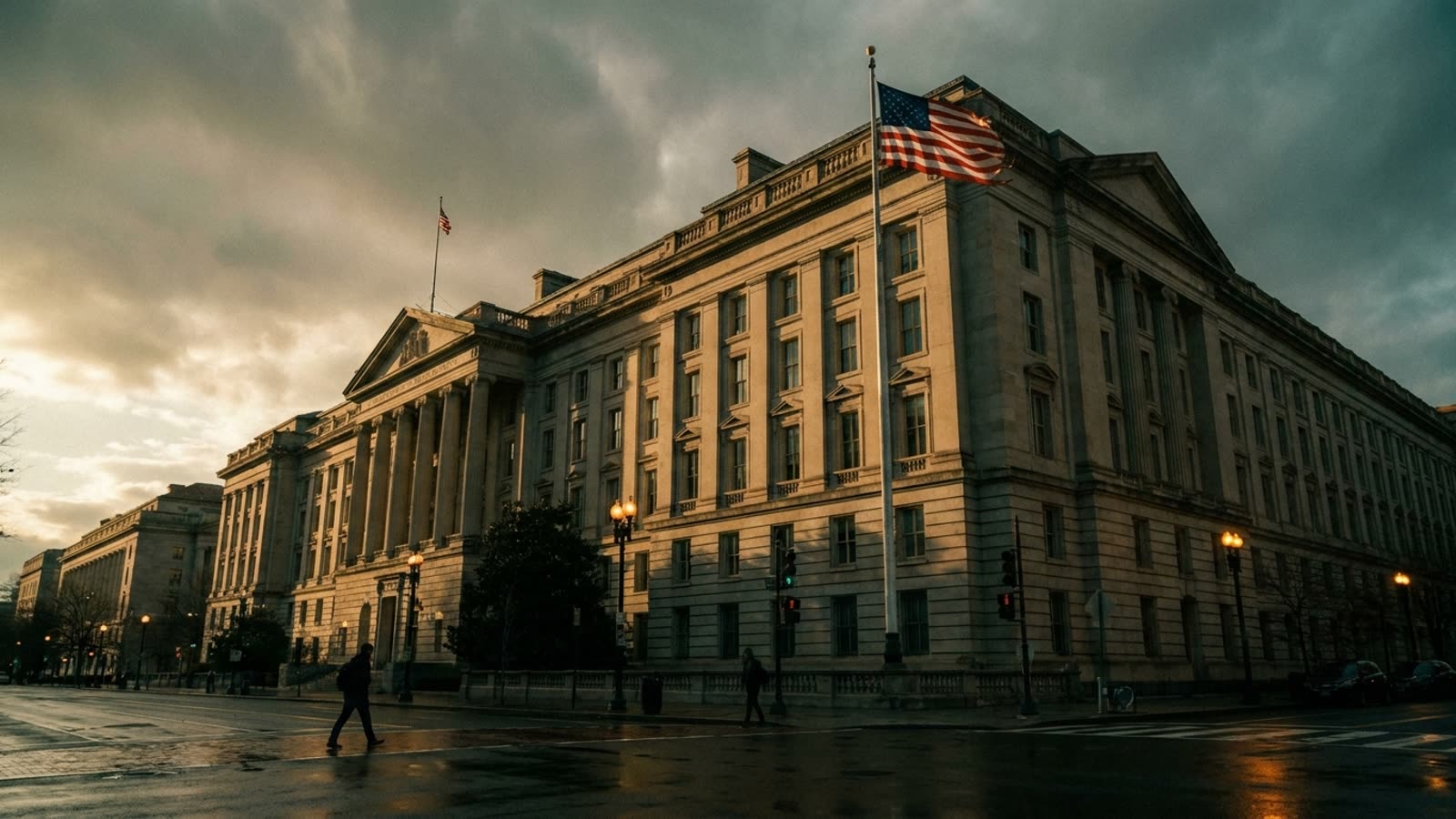
The Biden administration's long-promised outbound investment restrictions have arrived, and they land with the muffled thud of a compromise document. The Treasury Department's new proposed rules would require American investors to notify the government — or in some cases seek approval — before putting money into Chinese companies working on artificial intelligence, hypersonic weapons, and biotechnology. The ambition is clear: stop US capital from funding Beijing's military-industrial modernization. The execution is considerably murkier.
The proposal, released Thursday, represents the culmination of a policy debate that has consumed Washington for years. Hawks have long argued that American pension funds and venture capitalists are effectively subsidizing China's defense sector. The counterargument — that restricting capital flows will simply push deals offshore while handicapping US investors — has clearly shaped the final product.
The scope problem
What Treasury is proposing is not a ban. It's a notification regime with carve-outs wide enough to drive a semiconductor fabrication plant through. Investments in publicly traded securities, for instance, appear largely exempt. So do index funds. The restrictions focus on private equity, venture capital, and joint ventures — the channels through which American know-how most directly transfers alongside American dollars.
The categories themselves are revealing. "AI systems" covers machine learning for military applications, but the line between civilian and military AI in China is notoriously blurry. Hypersonics and certain biotech applications are easier to define but harder to police. Treasury is essentially asking investors to determine whether a Chinese company's work might eventually serve the People's Liberation Army — a judgment call that will keep compliance lawyers employed for decades.
The enforcement gap
The real question is whether any of this matters without robust enforcement. Treasury's proposal relies heavily on self-reporting, with penalties for violations that remain vaguely defined. The department has neither the staff nor the intelligence infrastructure to independently verify what Chinese companies are actually doing with American capital. It's asking investors to police themselves in a market where opacity is a feature, not a bug.
Compare this to the export control regime on semiconductors, which has actual teeth: companies like NVIDIA have been forced to redesign products and abandon Chinese customers. The investment restrictions, by contrast, feel more like a political gesture than a functional barrier. Beijing will notice the symbolism. Whether it notices the substance is another matter.
Our take
This is what decoupling looks like in practice: incremental, hedged, and thoroughly lawyered. The Treasury proposal acknowledges a real problem — American capital does flow to Chinese firms that support Beijing's military ambitions — while offering a solution calibrated not to disrupt the broader investment relationship. It's the policy equivalent of installing a screen door on a submarine: visible effort, questionable utility. The administration gets to claim it acted. China hawks get a talking point. And the money will find its way, as money always does.