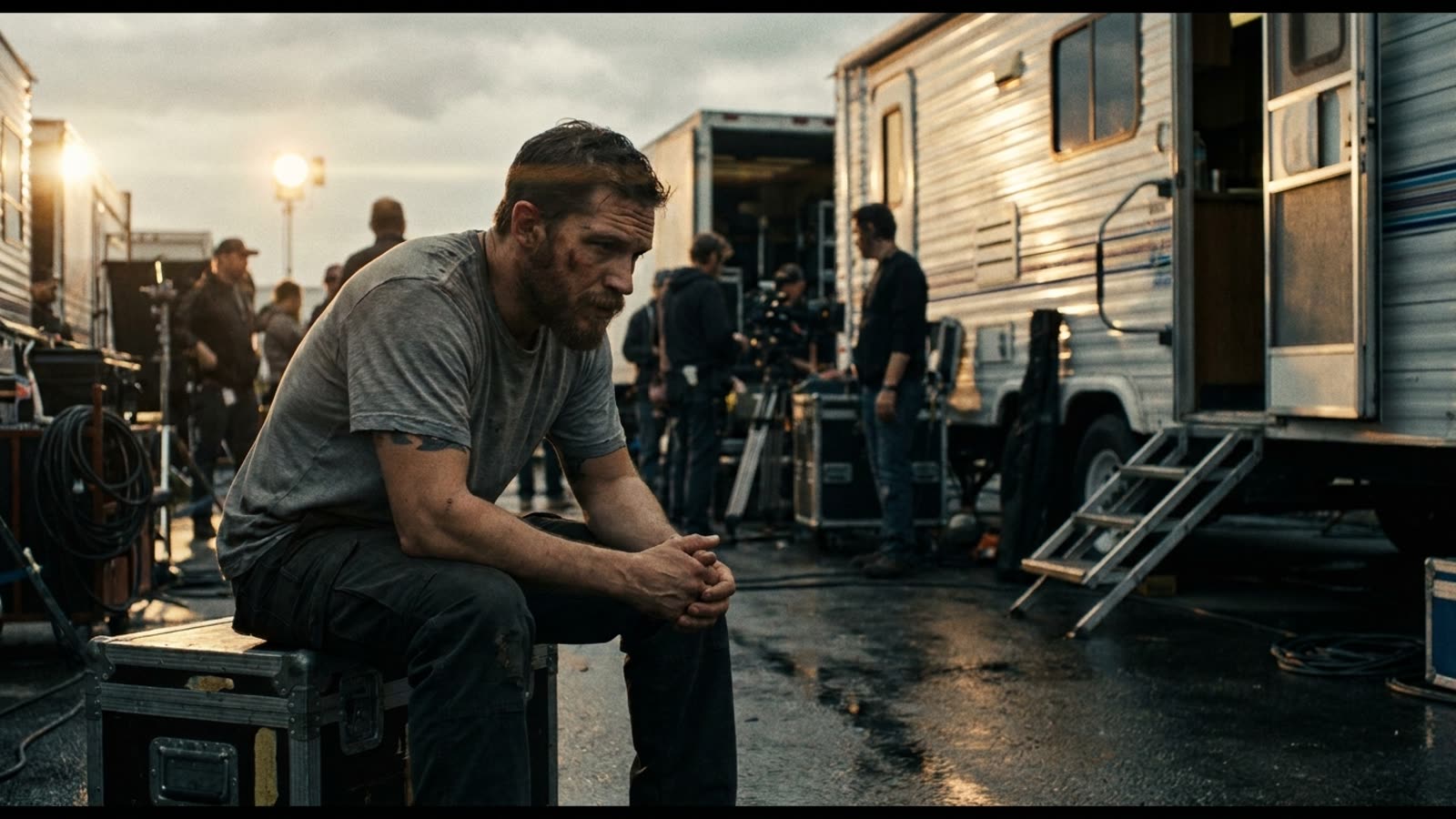
Tom Hardy has built a career on intensity — the kind of coiled, barely-contained energy that made Bane terrifying and Alfie Solomons magnetic. But intensity, it turns out, has diminishing returns when it manifests as allegedly refusing to emerge from one's trailer for extended stretches of production.
According to reports surfacing this week, Hardy spent significant portions of the MobLand shoot sequestered in his trailer, leaving cast and crew waiting and the production schedule in disarray. The accusations paint a picture less of artistic temperament and more of professional abdication, the kind of behaviour that studios once tolerated from bankable stars but increasingly cannot afford in an era of ballooning budgets and streaming-platform belt-tightening.
The economics of difficult
Hollywood has always had its difficult men. Marlon Brando famously refused to learn lines. Christian Bale's on-set tirade became a viral remix. But the calculus that once protected such behaviour — that certain talents were worth any inconvenience — has shifted dramatically. Studios are now run by executives who came up through private equity and streaming analytics, not the old mogul system that indulged auteurs and their chosen actors alike.
MobLand, a crime drama that presumably requires Hardy's particular brand of menace, now faces the awkward position of promoting a film while its star stands accused of professional discourtesy at best, breach of contract at worst. The production has not commented publicly, which itself speaks volumes; in an age of aggressive reputation management, silence often signals that the accusations are not easily dismissed.
Method or madness
Hardy has long cultivated an image of inscrutability. He gives interviews in fragments, mumbles through press junkets, and approaches roles with a physical commitment that has earned genuine critical respect. His transformation for Bronson, his voice work in The Dark Knight Rises, his feral energy in Mad Max: Fury Road — these are not the marks of a lazy performer.
But there is a meaningful distinction between the work of preparation and the work of showing up. The former is the actor's private craft; the latter is the professional obligation that makes the craft possible. Hiding in a trailer is not method acting. It is simply hiding.
Our take
The Hardy accusations arrive at a moment when Hollywood is actively reconsidering what behaviour it will tolerate from its talent. The post-MeToo, post-pandemic industry has less patience for disruption, less money to absorb delays, and a deeper bench of capable actors who will show up on time and hit their marks. Hardy remains genuinely talented, but talent has never been sufficient on its own. The question now is whether his particular brand of intensity is worth the reported cost — and whether audiences, who increasingly have infinite content options, will care enough about the distinction to notice.