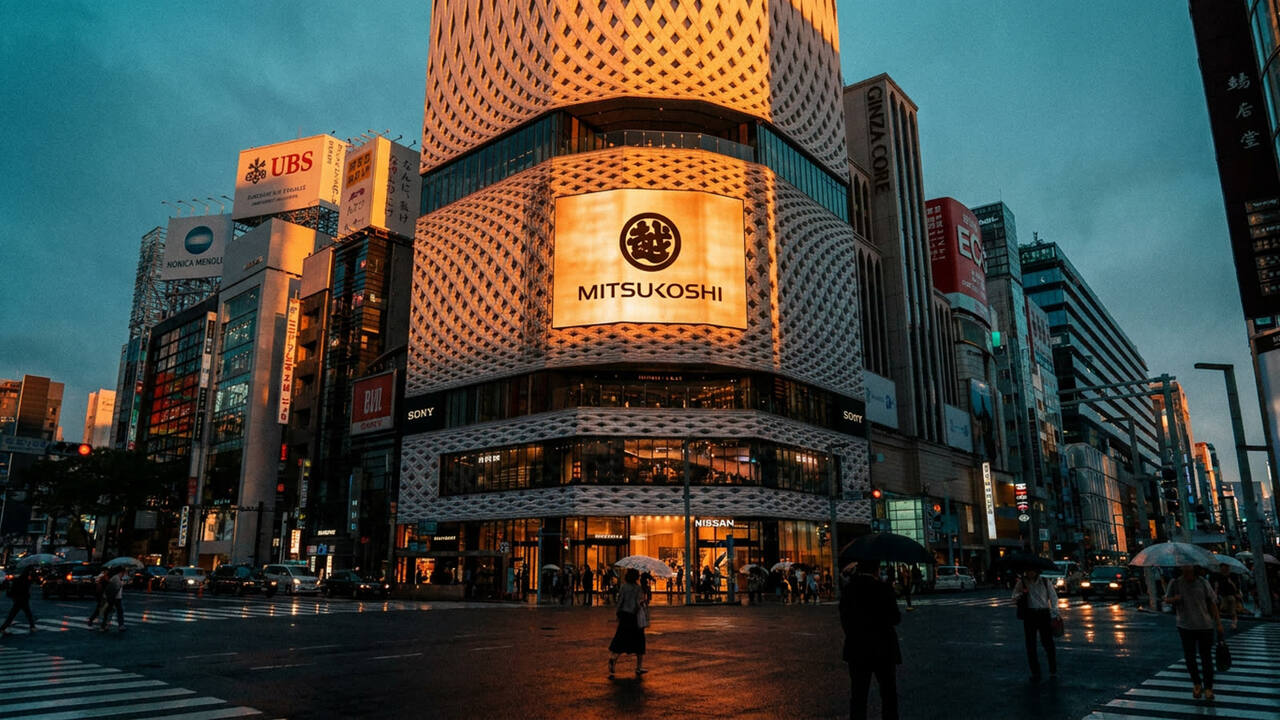
The elevator attendant in white gloves bows precisely as the doors close, announcing each floor in a melodic cadence refined over decades. The basement food hall offers wagyu beef wrapped like Cartier jewelry. On the seventh floor, a kimono specialist who has spent forty years mastering her craft adjusts an obi with movements so practiced they approach choreography. This is the Japanese department store—a retail cathedral that transformed shopping into theater and service into art.
These institutions are contracting. Sogo & Seibu, once symbols of Japan's economic miracle, have shed locations. Regional flagships that anchored city centers for a century have gone dark. The forces are familiar: e-commerce, demographic decline, changing consumption patterns. Yet to frame this simply as retail's inevitable march toward efficiency misses what is actually being lost—and what luxury brands worldwide should be racing to preserve.
The architecture of anticipation
Japanese department stores perfected what might be called anticipatory service. Staff are trained to notice a customer glancing at an umbrella display when clouds gather outside, to remember a regular's preferred wrapping paper, to sense hesitation and offer guidance without intrusion. This is omotenashi—the philosophy of selfless hospitality—rendered in commercial form.
The physical spaces reinforced this ethos. Unlike Western department stores that evolved from dry goods warehouses, Japanese emporia were designed as destinations. Rooftop gardens offered respite. Elaborate seasonal displays transformed atriums into public art installations. The depachika—basement food halls—became culinary theaters where confectioners performed their craft behind glass.
What the West borrowed, and what it missed
Luxury retail globally has absorbed Japanese influence selectively. The emphasis on packaging, the hushed reverence, the staff-to-customer ratios—these translate easily. Harder to export is the temporal dimension. Japanese department stores understood that luxury is partly about time: time spent selecting, time invested in service, time as a gift rather than a cost.
Western luxury increasingly optimizes for throughput. The appointment-only model, the curated clienteling, the algorithmic personalization—these create efficiency but sacrifice serendipity. The Japanese model trusted that a customer wandering the ceramics floor might discover a teapot she didn't know she wanted. That productive aimlessness requires space, staff, and patience that quarterly earnings reports struggle to justify.
The diaspora of expertise
As flagships close, their human capital disperses. Master gift-wrappers, sommeliers of the food hall, elevator attendants whose vocal training rivals that of radio announcers—these specialists carry institutional knowledge that cannot be digitized. Some find roles in luxury hotels or high-end boutiques. Others retire, their expertise unrecorded.
The smartest global brands are paying attention. Several European fashion houses have quietly recruited Japanese retail veterans to consult on service training. Hospitality groups study depachika layouts when designing hotel food concepts. The influence flows outward even as the institutions themselves contract.
Our take
The Japanese department store's decline is not a failure of the model but a mismatch with contemporary economics. These were civic institutions as much as commercial ones, subsidized implicitly by an era when retail margins could support such elaborate human infrastructure. What they proved, however, remains valid: that service can be elevated to art, that retail space can create meaning beyond transaction, that anticipating needs is more valuable than merely fulfilling them. The brands that internalize these lessons—rather than simply copying the aesthetics—will define the next chapter of luxury retail. The white-gloved elevator attendant may disappear, but her philosophy need not.