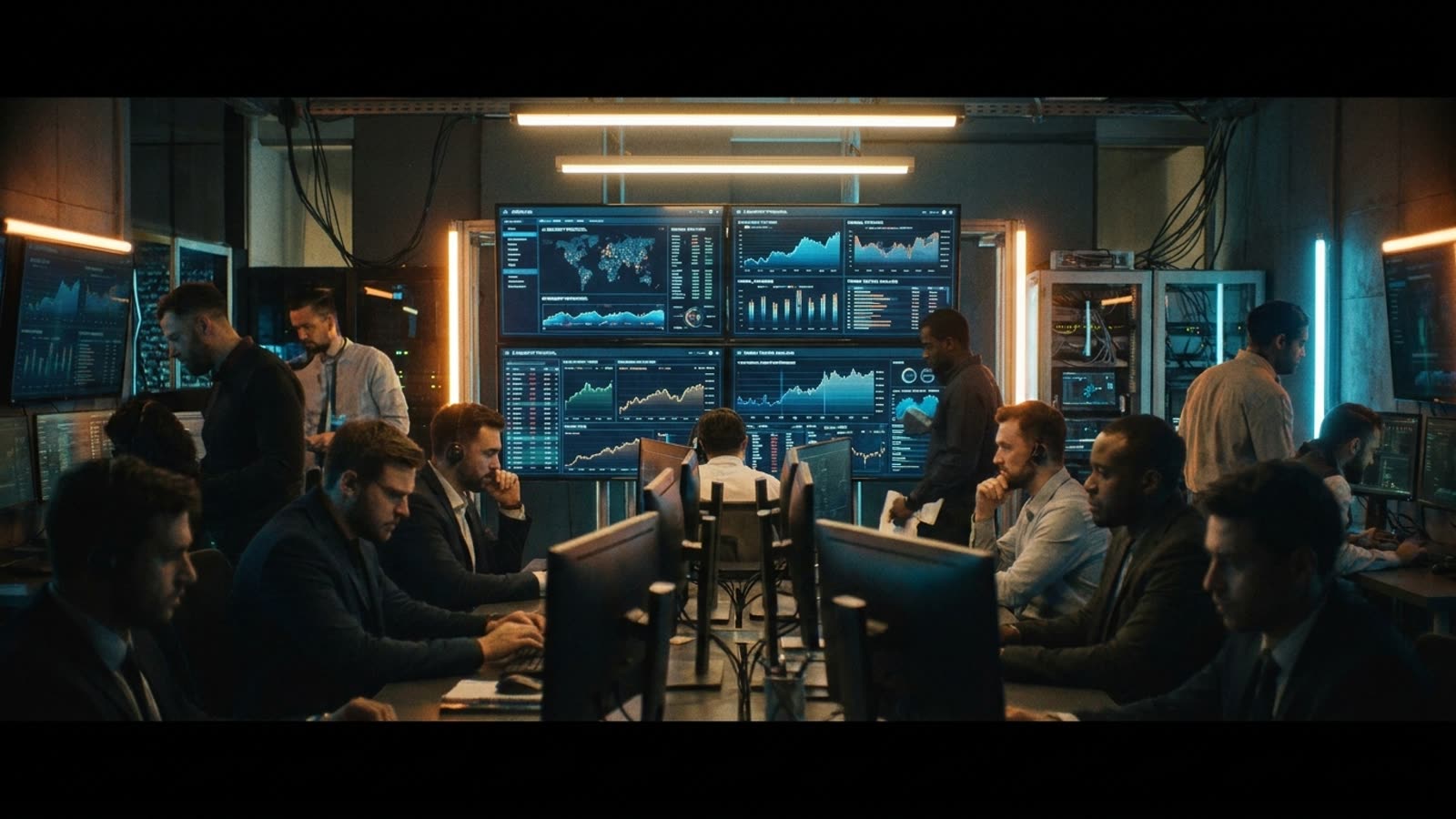
When Texas athletic director Chris Del Conte issued a clarification on Friday about the Longhorns' use of an AI-driven platform during their loss to Florida, he was doing damage control for something larger than a football game. The play in question—a fourth-quarter decision that failed badly—has become an instant case study in how institutions adopt artificial intelligence without fully grappling with its limitations.
The platform, which Texas began piloting this season, uses machine learning to analyze defensive formations and suggest optimal play calls in real time. On paper, it sounds like the future. In practice, when the algorithm's recommendation was executed and promptly stuffed by Florida's defense, it looked like expensive folly.
The seduction of quantified certainty
Del Conte's clarification was careful: the AI platform was one input among many, and the coaching staff made the final decision. This is the standard disclaimer that accompanies every AI deployment from radiology suites to trading floors. But the disclaimer obscures a psychological reality. When a system presents a recommendation with apparent mathematical authority—win probability percentages, expected yards gained—it exerts gravitational pull on human judgment. The coaches may have had the final call, but they were operating in an environment where the machine's confidence was legible and their own intuition was not.
This is the problem with AI as decision support in high-pressure environments. The technology is excellent at pattern recognition across large datasets. It is considerably worse at accounting for variables it has never seen: a defensive lineman playing through injury, a quarterback whose confidence has eroded over the past three drives, the particular humidity that makes a ball harder to grip. Football, like most human endeavors, is full of information that never makes it into the training data.
The accountability gap
The Texas situation also exposes a governance question that extends far beyond athletics. When an AI-assisted decision goes wrong, who bears responsibility? Del Conte's clarification implicitly argues that the coaches do—they made the call. But if the institution invested in the platform, promoted its use, and created an environment where its recommendations carried weight, the responsibility is more diffuse. This is the accountability gap that haunts AI deployment in medicine, criminal justice, and finance. The machine is never blamed, because the machine is never truly in charge. But the machine's influence is real, and its errors compound human ones rather than correcting them.
Texas is not alone in this experiment. Multiple Power Five programs have adopted similar platforms, and the NFL has been quietly evaluating AI-assisted play-calling for several years. The appeal is obvious: football generates enormous quantities of data, and coaches are chronically time-starved. If a machine can process information faster, why not use it?
Our take
The answer is not that AI has no place in football or anywhere else. The answer is that institutions adopting these tools need to be honest about what they are buying. They are not buying certainty. They are not buying wisdom. They are buying a very fast pattern-matcher that has never played a down in its life and cannot feel the momentum of a game shifting. Texas learned this lesson in the most public way possible. The rest of us—in boardrooms, hospitals, and courtrooms—should be paying attention.