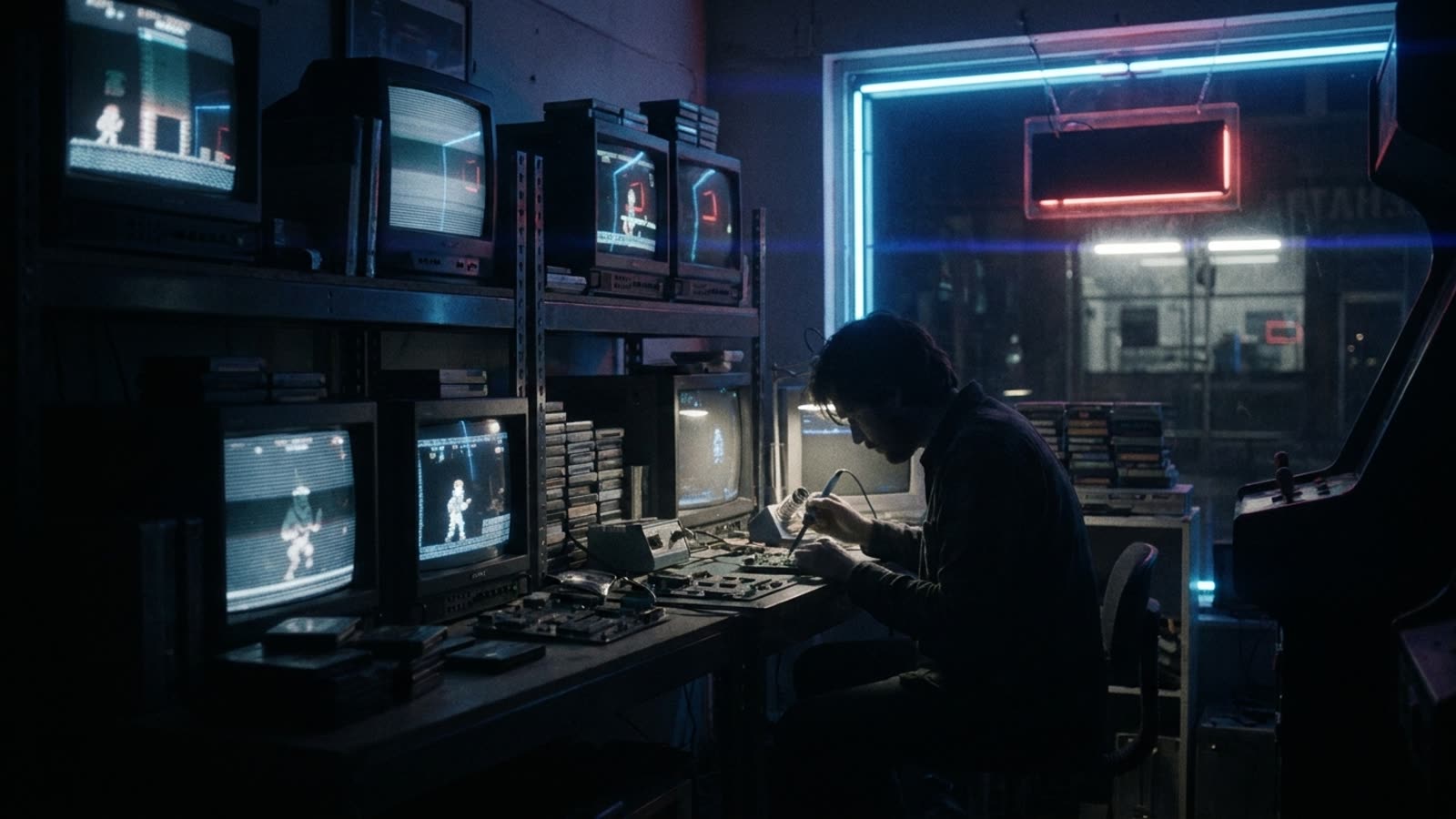
The past month has produced a parade of impossible ports: Halo running natively in a web browser, The Legend of Zelda: The Wind Waker on an iPhone without jailbreaking, Super Smash Bros. Melee in mixed-reality headsets. None of these releases came from Microsoft, Nintendo, or any authorized publisher. They came from hobbyist developers wielding a new generation of AI tools that can translate legacy code, upscale textures, and optimize performance in hours rather than years. Retro gaming, once a niche hobby requiring arcane hardware knowledge, is becoming a frictionless, universal experience—and the corporations that own these titles are watching their back catalogs escape into the wild.
The technical leap
Traditional emulation required painstaking reverse-engineering: programmers would spend years decoding proprietary chip architectures and replicating their behavior in software. The new approach uses large language models fine-tuned on assembly code and hardware documentation to accelerate the process by orders of magnitude. Projects like RetroLLM and EmuForge have released open-source toolkits that let even amateur coders generate working emulators for obscure systems within days. The results are imperfect—audio glitches, occasional crashes—but they are improving faster than any legal team can draft cease-and-desist letters.
More disruptive still are the AI upscalers and asset reconstructors. Tools trained on millions of game textures can transform blocky PlayStation-era graphics into something approaching modern fidelity, while neural audio models remaster compressed soundtracks in real time. The experience of playing a 1998 game in 2026 no longer requires nostalgia goggles; it can look and sound like a competent indie release.
The legal fog
Rights holders face a dilemma with no clean resolution. Emulation itself has survived court challenges—Sony lost its bid to shut down the original PlayStation emulator Bleem! in 2001—but distributing copyrighted ROMs remains unambiguously illegal. The new wrinkle is that AI tools can reconstruct playable approximations of games from publicly available footage, manuals, and partial code dumps, blurring the line between emulation and re-creation. Nintendo, the industry's most aggressive enforcer, has reportedly sent legal notices to at least a dozen GitHub repositories this month, but the projects resurface under new names within hours.
The broader question is whether the games industry wants to fight this war at all. Many of the titles being resurrected are commercially unavailable; publishers have let them languish rather than invest in official re-releases. Preservation advocates argue that AI emulation is filling a void the industry created through neglect. Some smaller studios have quietly endorsed the trend, viewing it as free marketing for dormant franchises.
Our take
The games industry spent two decades treating its history as a licensing inconvenience rather than a cultural asset. Now AI has called the bluff. Companies can either flood the zone with affordable, high-quality official ports—finally treating their back catalogs as the treasure troves they are—or watch a generation of players access the same games through channels that pay no royalties and respect no release schedules. The technology is not going back in the box. The only remaining choice is whether to compete with it or cede the field entirely.