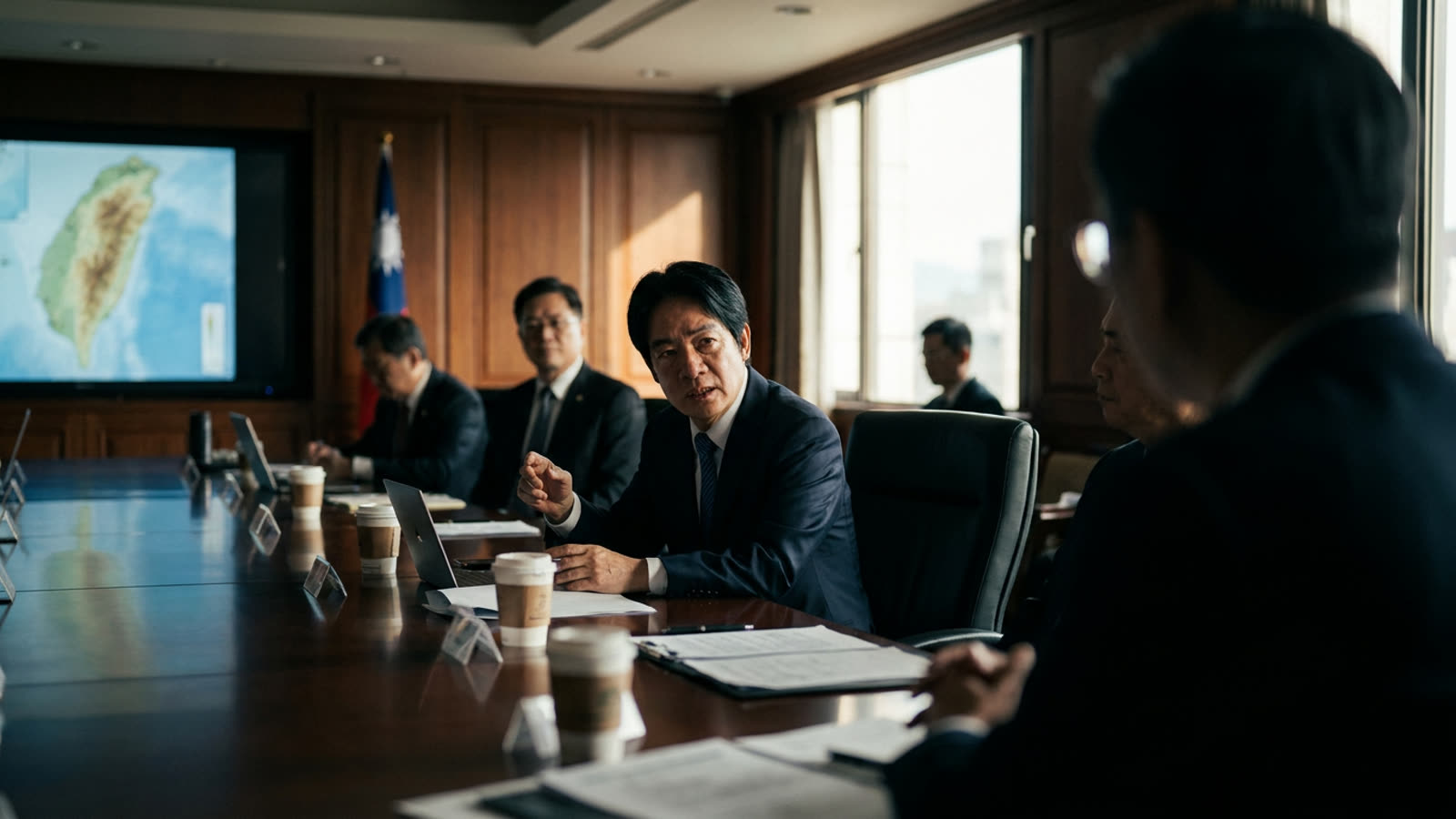
The anniversary press conference in Taipei this week carried the usual diplomatic boilerplate about peace, dialogue, and cross-strait stability. What it actually demonstrated was something more interesting: a leader who has learned that staying in the game matters more than winning any single hand.
President Lai Ching-te's first year has been defined less by bold initiatives than by the disciplined avoidance of catastrophic missteps. Beijing has maintained its elevated military tempo around the island—daily incursions into Taiwan's air defense identification zone, naval exercises that probe ever closer to territorial waters, and a diplomatic squeeze that has reduced Taipei's formal allies to a lonely dozen. Meanwhile, the Trump administration's transactional approach to alliances has left Taiwan uncertain whether American support remains a strategic commitment or a bargaining chip in some larger deal with Beijing.
The art of strategic ambiguity, reversed
For decades, Washington practiced strategic ambiguity toward Taiwan—keeping Beijing guessing about American intentions. Now Taipei finds itself practicing its own version, calibrating every statement to avoid provoking either superpower. Lai's rhetoric has been notably more restrained than his pre-election positioning suggested. The firebrand independence advocate has governed as a cautious institutionalist, emphasizing the constitutional status quo while quietly accelerating defense procurement and asymmetric warfare preparations.
This is not cowardice; it is arithmetic. Taiwan's twenty-three million people face a neighbor with sixty times their population and a military budget that dwarfs the island's entire government spending. The only viable strategy is buying time—for deterrence capabilities to mature, for international supply chains to remain dependent on Taiwanese semiconductors, for the geopolitical winds to shift.
The semiconductor shield, fraying at the edges
Taipei's ace card remains TSMC and the island's irreplaceable role in advanced chip manufacturing. But this leverage is eroding. American industrial policy is aggressively reshoring semiconductor capacity, and while those Arizona fabs remain years from matching Taiwan's output, the trajectory is clear. Lai's government understands that the silicon shield has a half-life, which explains the quiet urgency behind defense reforms that have extended conscription and reorganized reserve forces.
Our take
Lai's first year will not produce documentary footage or stirring speeches. It has produced something more valuable: continued existence as a functioning democracy under extraordinary pressure. The measure of Taiwanese statecraft in this era is not whether it achieves some final resolution of cross-strait tensions—no such resolution is available—but whether it preserves optionality for future generations. By that standard, the anniversary marks a modest success. The game continues.