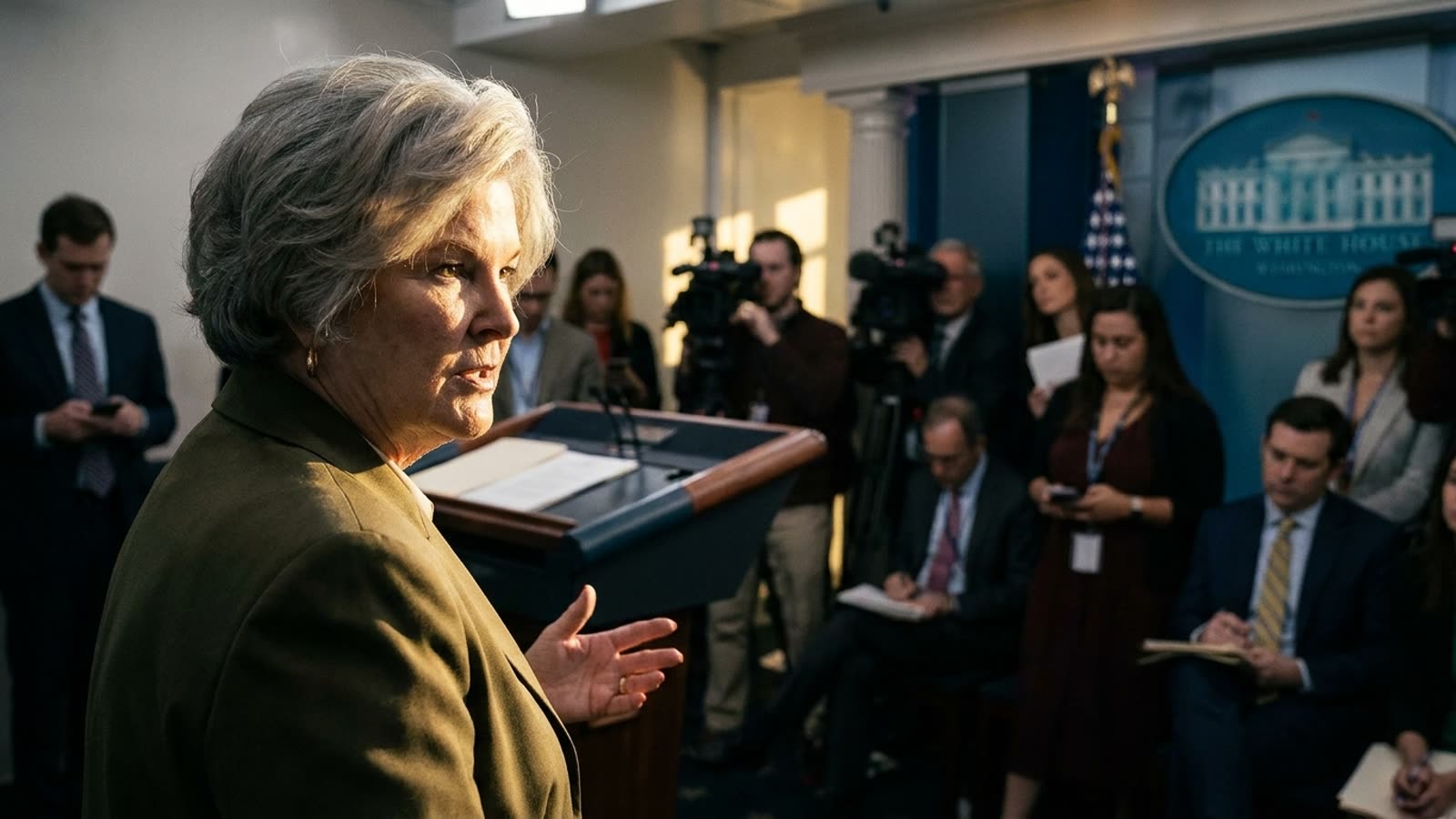
Donald Trump's decision to replace Susie Wiles with Stephen Miller as White House chief of staff completes a striking transformation: the administration's senior leadership is now overwhelmingly male. Wiles, who made history as the first woman to hold the role, thanked the president for the "honor of a lifetime" as she departed Friday. Her exit follows the November midterm elections, which delivered Democrats control of both chambers of Congress and appeared to repudiate Trump's second-term agenda. Rather than moderate, the president has chosen to consolidate power among a tighter circle of longtime loyalists—nearly all of them men.
The vanishing women
Wiles was not the first senior woman to leave in recent months. Her departure follows a pattern that has seen female voices steadily removed from positions of influence within the administration. The chief of staff role is the most visible, but the trend extends across the executive branch. What remains is a leadership structure that looks remarkably like Trump's first term: combative, insular, and dominated by figures who have been with him since the beginning. The optics are particularly stark given that Democrats made historic gains among female voters in the midterms, a demographic shift that strategists on both sides now view as a defining feature of the 2026 cycle.
Miller's ascent and the hard-line bet
Stephen Miller's promotion is less a surprise than a clarification. The architect of the administration's mass deportation policies and its most aggressive uses of executive power, Miller has long been the intellectual engine behind Trump's immigration agenda. His elevation to chief of staff signals that the president intends to pursue that agenda more forcefully, not less, despite the electoral rebuke. Democrats, predictably, have seized on the appointment as evidence that Trump "learned nothing from his historic defeat," in the words of Senate Minority Leader Chuck Schumer. Even some Republicans are uneasy: Marjorie Taylor Greene warned publicly that the Miller-Wiles shakeup will "sink the party's chances in 2028." The comment, rare in its directness, suggests that Trump's post-midterm strategy is dividing his own coalition.
Our take
Wiles was the adult in the room, a role that is now vacant. Her departure removes one of the few figures capable of telling Trump no—or at least of delivering bad news in a way he might accept. Miller, by contrast, is a true believer whose instinct is to escalate rather than negotiate. The result is an administration that looks less like a governing operation and more like a movement in retreat, circling the wagons around its most uncompromising voices. That may satisfy the base, but it leaves Trump with no obvious path to expanding his coalition before 2028. The all-male leadership team is not just a symbolic problem; it reflects a strategic one. In a political environment where women are driving electoral outcomes, Trump has chosen to surround himself with men who share his grievances. It is a bet that defiance, not adaptation, will carry the day. History suggests otherwise.