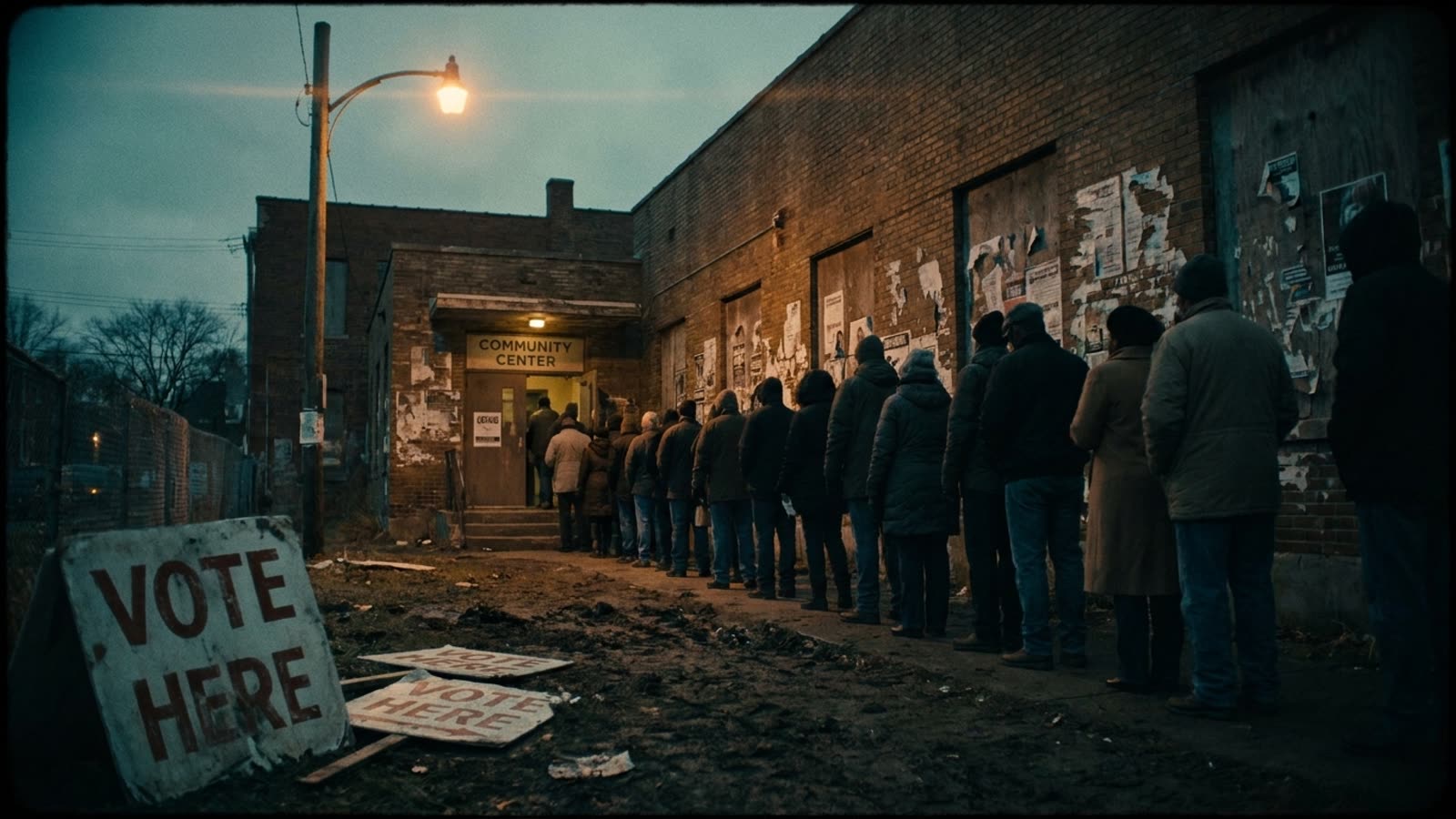
The American electorate heading to the polls this November will encounter a legal landscape almost unrecognizable from the one that governed the 2024 cycle. Over the past eighteen months, the Supreme Court has issued a cascade of decisions—some in high-profile cases, others in unsigned shadow-docket orders—that collectively loosen federal oversight of state election administration, narrow the window for legal challenges to redistricting, and expand the latitude legislatures enjoy when tightening ballot access. The cumulative effect is a structural tilt whose magnitude will only become clear when votes are counted.
The shift did not arrive as a single thunderclap. It accreted through a sequence of moves: a January ruling that blessed aggressive voter-roll maintenance in Georgia, a March order declining to block a North Carolina congressional map that civil-rights groups called a racial gerrymander, and an April decision limiting the reach of Section 2 of the Voting Rights Act in challenges to at-large election schemes. Each ruling, taken alone, could be cabined as incremental. Taken together, they signal a Court majority increasingly skeptical of federal judicial intervention in what it frames as state prerogatives.
The gerrymandering question
Redistricting litigation has become a game of diminishing returns. After the Court's 2019 Rucho v. Common Cause decision declared partisan gerrymandering claims non-justiciable in federal court, advocates pivoted to state constitutions and racial-gerrymandering theories. The 2026 term has narrowed even those avenues. In Moore v. North Carolina, the justices stopped short of adopting the independent-state-legislature theory in its maximalist form, but they signaled deep reluctance to second-guess maps that survive state-court review. The practical upshot: Republican-drawn maps in Texas, Florida, and Ohio face fewer federal hurdles, while Democratic gerrymanders in Illinois and Maryland enjoy similar insulation.
Ballot access and roll purges
Voter-roll maintenance has emerged as the quieter battleground. The Court's Georgia ruling upheld a statute permitting the state to remove registrants who have not voted in two consecutive federal elections and failed to respond to a mailer—a practice critics call "use it or lose it." Similar laws are now moving through legislatures in Arizona and Wisconsin. Meanwhile, restrictions on mail-ballot drop boxes and early-voting hours have survived lower-court challenges, emboldened by the justices' reluctance to intervene on the shadow docket.
The downstream scramble
Both parties are recalibrating. Republican strategists see an opportunity to lock in structural advantages before demographic shifts erode their margins in Sun Belt suburbs. Democratic operatives are pouring resources into voter-registration drives and state-court litigation, hoping to outrun the new constraints through sheer turnout. Neither approach addresses the underlying asymmetry: the Court's rulings apply uniformly, but their practical effects fall unevenly on populations with less bureaucratic fluency—younger voters, renters, and communities of color who move frequently and are more likely to be purged.
Our take
The Supreme Court has not abolished voting rights; it has simply made them harder to enforce. That distinction matters legally but may prove irrelevant politically. Elections are won at the margins, and the margins are precisely where these rulings bite. The 2026 midterms will function as a stress test for a democracy whose guardrails have been quietly lowered. Whether the results reflect the will of the electorate or the architecture of the rules will be a question Americans argue about long after the ballots are certified.