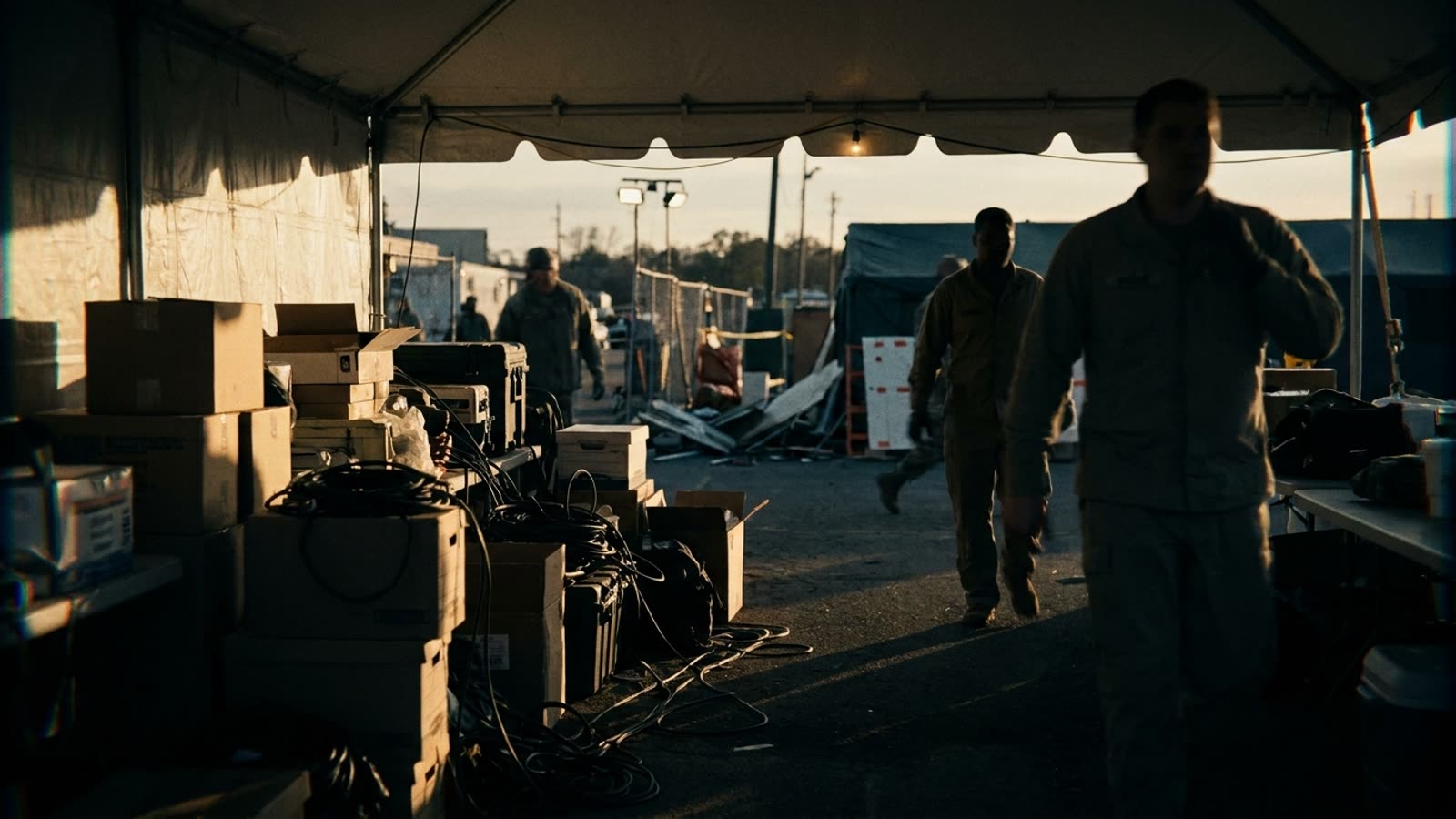
The Federal Emergency Management Agency is being remade not through legislation but through administrative velocity. The Trump White House, stung by criticism of sluggish hurricane responses and eager to demonstrate executive competence, has ordered a systematic rollback of the verification procedures that have slowed disaster relief for decades. The bet is straightforward: Americans care more about getting checks quickly than about preventing some fraction of those checks from reaching the wrong hands.
The logic is not without merit. FEMA's post-Katrina reforms layered approval processes atop approval processes, creating a bureaucracy optimized for audit trails rather than urgent need. Families displaced by floods have waited months for housing assistance while inspectors verified damage that satellite imagery had already confirmed. The agency became a punchline for government dysfunction, and the administration sees an opportunity to rewrite that narrative before the 2026 hurricane season peaks.
The mechanics of acceleration
The White House is pushing FEMA to pre-approve aid based on predictive modeling and remote sensing, releasing funds within days of a disaster declaration rather than weeks. Identity verification is being streamlined through existing federal databases rather than requiring fresh documentation from people who may have lost everything. Regional administrators are being given broader authority to approve individual assistance without headquarters review.
These changes mirror private-sector disaster response—insurance companies have long used aerial imagery and algorithmic damage assessment to expedite claims. The federal government is simply catching up, advocates argue. Critics counter that insurers have contractual relationships and credit histories to fall back on; FEMA is writing checks to strangers.
The fraud question
The inspector general's office has already flagged concerns. Post-pandemic audits revealed billions in improper payments across federal relief programs, and FEMA's existing fraud rate, while lower than unemployment insurance, is not negligible. Removing verification steps will mechanically increase waste, the only question being by how much.
Administration officials argue that the political cost of visible fraud is lower than the political cost of visible suffering. A viral video of a family waiting in a FEMA line does more damage than an audit report released eighteen months later. This is probably correct as electoral math, though it invites a ratchet effect: once speed becomes the standard, any future administration that tries to restore controls will be accused of cruelty.
Our take
The FEMA overhaul is the Trump domestic agenda in miniature—impatient, transactional, and contemptuous of procedural caution. It will almost certainly produce faster relief and almost certainly produce more fraud. Whether that trade-off is wise depends on your priors about government's purpose. If you believe the state's job is to move money quickly during emergencies, this is progress. If you believe the state's job is to move money carefully, this is regression. The administration has made its choice, and the next major hurricane will be the test.